15 Old Samhain Traditions to Practice For Solitary Witches
Samhain Traditions (pronounced SOW-in) marks the final harvest, the descent into the dark half of the Celtic year, and the moment when the veil between realms grows thinnest. For centuries, ancient communities gathered around hilltop balefires to honor ancestors, divine the coming winter, and seek protection through the long freeze.
Practicing as a solitary witch on Samhain offers an intimate, deeply personal experience. Away from group politics and performance, you can commune directly with ancestral memory, your inner self, and the shifting rhythms of the earth. These timeless rituals require no elaborate tools—only intention, seasonal botanicals, and quiet devotion in the dark.
Understanding the Threshold of the Year
Samhain represents a liminal cross-quarter checkpoint situated between the autumn equinox and the winter solstice. In ancient Celtic reckoning, days began at sundown, and the new year began in the depths of winter’s shadow. It is a spiritual threshold: a pause between inhalation and exhalation where time stands suspended.
Embracing this seasonal turning means accepting the necessity of decay, rest, and surrender. Just as trees drop dead foliage to nourish hidden root systems, the solitary practitioner uses this night to release emotional fatigue and outgrown attachments. It is a tranquil, restorative sanctuary away from modern consumer noise.
The Dynamics of Ancestral Communion
Connecting with ancestors does not require complicated mediumship or fearful summoning. In traditional pagan folklore, ancestors are honored as loving guides, protectors, and carriers of wisdom whose lineage survives in your very cells. Ancestors also include the spiritual forerunners, teachers, and unseen guardians of the land you walk upon.
When crafting ancestral rites alone, prioritize hospitality, remembrance, and reverence. A solitary ritual space should feel calm, warm, and comforting—never fearful. Speaking family names aloud, telling their favorite stories, and preparing their beloved recipes keeps their memory vibrant across the veil.
Creating Safe, Low-Lit Sacred Space
Because the energetic boundaries of this night are exceptionally thin, establishing clean psychic boundaries is vital. Solitary witches begin rituals by cleansing work surfaces with herbal smoke, saltwater mists, or sound vibrations from bells. Protective herbs like mugwort, rosemary, bay, and wild juniper form an ancient botanical shield.
Lighting is essential to setting the threshold mood. Eliminate harsh artificial bulbs, screen glare, and streetlights with blackout curtains. Use natural beeswax candles, oil lamps, or flickering hearth embers. Low amber light naturally relaxes brainwaves, deepening meditation and dream recall during scrying rites.
Honoring the Cycles of Food and Earth
Samhain was historically a pragmatic pastoral festival centered on food preservation and winter survival. Herds were culled, root vegetables cellared, apples pressed, and grain silos sealed before frosts locked the soil. Practicing solitary traditions means recognizing our profound biological connection to seasonal food.
Integrating traditional harvest staples—apples, hazelnuts, oats, elderberry wine, squashes, and root herbs—grounds your practice in physical reality. Baking bread and mulling cider transforms ordinary kitchen tasks into sacred sensory spells. Eating with gratitude honors the labor of those who walked before us and sustained our shared existence.
1. The Dumb Supper (Silent Ancestral Feast)
Silent Communion with the Beloved Dead
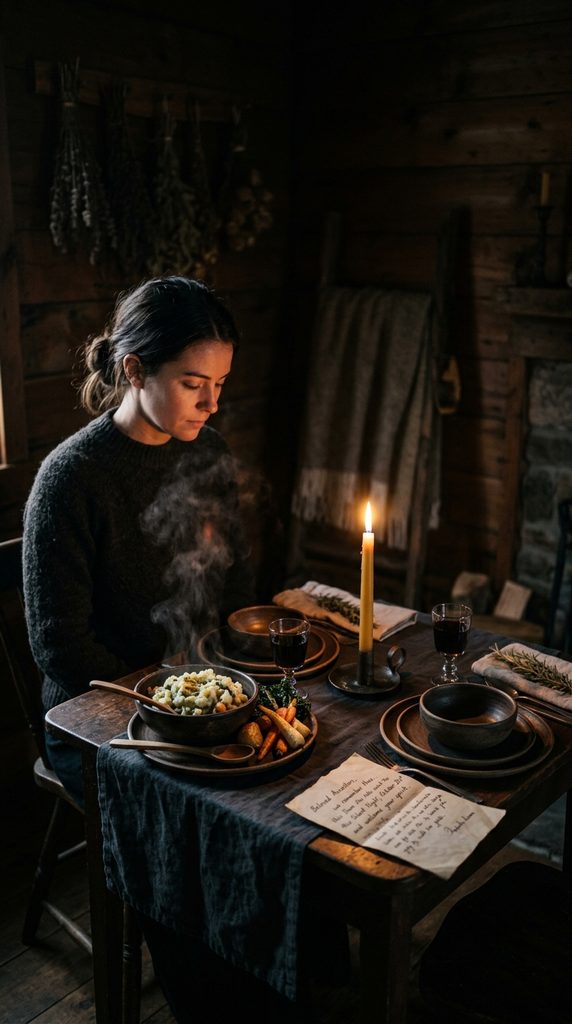
The Dumb Supper is among the most solemn and powerful solitary rites of the autumn season. Conducted in absolute, reverent silence from sunset to candle burnout, this meal offers nourishment and honor to departed loved ones. You set a solitary table with two places: one for yourself, and one directly opposite for visiting spirits.
The silent plate is served first with the finest portions of a warm, home-cooked harvest meal, accompanied by wine, water, or cider. Throughout the meal, you sit quietly, absorbing memories and sensing gentle impressions across the table. When finished, the ancestral plate is placed outdoors under a tree as a libation to the earth.
Materials You Will Need
- Dark, clean table runner and two matching dinner settings
- 1 white or black beeswax taper candle placed between settings
- Home-cooked harvest meal (colcannon, stew, or roasted squash)
- A small glass of red wine, spiced cider, or pure spring water
- Handwritten letter of gratitude to your ancestors
How to Style and Practice
Set your dining table neatly, removing all electronics and distractions from the room. Light a solitary taper candle at the head of the table and maintain total silence throughout the rite. Serve the ancestral plate first, setting it opposite your chair with a glass of cider and your written letter.
Sit down and eat your portion mindfully, allowing memories of your beloved ancestors to flow naturally through your thoughts. Feel their enduring love and presence resting quietly across the candlelight. After the supper, take the spirit plate outside, leaving the food beneath an oak or fruit tree for the creatures of the night.
2. The Apple Seed & Peel Divination
Unlocking the Wisdom of the Silver Bough
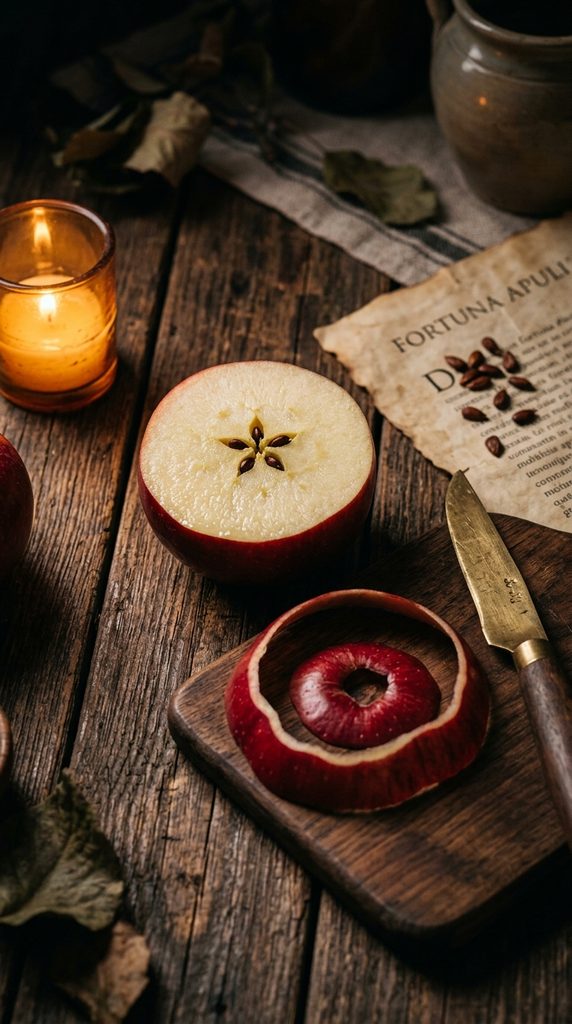
Apples have long symbolized wisdom, youth, and the gateway to the Otherworld (the mythical Isle of Avalon). When sliced crosswise, an apple reveals a hidden five-pointed star of seeds, representing the five elements and cosmic harmony. Solitary witches use this fruit for traditional fortune-telling and seasonal omens.
In classic folk divination, peeling an apple in one continuous ribbon and casting it over your left shoulder reveals the initial of a future partner or life-guiding archetype. Counting the seeds inside indicates seasonal prosperity, fruitful projects, or challenges to prepare for during the coming winter months.
Materials You Will Need
- 1 fresh, organic red or russet harvest apple
- Sharp pairing knife with a comfortable wooden handle
- Small wooden cutting board
- Clean parchment paper to count and dry seeds
- Amber votive candle for soft working light
How to Style and Practice
Sit quietly before your altar by candlelight, holding the apple in both hands while asking a clear question about the coming year. Carefully peel the apple skin in a single, unbroken spiral ribbon using your paring knife. Swirl the ribbon three times over your head, drop it behind your left shoulder, and examine the shape it forms on the floor.
Slice the peeled apple horizontally through the center equator to reveal the hidden star pattern of seeds inside. Count the fully formed seeds: odd numbers forecast periods of deep internal focus, while even numbers signal abundance and outer expansion. Dry the seeds on parchment to use in protective prosperity sachets throughout winter.
3. Hearth Fire Cleansing & Re-Kindling
Extinguishing the Old, Welcoming the New
In ancient Celtic villages, all domestic hearth fires were deliberately extinguished on Samhain eve. The people would gather at a communal hilltop where the Druids kindled a sacred, pristine “need-fire.” Embers from this blessed flame were carried back to relight home hearths, ensuring protection, warmth, and luck.
As a solitary practitioner, you can recreate this powerful renewal ritual using candles or your fireplace. You systematically extinguish every flame and light in your home, standing in total, purifying darkness to release the old year. Then, with deep intention, you strike a new flame to bless your hearth for the coming winter.
Materials You Will Need
- 1 sturdy candle snuffer (never blow out the flame)
- 1 brand-new, unburned pillar candle (white, gold, or raw beeswax)
- Fresh matches or flint and striker
- Dried garden sage, cedar sprigs, or mugwort for cleansing
- A small brass or iron bowl to hold the new flame
How to Style and Practice
Walk mindfully through your home before midnight, extinguishing every lamp, light switch, and existing candle with a snuffer. Stand in complete darkness for several moments, breathing slowly while reflecting on the burdens, griefs, and lessons of the past twelve months. Speak a quiet affirmation releasing the old year into the shadows.
Strike a fresh match in the darkness, focusing on the spark of illumination, and light your new pillar candle. Carry this pristine flame throughout your home, lighting a stick of cleansing incense or hearth candle in each room. Speak words of peace, health, and warmth over every threshold, blessing your home for the winter freeze.
4. The Turnip or Gourd Ward (Jack-o’-Lantern)
Carving Ancient Protective Sentinels
Before soft orange pumpkins arrived from the Americas, traditional Irish and Scottish folk carved hollowed turnips, beets, and swedes. These dense, gnarly root vegetables were hollowed out and carved with fierce, grotesque faces. An ember from the sacred fire was placed inside to create a protective lantern.
These lanterns guarded household gates from malicious spirits, mischievous fairies, and wandering lost souls during the veil thinning. Carving a traditional small turnip or heirloom gourd connects you with the raw, earthy history of folk witchcraft. Placed on your doorstep or windowsill, it stands as an uncompromising boundary sentinel.
Materials You Will Need
- 1 large purple-top turnip, rutabaga, or heirloom winter gourd
- Melon baller, pairing knife, and small serrated blade
- 1 tea light candle (beeswax or battery-operated)
- Coarse sea salt to sprinkle inside for purification
- Small outdoor table or doorstep flagstone
How to Style and Practice
Slice a level cap off the top of your turnip and scoop out the dense interior flesh using a melon baller and spoon. Take your time, scraping walls thin enough for light to shine through while keeping the structure sturdy. Carve angular, toothy grimaces and fierce eyes into the vegetable’s tough purple skin.
Sprinkle coarse sea salt into the base to absorb negative residual energy, then place a lit candle inside. Replace the carved top lid and set the turnip lantern on your front doorstep, porch railing, or exterior window ledge. Charge the lantern to turn away all unwanted spiritual interference throughout the night.
5. Burning the Harvest Regrets (The Fire Release)

Alchemical Transmutation of Past Pain
Samhain is the time when the vegetative world dies back into the earth, breaking down into rich, fertile compost for future spring growth. Solitary practitioners align with this natural cycle by performing an intentional burning ritual. Anything that has brought pain, stagnant habits, or sorrow over the past year is released into the flame.
Writing down your regrets, anxieties, or toxic attachments gives emotional weight physical form. When cast into the sacred fire, the paper transforms into carbon, heat, and smoke, returning its energy back to the universe. It brings deep emotional catharsis and clears space for personal reinvention.
Materials You Will Need
- Strips of unbleached scrap paper or dry fallen leaves
- Black ink pen or charcoal pencil
- 1 heat-safe cast iron cauldron, ceramic bowl, or hearth fireplace
- Dried bay leaves and a pinch of dried rosemary
- Water or sand container kept nearby for fire safety
How to Style and Practice
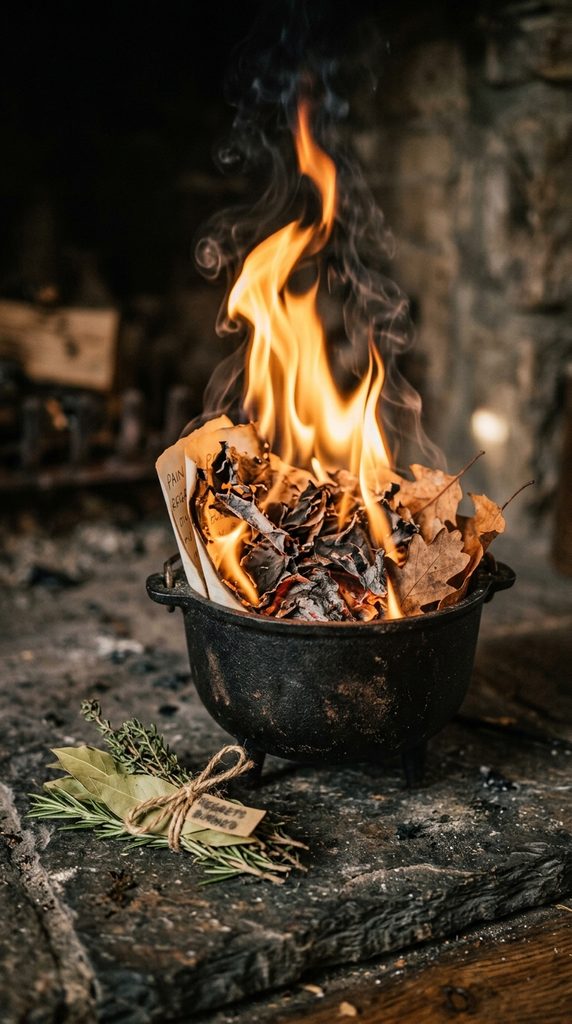
Sit quietly before your cauldron or fireplace, reflecting deeply on the mistakes, hurts, and bad habits of the past year. Write each burden honestly onto separate strips of paper or directly onto brittle, dry fallen leaves. Hold each item, acknowledging the lesson it provided, then state aloud your decision to let it go.
Ignite each paper in your altar flame and drop it safely into your iron cauldron, watching it consume to ash. Scatter dried bay leaves and rosemary over the burning ashes to clear lingering emotional heaviness. Once cooled, scatter the ashes outside in the autumn wind or bury them under a shrub to complete the release.
6. The Obsidian Mirror Scrying
Peering Through the Shroud of Time
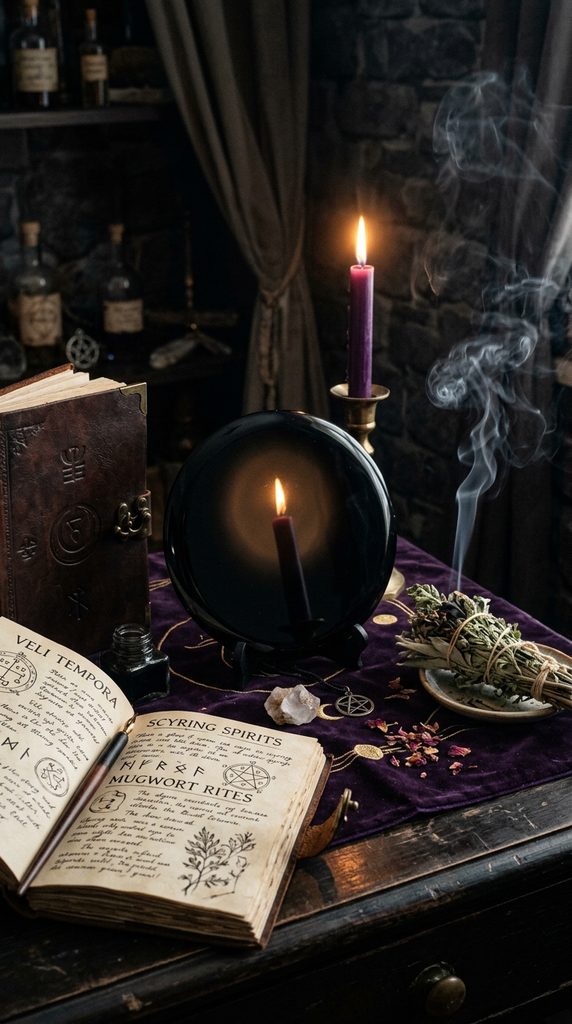
Scrying is the ancient art of gazing into a dark, reflective surface to perceive visions, intuitive symbols, and spiritual counsel. Because the veil between the conscious mind and the spirit world is thinnest at Samhain, divination yields clear insights. A polished black obsidian mirror, a bowl of dark water, or smoked glass serves as the ideal threshold.
A solitary witch uses the mirror not to predict rigid events, but to read subconscious archetypes and ancestral whispers. In the soft glow of a solitary candle placed behind you, the black reflection blurs physical boundaries. It opens a tranquil portal into deep self-discovery and seasonal clarity.
Materials You Will Need
- 1 polished round black obsidian mirror or dark stoneware bowl filled with still water
- 1 purple, silver, or dark beeswax taper candle
- Dried mugwort or wormwood smudge to cleanse the mirror
- Soft velvet cloth to keep the glass clean and covered
- Journal and pen to record instant intuitive symbols
How to Style and Practice
Cleanse your obsidian mirror with smoke from burning mugwort, setting the disc upright on your altar. Position a solitary candle slightly behind the mirror or behind yourself so the flame does not reflect directly on the glass. Dim all other room lights, ensuring you can only see the soft, dark sheen of the reflective surface.
Soften your gaze and stare gently into the dark depths of the mirror, breathing deeply without straining. Allow your physical eyes to de-focus as cloudy shapes, colors, or symbolic imagery drift across your awareness. When finished, cover the mirror with a velvet cloth and write your impressions immediately in your journal.
7. The Midnight Soul Cake Baking
Kneading Hospitality and Remembrance
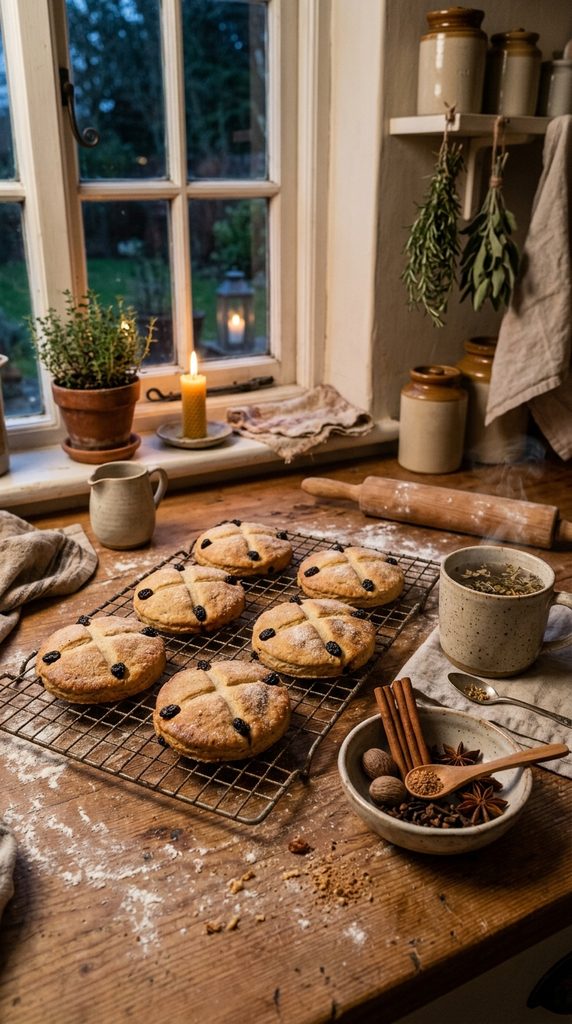
Soul Cakes are small, spiced round shortbreads traditionally baked around Samhain and All Souls’ Day. In historical traditions, wandering beggars and children (“soulers”) would go from door to door singing prayers for departed ancestors in exchange for cakes. Each cake eaten was believed to release a soul from suffering and bring domestic blessing.
For the solitary witch, baking soul cakes is an act of kitchen witchcraft, grounding spiritual intention into nourishment. The aromatic spices—cinnamon, nutmeg, allspice, and ginger—awaken physical warmth and protect the home. Marked with a stamped cross or solar wheel, they become edible offerings of hospitality across realms.
Materials You Will Need
- 2 cups all-purpose flour, 1/2 cup sugar, and 1/2 cup softened unsalted butter
- 1 egg yolk and 2 tablespoons milk
- 1/2 teaspoon each of ground cinnamon, nutmeg, ginger, and allspice
- Dried currants or raisins to mark the tops
- Mixing bowl, rolling pin, round biscuit cutter, and baking tray
How to Style and Practice
Preheat your oven to 375°F (190°C) and cream the butter and sugar together while speaking blessings for your home. Stir in the egg yolk, flour, and fragrant autumn spices, kneading the dough smoothly with focused gratitude. Roll the dough out to half-inch thickness, cutting it into neat rounds with a biscuit cutter.
Use a dull butter knife or fork to press an equal-armed cross into the top of each cake, pressing currants into the corners. Bake for 12 to 15 minutes until pale golden-brown, filling your kitchen with warming autumn spices. Eat one cake warm with herbal tea, setting another aside on your ancestral altar as a sacred offering.
8. Forest Threshold Gathering & Boundary Dressing
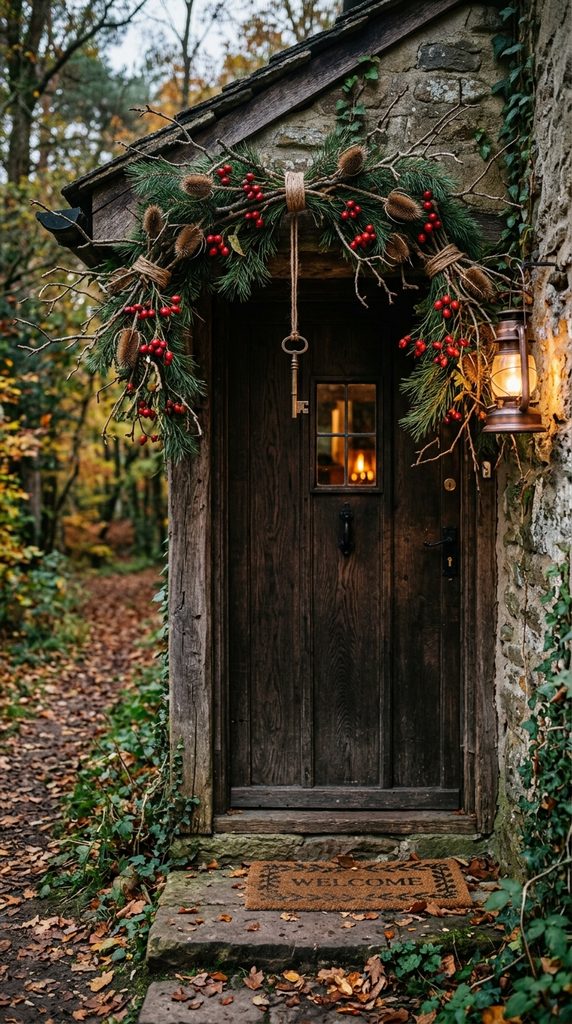
Weaving Protective Autumn Garlands
Before winter sets in, ancient rural folk dressed their doors, windows, and barns with protective evergreen boughs and thorny plants. This kept wandering malevolent spirits and winter blights from crossing the home threshold. Solitary witches carry on this tactile craft by foraging wild woodland elements to weave seasonal charms.
Gathering fallen pine sprigs, wild briars, rosehips, and oak twigs connects your hands directly to the seasonal landscape. Hanging a hand-bound botanical garland over your front door visibly honors the harvest’s end. It acts as an energetic filter, welcoming ancestral blessings while keeping cold seasonal blues outside.
Materials You Will Need
- Fallen pine boughs, cedar sprigs, and bare oak branches
- Spiky teasel pods, wild rosehip stems, or hawthorn thorns
- Natural brown jute twine or floral wire
- 1 iron key, brass bell, or skeleton key charm
- Heavy pruning shears and garden gloves
How to Style and Practice
Take a quiet foraging walk through a nearby woods or garden, collecting fallen evergreen boughs and berry stems. Lay your evergreen sprigs on a table, overlapping stems and binding them tightly together using natural jute twine. Weave spiky teasel pods and bright red rosehip stems into the greenery to create protective boundaries.
Tie an antique brass bell or iron skeleton key to the center of the garland to act as an auditory spirit chime. Hang the completed garland over your exterior front door or mantlepiece, speaking an ancient verse of shelter and safety. Touch the boughs each time you cross the threshold to ground yourself in natural stability.
9. Creating the Ancestral Memory Altar
Anchoring Your Lineage with Photographs and Relics
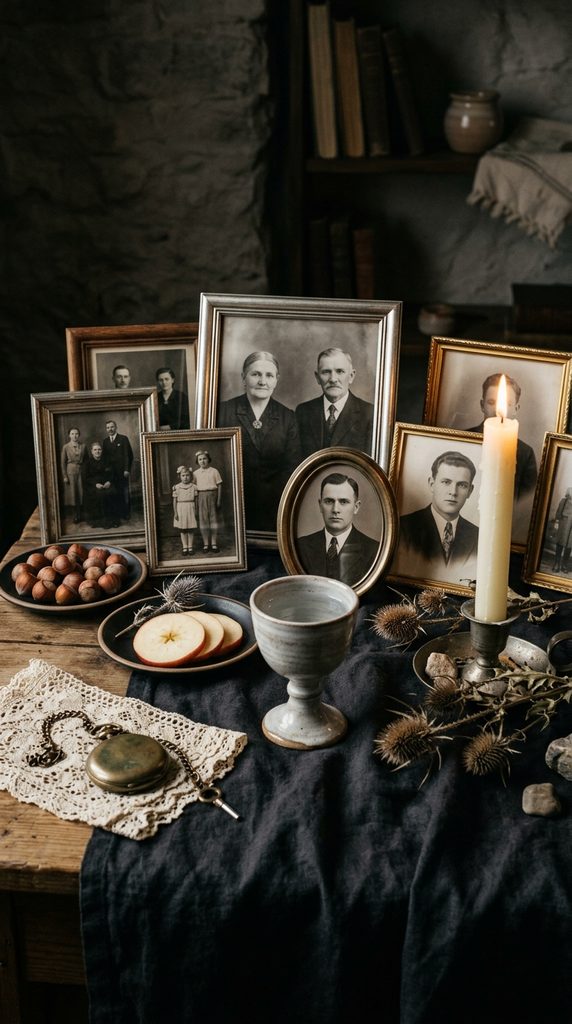
Building a dedicated ancestor altar (or bóithrín) is the beating heart of traditional Samhain practice. Rather than keeping it tucked away, construct a vibrant, respectful focal point in your living space. This sacred display serves as a focal bridge where the living and departed connect across the veil.
Include framed photographs of deceased parents, grandparents, beloved friends, and passed companion animals. Decorate the surface with their personal heirlooms—pocket watches, jewelry, handwritten recipe cards, or favorite teacups. Surrounding these keepsakes with seasonal gourds, dried corn, and beeswax candles keeps their memory alive.
Materials You Will Need
- Framed black-and-white or color photographs of deceased family and friends
- Cherished personal relics (rings, medals, letters, glasses, pipes)
- Dark wool, linen, or lace cloth to drape over the altar table
- Fresh red apples, hazelnuts, and a small glass of spirits or spring water
- White pillar candle and a small vase of dried autumn thistles
How to Style and Practice
Drape a quiet corner table or shelf in deep charcoal or dark lace cloth, arranging family photographs with care. Place small saucers containing offerings of fresh hazelnuts, apple slices, and their favorite beverages beside their portraits. Position cherished personal heirlooms near their images, letting their belongings anchor their spiritual presence.
Light your central white pillar candle each evening from sunset on Samhain through the early days of November. Sit quietly before the pictures, speaking their names aloud, recounting family stories, and thanking them for the gift of life. This simple ritual reminds us that love never ends, transcending physical form.
10. Hazelnut Hearth Divination
Reading the Sparks of Fate and Fidelity
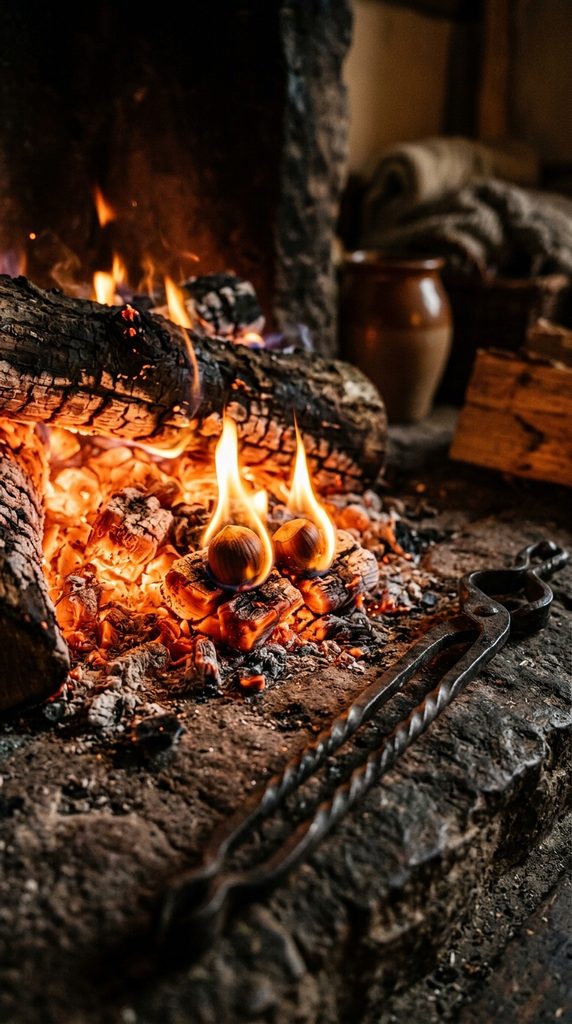
In Celtic mythology, the hazel tree is the sacred guardian of poetic inspiration, ancient wisdom, and hidden knowledge. The Salmon of Knowledge gained its mystical wisdom by eating nine hazelnuts that dropped into a sacred well. On Samhain night, rural folk placed hazelnuts in the glowing hearth embers to divine the coming year.
A solitary witch uses this cozy kitchen ritual to read decisions, career paths, and spiritual undertakings. By naming pairs of hazelnuts before setting them into the fire, you observe how they burn. A calm, steady burn forecasts harmony and stable growth, while an explosive burst warns of conflict and sudden disruption.
Materials You Will Need
- 4 to 6 fresh, whole hazelnuts in their hard shells
- Black permanent marker or carving tool to scratch initials onto shells
- Safe fireplace, woodstove embers, or an iron brazier with hot coals
- Metal fire tongs to place and remove nuts safely
- Heat-resistant dish to catch spent shells
How to Style and Practice
Hold two hazelnuts in your hands, assigning one to your current path and the other to an impending life decision or partnership. Use a fine marker or nail to mark small initials or symbols onto the hard brown hazel shells. Approach your glowing hearth embers or outdoor fire pit with reverence, holding your intentions clearly in mind.
Use long metal tongs to set both hazelnuts side by side directly into the glowing hot embers. Watch their reaction: if they burn quietly together with a clear flame, the path will proceed with peace and mutual blessing. If one crackles violently or bursts away, reconsider the venture and prepare for sudden friction.
11. Rosemary Remembrance Crown
Weaving the Herb of Memory
Rosemary has been revered since antiquity as the herb of memory, fidelity, and spiritual protection. Shakespeare famously captured this folk wisdom through Ophelia: “There’s rosemary, that’s for remembrance.” Weaving fresh sprigs of this resilient herb into a wreath or crown provides a fragrant connection to the past.
Wearing a rosemary circlet during solitary prayer keeps the mind centered, clear, and focused. The sharp, pine-like aroma stimulates mental alertness, lifting the melancholic fog that often accompanies autumn seasonal shifts. When the night’s rites conclude, the dried crown is hung over your bed or hearth to protect your dreams.
Materials You Will Need
- 6 to 8 fresh, flexible woody sprigs of garden rosemary
- Thin green floral wire or natural craft wire
- Brown paper florist tape to wrap wire ends safely
- 1 white candle to dedicate the finished crown
- Sharp kitchen shears
How to Style and Practice
Measure a length of craft wire comfortably around the crown of your head, twisting the ends into a circular circlet frame. Overlap fresh sprigs of fragrant rosemary along the wire, binding them closely using thin floral wire. Ensure all wire ends are neatly covered with floral tape so the crown rests comfortably on your brow.
Light your altar candle, holding the finished aromatic crown over the rising heat while asking for clear memory and ancestral blessings. Wear the crown during your solitary meditation, ancestral feast, or card readings throughout the night. Once the rituals conclude, hang the crown over your bedpost to ward away night terrors and inspire lucid dreams.
12. Leaving the Faery Libation at the Threshold
Honoring the Fair Folk and Nature Guardians
Samhain is not exclusively the night of human ancestors; it is also the great revel of the Aos Sí—the sidhe, faeries, and wild nature spirits. In ancient lore, fairy hills (sidhe mounds) opened wide on this night, allowing the hidden people to roam freely. To prevent mischief and secure blessing for crops and livestock, households left generous gifts.
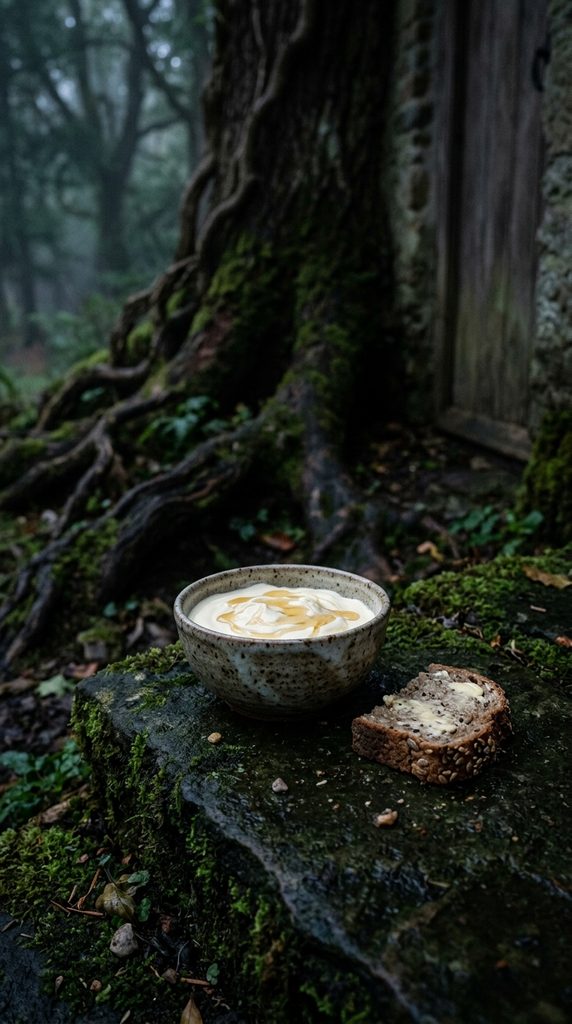
Solitary witches maintain this reciprocal bond with the unseen landscape by offering rich harvest libations. Setting out a dish of sweet whole milk, honey, unsalted butter, or sweet cake outside your door acknowledges the land’s original spirits. It fosters a respectful relationship with the natural, wild world that surrounds your home.
Materials You Will Need
- Small natural stoneware, ceramic, or wooden bowl (avoid iron, which repels spirits)
- 1/2 cup of whole milk, sweet cream, or local honey
- A small slice of fresh bread with sweet unsalted butter
- Doorstep flagstone, garden flat stone, or hollow tree base
- A respectful verbal blessing of peace and reciprocity
How to Style and Practice
Pour sweet whole cream or a generous drizzle of local honey into a small wooden or ceramic bowl before nightfall. Place a slice of buttered homemade bread on the side, keeping the offering pristine and wholesome. Carry the dish outside to your front doorstep, garden stone, or the roots of a nearby elder or hawthorn bush.
Place the bowl down gently, speaking aloud that this offering is given in mutual respect and friendship to the land’s unseen guardians. Leave the offering undisturbed overnight, never consuming food set aside for the unseen folk. By morning, what remains has been spiritually accepted and can be composted back into the soil.
13. The Cauldron Root Vegetable Simmer Pot
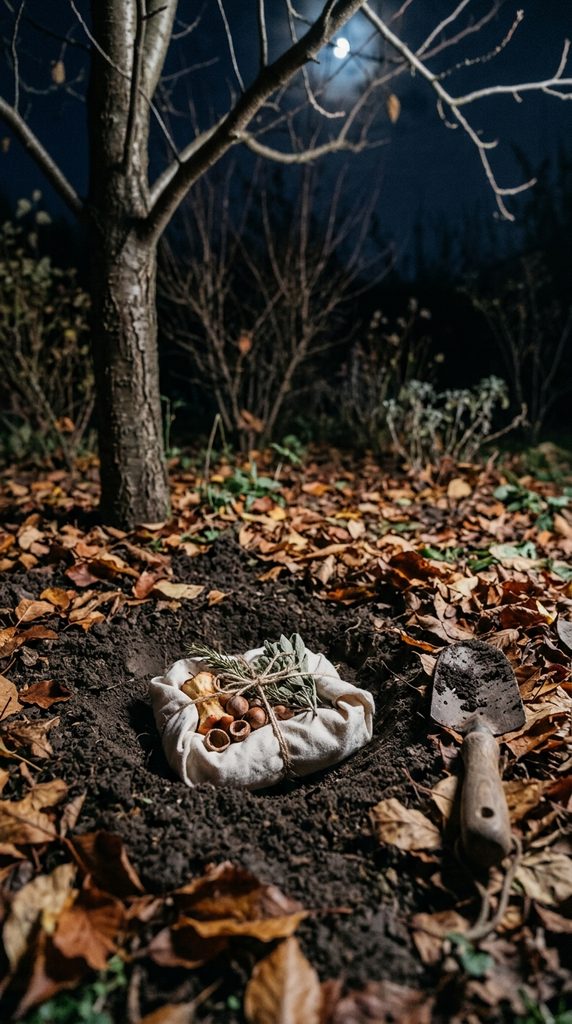
Alchemy of Earth, Water, and Protection
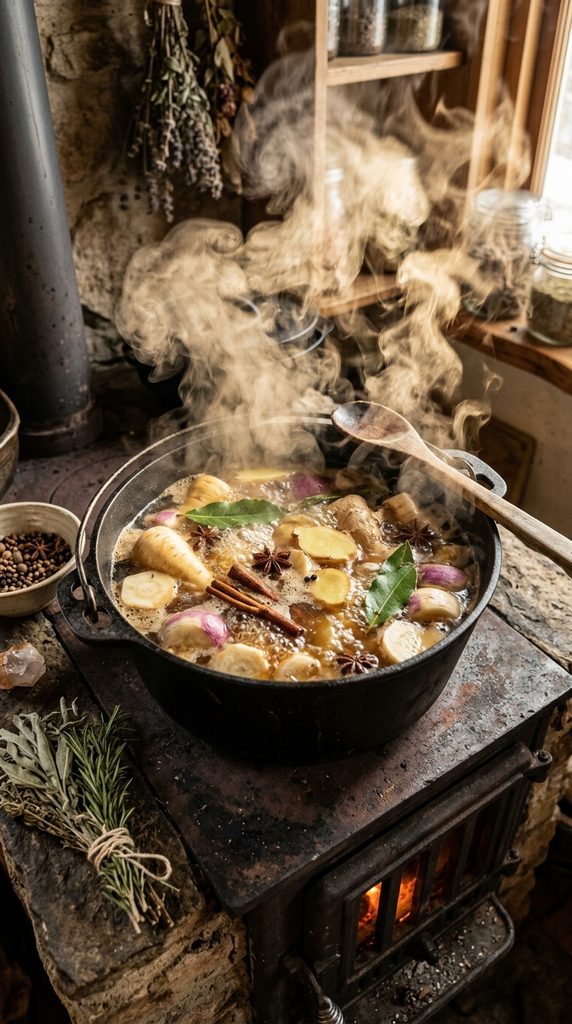
A solitary witch’s cauldron is both a symbol of rebirth and a practical tool for alchemical kitchen magic. Simmering protective root vegetables and warming spices fills the home with comforting aromas and purifying steam. This practice transforms ordinary winter vegetables into a fragrant, protective atmosphere.
Root vegetables like turnip, parsnip, potato, and ginger grow hidden in total darkness, absorbing deep telluric energy from the soil. As they simmer gently in spring water with autumn spices, their steam purifies the home. It is a simple, non-toxic household cleansing ritual that leaves your space feeling grounded and safe.
Materials You Will Need
- Small cast-iron Dutch oven, saucepan, or decorative kitchen cauldron
- Spring water or clean filtered tap water
- Chunks of raw parsnip, turnip, beet, or ginger root
- 3 whole cinnamon sticks, 1 tablespoon whole cloves, and 2 star anise pods
- 2 fresh bay leaves and a sprig of fresh rosemary
How to Style and Practice
Fill your pot three-quarters full with clean water and set it on low heat on your stove or wood burner. Add chunks of earthy root vegetables along with cinnamon sticks, whole cloves, star anise, and fresh bay leaves. Stir the mixture clockwise with a wooden spoon, whispering intentions for family health, security, and warmth.
Allow the pot to simmer gently for several hours, adding more water as needed to prevent burning. The fragrant, earthy steam carries purifying botanicals into every corner of your living quarters. When finished, allow the pot to cool, straining the liquid to wash your front doorstep for protective blessing.
14. Midnight Tarot / Rune Year-Ahead Spread
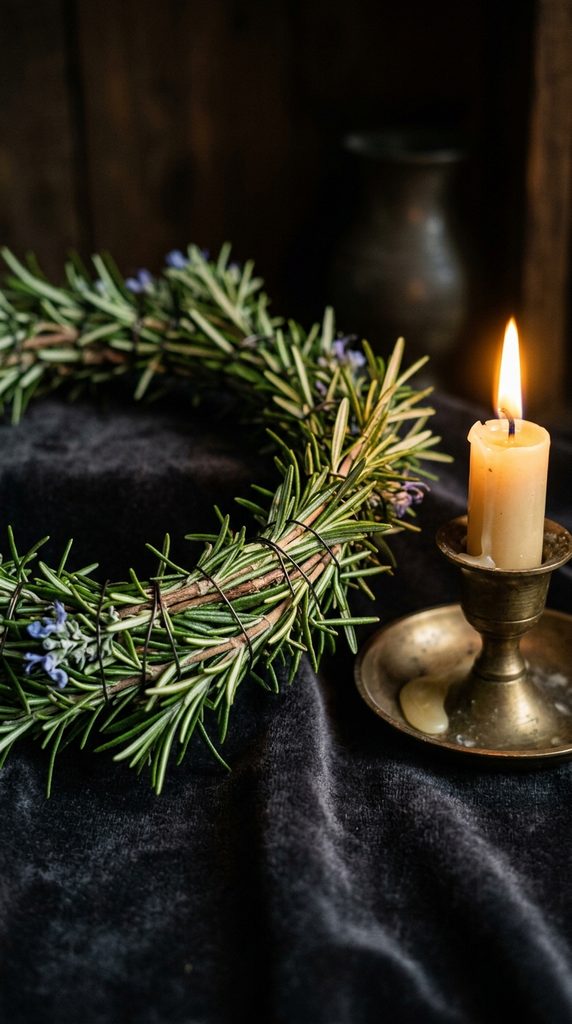
Mapping the Arc of the Winter Cycle
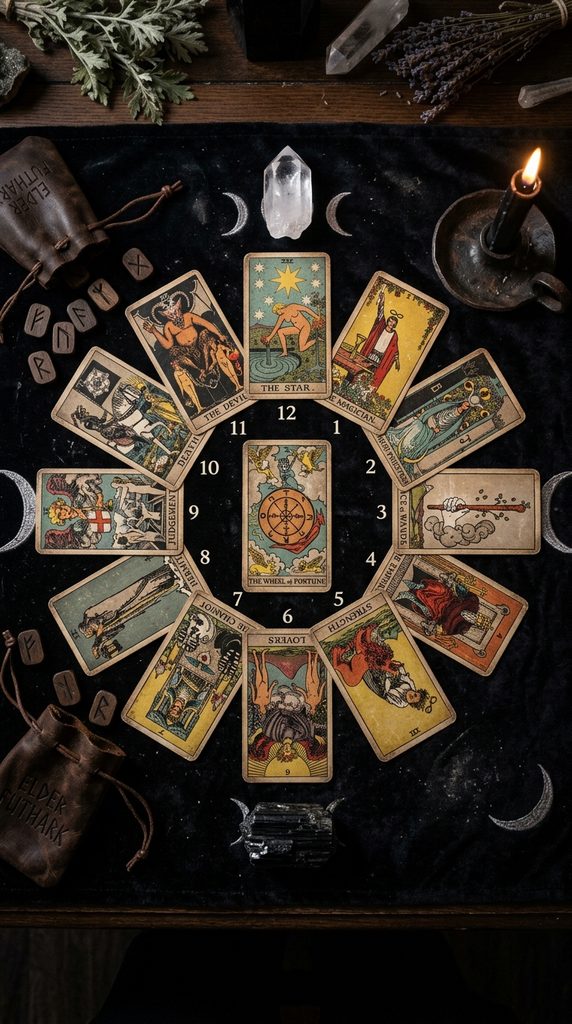
With the veil thin and daily distractions quieted, midnight on Samhain is the premier hour for deep cartomancy and rune casting. Solitary witches use this quiet window to lay out a twelve-month compass spread for the coming year. Rather than seeking fortune-telling, this reading provides an inner map for personal development.
Consulting your cards or elder futhark runes in the dim glow of ancestral candlelight yields remarkable clarity. Each card drawn corresponds to a month or seasonal milestone between this Samhain and the next. It equips the solitary practitioner with foresight, wisdom, and emotional preparedness for winter’s trials.
Materials You Will Need
- 1 trusted Tarot deck, Oracle deck, or bag of wooden Elder Futhark runes
- Velvet casting cloth in black, deep purple, or dark green
- 2 cleansing crystals (clear quartz and raw black tourmaline)
- 1 purple or black beeswax candle
- Dedicated journal and pen to record the card layout
How to Style and Practice
Spread your velvet cloth over your altar, placing black tourmaline for protection and clear quartz for mental focus. Light your candle, shuffle your deck or shake your rune pouch slowly, breathing rhythmically to clear lingering thoughts. Ask your ancestors and higher self for honest guidance regarding the lessons of the coming year.
Draw thirteen cards: twelve cards arranged in a circular clock representing the upcoming months, and a central thirteenth card as the foundational theme of your year. Study each symbol carefully, taking time to absorb its advice rather than rushing through interpretations. Transcribe the spread carefully into your journal so you can review its unfolding accuracy throughout the year.
15. The Biodegradable Earth Burial Offering
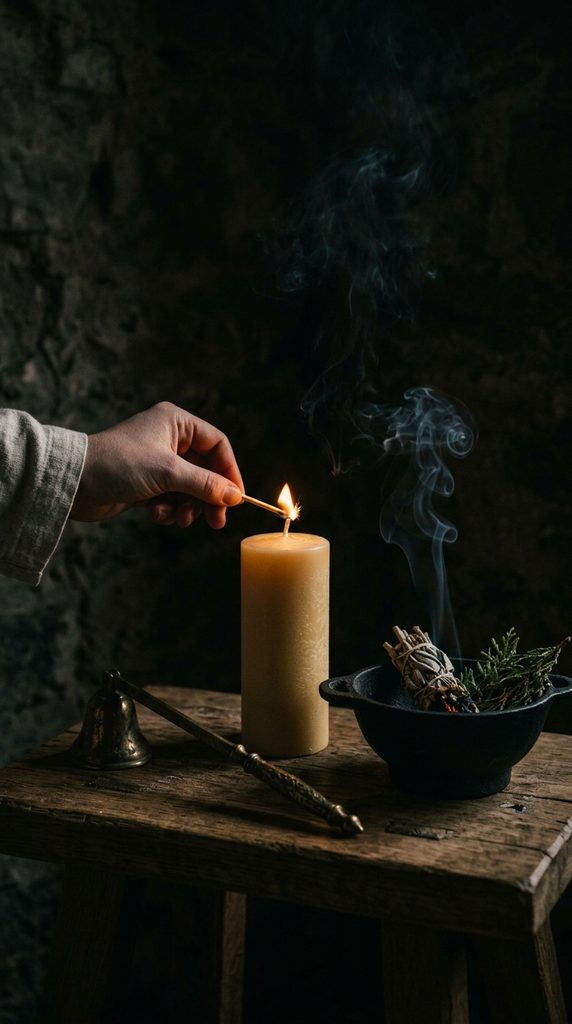
Feeding the Roots of the World
The final, essential act of any solitary Samhain working is returning energy back to the earth that sustains us. Throughout history, rural folk buried portions of their harvest, cider, and bread back into field furrows. This act of sacrificial gratitude nourished the soil and completed the harvest cycle.
As solitary witches, ending your night with an outdoor burial offering seals your magic in reality. Gathering leftover feast scraps, apple cores, hazelnut shells, and spent ritual herbs into a biodegradable parcel gives back to nature. Digging a small hollow in the cold autumn soil grounds your spirit, leaving you feeling balanced and deeply at peace.
Materials You Will Need
- Small trowel or garden spade
- Small piece of undyed cotton cloth, unbleached paper, or a large fallen leaf
- Apple cores, hazelnut shells, bread crumbs, and spent ceremonial herbs
- A few drops of pure water, cider, or wine
- Quiet spot beneath a backyard tree, hedge, or outdoor potted planter
How to Style and Practice
Collect all organic remnants from your evening’s rituals—apple cores, spent candle herbs, bread crumbs, and food scraps. Place these natural items inside a large dried maple leaf or wrap them neatly in an undyed scrap of cotton cloth. Step outside into the crisp, quiet night air, taking your trowel to a respectful spot beneath a tree.
Dig a small hollow four to six inches deep into the cold soil, whispering words of gratitude to the earth for sheltering your life. Place the biodegradable bundle inside, pour a few drops of cider or water over it, and gently pat the soil back into place. Stand quietly for a moment, breathing in the cold air, knowing the old year has ended and peace awaits.
Solitary Samhain Ritual Checklist
Keep this reference guide handy to pace your solitary celebration smoothly from twilight to midnight:
| Time | Sacred Practice | Core Focus | Key Tools |
| Sunset (5:30 PM) | Hearth Extinguishing & Cleansing | Cleansing and releasing the past year | Candle snuffer, dried sage or mugwort |
| Twilight (6:30 PM) | Doorstep Turnip Ward & Faery Libation | Establishing protective boundaries | Carved turnip, bowl of milk and honey |
| Evening (7:30 PM) | The Dumb Supper (Silent Meal) | Ancestral hospitality and honor | Two place settings, harvest food, taper |
| Night (9:00 PM) | Apple Divination & Hazelnut Rites | Divination and intuitive foreknowledge | Fresh apples, pairing knife, hazelnuts |
| Late Night (10:30 PM) | Burning Regrets & Cauldron Simmer | Releasing emotional baggage | Cauldron, paper strips, root vegetables |
| Midnight (12:00 AM) | Tarot Spread & Earth Burial Offering | Year-ahead guidance and final grounding | Tarot deck, garden trowel, organic parcel |