13 Bedroom Decor Ideas For Small Rooms
Decorating a small bedroom can sometimes feel like solving a difficult puzzle. Limited floor space, compact layouts, and the challenge of balancing style with functionality often make homeowners believe that beautiful bedroom designs are only possible in larger spaces. However, small bedrooms can become some of the most inviting, cozy, and visually appealing areas in a home when designed thoughtfully. With the right decor ideas, smart furniture choices, and clever organization techniques, even the tiniest room can feel spacious, stylish, and comfortable.
Modern interior design has proven that square footage does not determine beauty. Instead, proper planning, intentional decor, and creative use of available space can completely transform a compact bedroom into a relaxing retreat. Whether you live in a small apartment, a studio, a guest room, or simply have a limited bedroom layout, there are countless ways to maximize every inch while maintaining an elegant and functional design.
One of the biggest advantages of small bedrooms is that they naturally create a cozy atmosphere. Unlike larger spaces that sometimes feel empty or difficult to decorate, small rooms can easily achieve warmth and intimacy. Soft textures, calming color palettes, layered lighting, and carefully selected decor elements can instantly make a small bedroom feel welcoming and comfortable.
Storage often becomes the primary concern in compact bedrooms. Clothes, accessories, books, bedding, and personal items can quickly overwhelm limited square footage. Fortunately, modern bedroom decor focuses heavily on multifunctional furniture, hidden storage solutions, vertical organization, and space-saving designs. Beds with storage drawers, floating shelves, wall-mounted lighting, and slim furniture pieces help maintain both functionality and style without making the room feel crowded.
Color selection also plays a major role in small bedroom design. Light and neutral colors can create the illusion of a larger room by reflecting natural light and making walls appear farther apart. Soft whites, warm beiges, gentle grays, and muted pastels remain popular choices because they help small spaces feel airy and open. However, bold accents, textured materials, and carefully chosen decorative pieces can add personality without overwhelming the room.
Lighting is another important factor that greatly impacts the overall feel of a small bedroom. Natural sunlight can make a compact room appear brighter and larger, while layered lighting techniques add warmth and dimension. Combining bedside lamps, wall sconces, pendant lights, and soft ambient lighting allows homeowners to create a relaxing atmosphere while maximizing functionality.
Furniture selection requires careful consideration in smaller spaces. Large, bulky pieces often consume valuable floor area and make the room feel cramped. Instead, streamlined furniture with clean lines, raised legs, and multifunctional features helps maintain visual openness. Minimal furniture arrangements can also improve movement throughout the room and create a more organized appearance.
Decorating a small bedroom does not mean sacrificing personal style. Whether you prefer modern, minimalist, bohemian, farmhouse, Scandinavian, contemporary, or cozy aesthetic designs, every decorating style can be adapted to fit compact spaces. The key is choosing decor elements intentionally and avoiding unnecessary clutter. A few well-selected pieces often create a stronger visual impact than overcrowding the room with excessive decorations.
Wall decor offers another opportunity to add personality without occupying valuable floor space. Artwork, mirrors, floating shelves, framed prints, and decorative panels can transform blank walls into stylish focal points. Mirrors are especially effective because they reflect light and create the illusion of additional space, making small bedrooms feel significantly larger.
Textiles also contribute greatly to the comfort and appearance of a bedroom. Layered bedding, decorative pillows, soft blankets, curtains, and area rugs introduce texture, warmth, and visual interest. Choosing coordinated fabrics and colors helps create a cohesive design while maintaining a calm and inviting atmosphere.
Many people assume that decorating small bedrooms requires expensive renovations or custom-built furniture. In reality, simple changes can produce remarkable results. Rearranging furniture, adding storage baskets, introducing better lighting, updating bedding, or incorporating plants can dramatically improve both functionality and aesthetics without requiring a large budget.
The following bedroom decor ideas demonstrate that small spaces can be both beautiful and practical. Each idea focuses on maximizing available space while enhancing comfort, organization, and style. From smart storage solutions to cozy decor techniques, these ideas provide inspiration for creating a bedroom that feels larger, brighter, and more enjoyable to spend time in.
Whether you are redesigning your current bedroom, decorating a new apartment, or simply looking for fresh inspiration, these small bedroom decor ideas will help you transform limited square footage into a stylish and comfortable sanctuary. With thoughtful planning and creative design choices, any small bedroom can become a beautiful retreat that perfectly balances function and personality.
1. Use Light Neutral Colors to Make Small Bedrooms Feel Larger
Color is one of the most powerful design tools when decorating a small bedroom. The right color palette can visually expand the room, reflect natural light, and create an airy atmosphere. Light neutral colors such as white, cream, beige, soft gray, warm taupe, and pale blush are popular choices because they make walls appear farther apart and help the room feel more spacious.
Many small bedrooms suffer from limited natural light, which can make the space appear cramped and dark. Lighter shades reflect available light instead of absorbing it, instantly brightening the entire room. This creates a calm and relaxing environment while also making the bedroom feel larger than its actual size.
To achieve this look, start with soft wall colors. White walls provide a clean and timeless appearance, while warm beige or greige adds coziness. Choose bedding that matches the color palette to maintain visual continuity. Layering different shades of the same color adds depth without creating visual clutter.
Furniture pieces in light wood tones, white finishes, or natural materials also contribute to an open feel. Avoid using too many dark colors on large surfaces because they can make the room feel enclosed.
How to Create This Look
- Paint walls in soft neutral shades.
- Use white or beige bedding.
- Add cream-colored curtains.
- Choose light wood furniture.
- Incorporate soft textures through rugs and blankets.
- Keep decorative accents minimal.
Materials and Decor Items
- Neutral wall paint
- White or beige bedding sets
- Light wood nightstands
- Linen curtains
- Soft throw blankets
- Neutral area rugs
- Decorative pillows
Pinterest Tip
Layering multiple shades of beige, white, and cream creates a luxury bedroom look while maintaining a spacious feel. Small bedrooms benefit greatly from tonal decorating because it reduces visual distractions and creates harmony throughout the space.
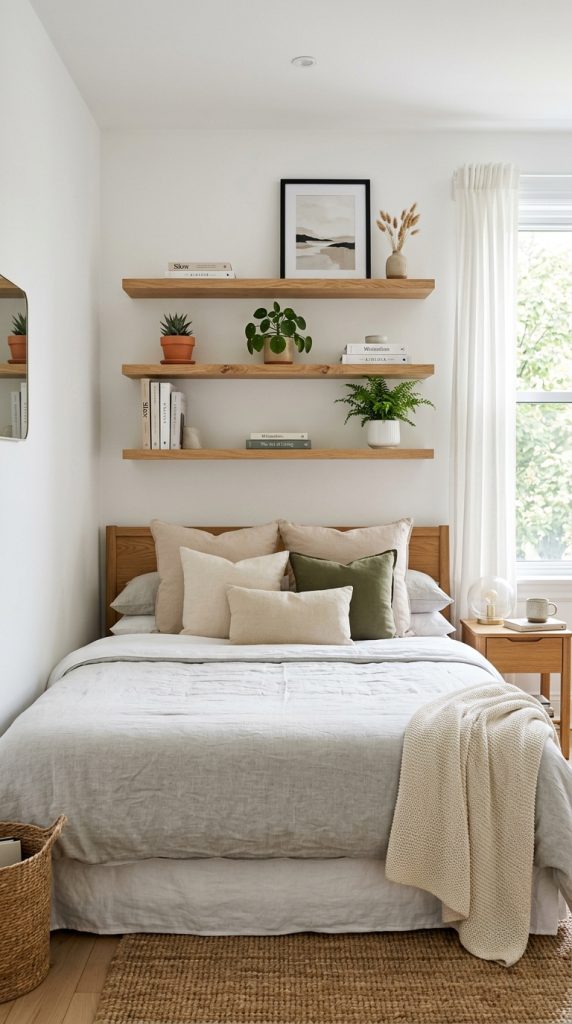
2. Install Floating Shelves to Save Valuable Floor Space
Storage is often the biggest challenge in small bedrooms. Traditional bookshelves and storage cabinets can consume precious floor space, making the room feel crowded. Floating shelves provide an elegant solution by utilizing empty wall areas while keeping the floor open and uncluttered.
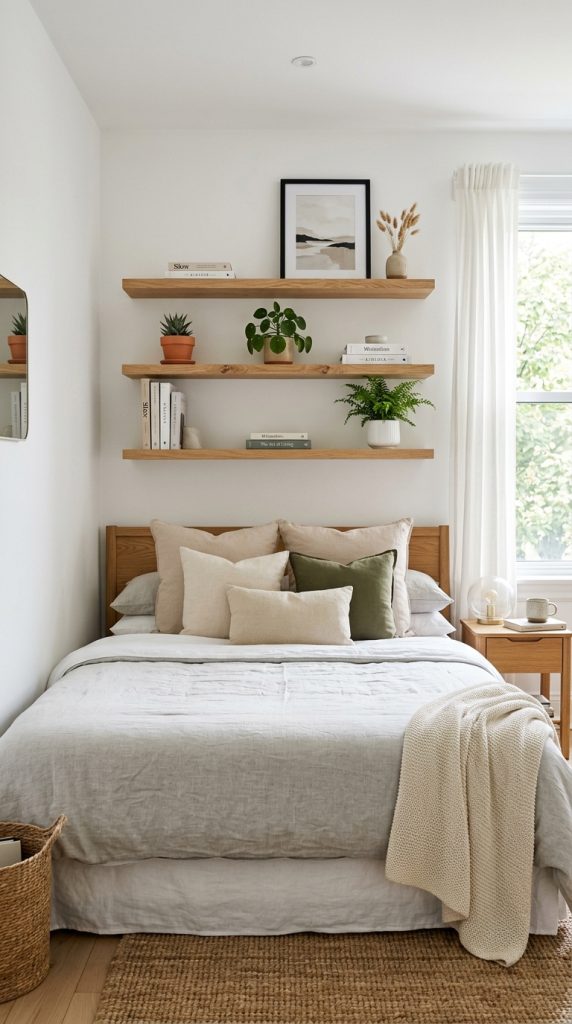
Floating shelves work exceptionally well above beds, desks, dressers, or reading corners. They offer storage for books, decorative objects, plants, candles, framed photographs, and storage baskets without requiring additional furniture.
One of the major benefits of floating shelves is their versatility. They can match modern, minimalist, farmhouse, Scandinavian, or boho bedroom styles. White shelves blend seamlessly into light-colored walls, while natural wood shelves add warmth and texture.
When decorating floating shelves, avoid overcrowding them. Too many objects can create visual clutter, which makes a small bedroom feel even smaller. Instead, use a balanced arrangement that combines functional and decorative pieces.
How to Install Floating Shelves
- Measure available wall space.
- Mark shelf placement using a level.
- Install wall anchors if necessary.
- Secure shelf brackets.
- Attach shelves firmly.
- Decorate with lightweight items.
Items to Display
- Small indoor plants
- Framed artwork
- Decorative candles
- Books
- Storage baskets
- Ceramic vases
- Picture frames
Materials Needed
- Floating shelves
- Wall anchors
- Screws and brackets
- Drill
- Measuring tape
- Decorative accessories
Pinterest Tip
Styling shelves with odd-numbered decorative groups creates a more balanced and visually appealing arrangement. Combine greenery, books, and neutral decor objects for a trendy Pinterest-inspired bedroom look.
3. Choose Multifunctional Furniture for Maximum Efficiency
Small bedrooms require furniture that serves more than one purpose. Multifunctional furniture helps maximize limited space while reducing clutter and improving organization. Instead of filling the room with multiple pieces, selecting furniture that offers both storage and functionality can completely transform the layout.
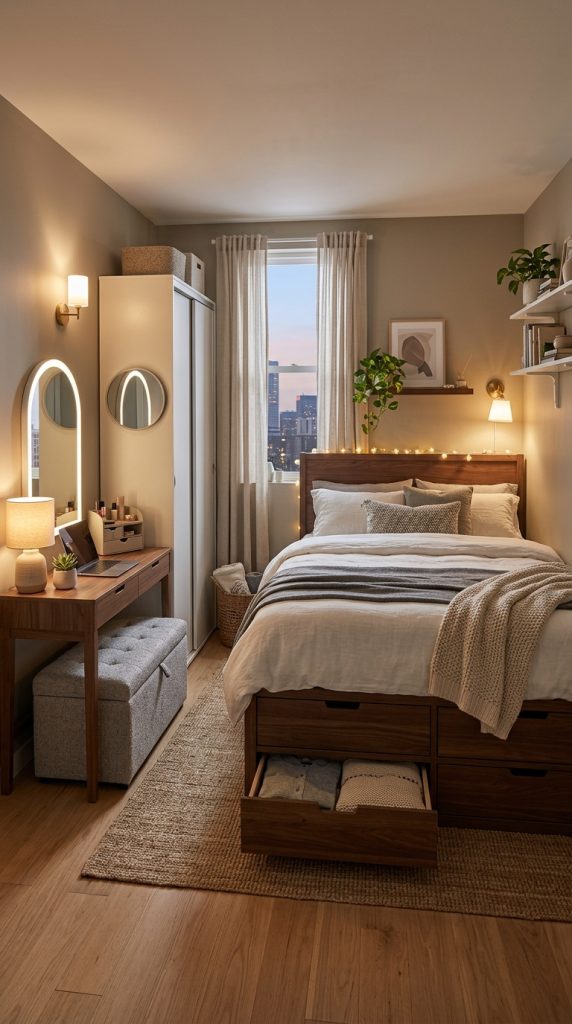
Storage beds are among the most popular options. Beds with built-in drawers underneath provide hidden storage for blankets, clothing, seasonal items, and extra bedding. Ottoman benches placed at the foot of the bed offer seating while also functioning as storage containers.
Nightstands with drawers, desks that double as vanities, and foldable furniture pieces allow homeowners to make the most of every square foot. Murphy beds and wall-mounted desks are especially useful in extremely small rooms or studio apartments.
Choosing furniture with raised legs can also help the room feel larger because visible floor space creates the illusion of openness. Slim furniture profiles prevent the room from becoming overcrowded.
How to Select Multifunctional Furniture
- Measure the room carefully.
- Prioritize essential furniture.
- Choose pieces with hidden storage.
- Select compact designs.
- Consider foldable or wall-mounted options.
- Look for furniture that serves two purposes.
Recommended Furniture Pieces
- Storage bed frames
- Ottoman benches
- Drawer nightstands
- Wall desks
- Foldable chairs
- Storage benches
- Lift-top tables
Materials and Decor Items
- Under-bed storage bins
- Storage baskets
- Drawer organizers
- Compact furniture
- Decorative boxes
- Multi-purpose seating
Pinterest Tip
Keep furniture proportional to the room size. Large oversized pieces can dominate a small bedroom, while streamlined multifunctional furniture creates a clean, organized, and highly aesthetic space.
4. Add Mirrors to Create the Illusion of More Space
Mirrors are one of the oldest and most effective decorating tricks for making a small bedroom feel larger. They reflect both natural and artificial light, visually double the room’s depth, and create an open, airy atmosphere. A well-placed mirror can instantly transform a compact bedroom without requiring any major renovation or expensive furniture.
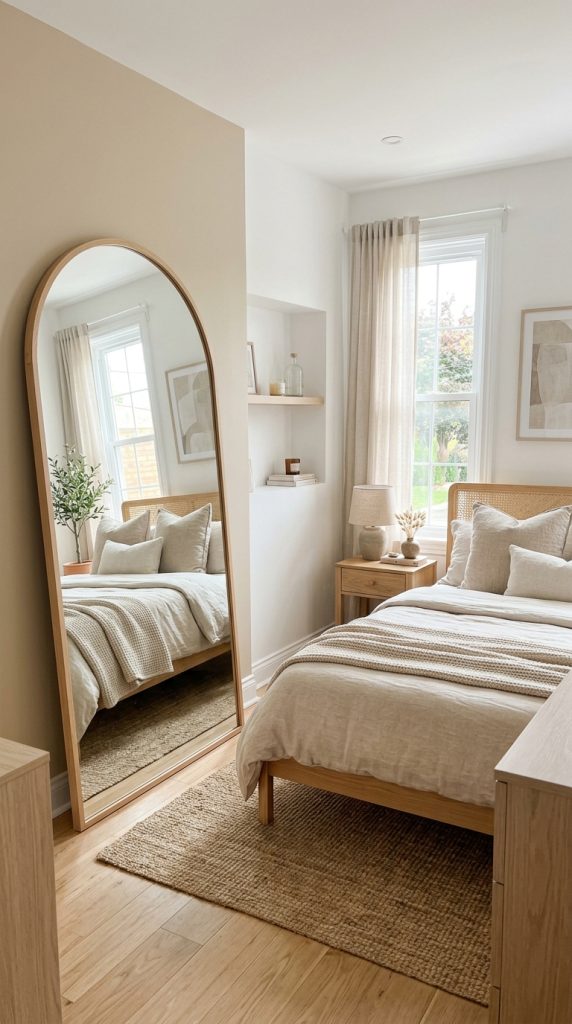
Large mirrors work especially well in small rooms because they reflect the entire space. Leaning mirrors against the wall, full-length mirrors behind doors, or decorative mirrors above dressers can all make the bedroom appear wider and brighter. Mirrors placed opposite windows maximize sunlight and distribute it throughout the room.
Besides their practical use, mirrors also serve as decorative elements. Modern black frames create a contemporary look, while wooden frames add warmth and texture. Round mirrors soften the room, while oversized rectangular mirrors provide a clean and elegant appearance.
When decorating with mirrors, avoid placing too many in one room. One large mirror often has a stronger impact than several small mirrors scattered throughout the space.
How to Use Mirrors Effectively
- Place a mirror opposite a window.
- Install a full-length mirror behind the door.
- Use a decorative mirror above a dresser.
- Lean a tall mirror against the wall.
- Choose frames that match your bedroom style.
- Keep the mirror area uncluttered.
Materials and Decor Items
- Full-length mirror
- Round decorative mirror
- Wall-mounted mirror
- Mirror frame
- Mirror hooks or brackets
- Small decorative accessories
Pinterest Tip
An oversized mirror with a thin frame creates a luxury bedroom appearance while making the room feel significantly larger. Positioning it near natural light can completely change the atmosphere of a small bedroom.
5. Utilize Under-Bed Storage for Better Organization
The area beneath the bed is often wasted space in small bedrooms. Under-bed storage provides an excellent opportunity to organize belongings without adding extra furniture to the room. By using this hidden storage area, homeowners can reduce clutter and maintain a cleaner, more spacious environment.
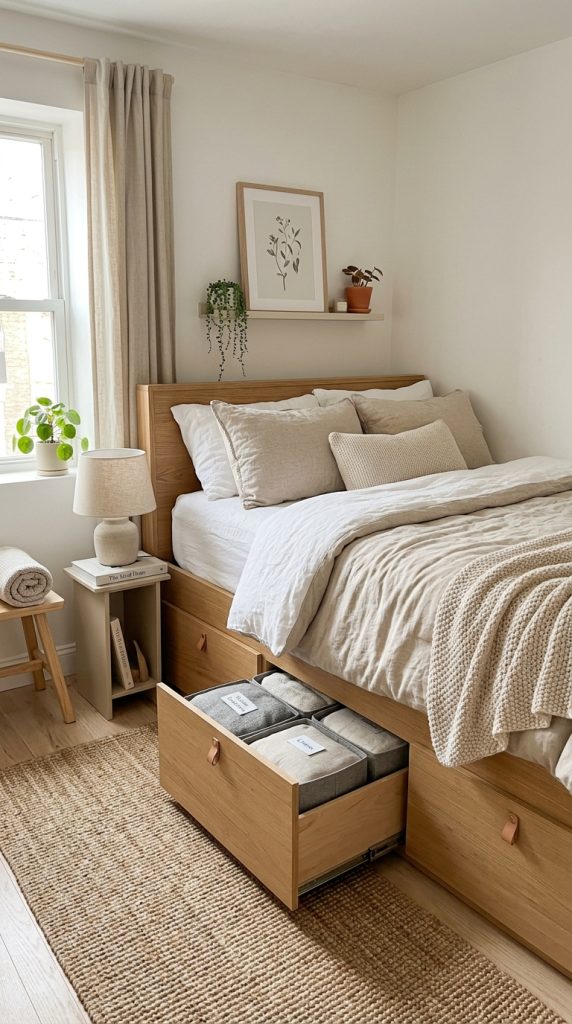
Storage bins, rolling containers, fabric baskets, and built-in bed drawers are popular solutions. Seasonal clothing, extra blankets, shoes, books, and spare bedding can all be stored neatly underneath the bed. This helps free up closets, shelves, and floor space.
Choosing beds with built-in drawers is one of the most efficient options for small rooms. These beds combine sleeping and storage functions while maintaining a clean appearance. For existing beds, low-profile containers with lids keep belongings protected and organized.
Organization is important when using under-bed storage. Label containers and group similar items together for easy access. Clear storage bins make it easier to identify contents without pulling everything out.
How to Organize Under-Bed Storage
- Measure the clearance under your bed.
- Choose suitable storage containers.
- Separate items by category.
- Label storage boxes.
- Store seasonal items toward the back.
- Keep frequently used items easily accessible.
Items to Store
- Extra bedding
- Winter clothing
- Shoes
- Towels
- Books
- Decorative pillows
- Seasonal decorations
Materials Needed
- Storage bins
- Rolling containers
- Drawer organizers
- Labels
- Fabric baskets
- Vacuum storage bags
Pinterest Tip
Matching storage boxes or baskets create a more organized and aesthetically pleasing appearance. Neutral-colored containers help maintain a calm and uncluttered bedroom design.
6. Create Vertical Storage Solutions to Maximize Wall Space
When floor space is limited, the walls become valuable storage areas. Vertical storage helps maximize every inch of the room while keeping the floor open and uncluttered. Using the height of the room effectively can dramatically improve both organization and visual appeal.
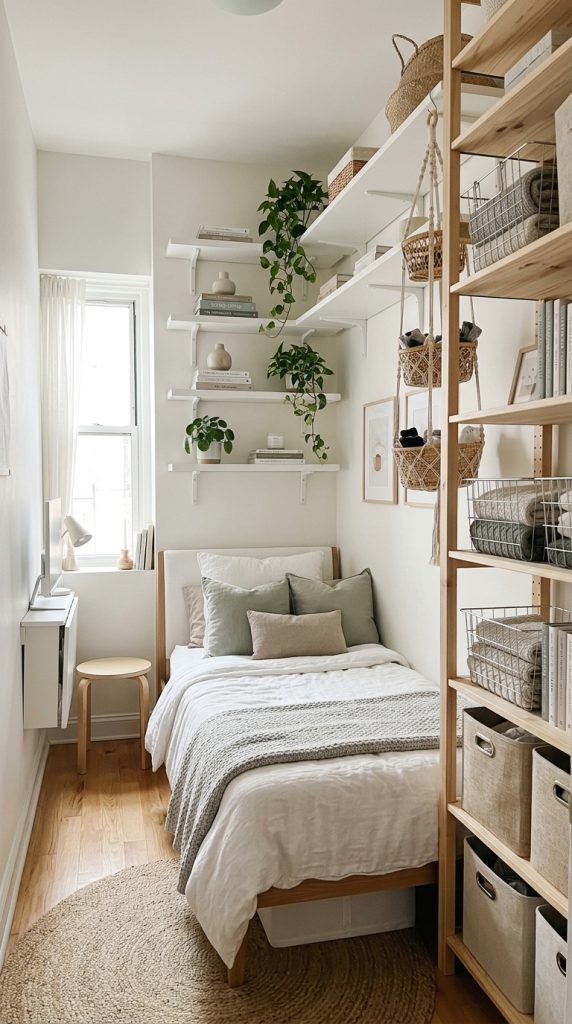
Tall bookshelves, wall-mounted cabinets, hanging organizers, pegboards, and ladder shelves allow homeowners to store and display items without sacrificing valuable floor space. Vertical storage is especially useful for books, accessories, plants, decorative pieces, and everyday essentials.
Above-door storage shelves can utilize often-overlooked areas, while hanging baskets provide extra storage without adding bulky furniture. Wall hooks can hold bags, hats, jewelry, and accessories while contributing to the room’s overall style.
The key to successful vertical storage is maintaining balance. Overloading walls with shelves and decorations can make the room feel crowded. Leave some empty wall space to maintain an open and airy atmosphere.
How to Create Vertical Storage
- Identify unused wall areas.
- Install shelves above furniture.
- Add hooks and organizers.
- Use tall narrow bookcases.
- Store lightweight items higher up.
- Keep frequently used items within reach.
Best Vertical Storage Ideas
- Floating shelves
- Ladder shelves
- Pegboards
- Wall hooks
- Hanging baskets
- Tall bookcases
- Over-door organizers
Materials and Supplies
- Wall anchors
- Floating shelves
- Decorative baskets
- Storage hooks
- Pegboards
- Mounting hardware
Pinterest Tip
Combining storage and decor creates a stylish look. Add plants, framed prints, candles, and books to shelves to make storage areas feel intentional and visually attractive rather than purely functional.
7. Layer Soft Textiles for a Cozy and Inviting Bedroom
Small bedrooms often feel more comfortable and intimate than large spaces, making them perfect for creating a cozy retreat. One of the easiest ways to achieve this atmosphere is by layering soft textiles throughout the room. Bedding, throw blankets, decorative pillows, curtains, and rugs can add warmth, texture, and personality without taking up valuable floor space.
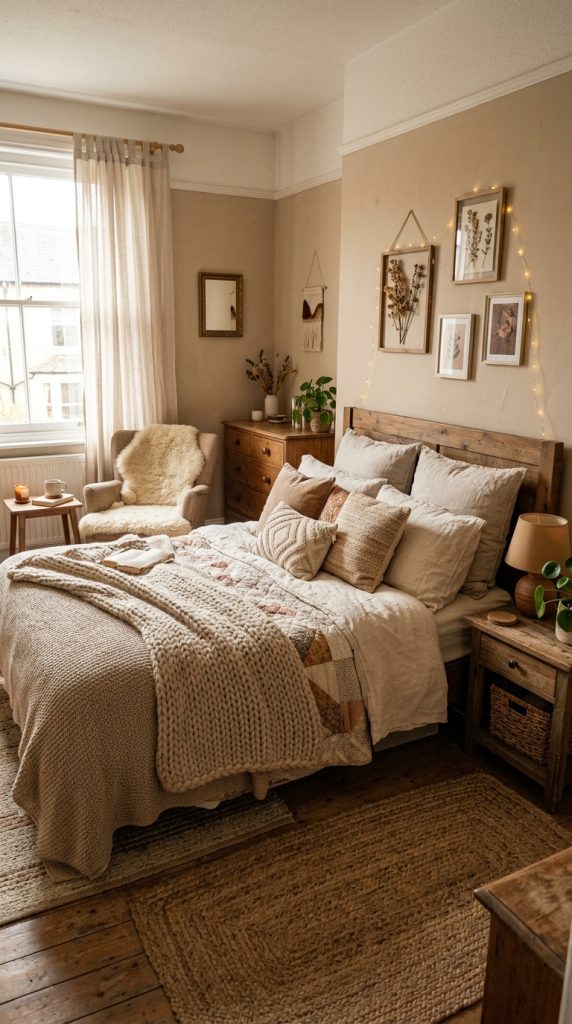
Layered textiles help make a bedroom feel complete and luxurious. Instead of relying on a single comforter or blanket, combine multiple layers such as sheets, quilts, knitted throws, and accent pillows. Different textures create visual interest while maintaining comfort.
Soft fabrics like cotton, linen, velvet, faux fur, and knitted materials work especially well in small bedrooms because they add depth without making the room feel crowded. Neutral colors create a calm appearance, while subtle patterns can add character.
Window treatments also play a major role. Floor-length curtains make ceilings appear taller and soften the overall design. Area rugs add comfort underfoot and help define the sleeping area, especially in apartments or rooms with hard flooring.
How to Layer Bedroom Textiles
- Start with high-quality bedding.
- Add a textured quilt or comforter.
- Layer decorative throw blankets.
- Use multiple pillow sizes.
- Install full-length curtains.
- Place a soft area rug under the bed.
Recommended Textiles
- Cotton sheets
- Linen bedding
- Knitted throw blankets
- Velvet cushions
- Faux fur accents
- Area rugs
- Blackout curtains
Materials and Decor Items
- Decorative pillows
- Bed throws
- Textured blankets
- Curtain panels
- Soft rugs
- Cushion covers
Pinterest Tip
Mixing different textures within the same color palette creates a luxurious Pinterest-inspired bedroom. Cream knit blankets, linen bedding, and soft pillows can instantly make a small room feel warm and elegant.
8. Use Wall Lighting Instead of Bulky Table Lamps
Lighting plays an important role in both the appearance and functionality of a small bedroom. Traditional bedside lamps often take up valuable space on nightstands, leaving less room for books, phones, or decorative accessories. Wall-mounted lighting provides an attractive solution while keeping surfaces clear and uncluttered.
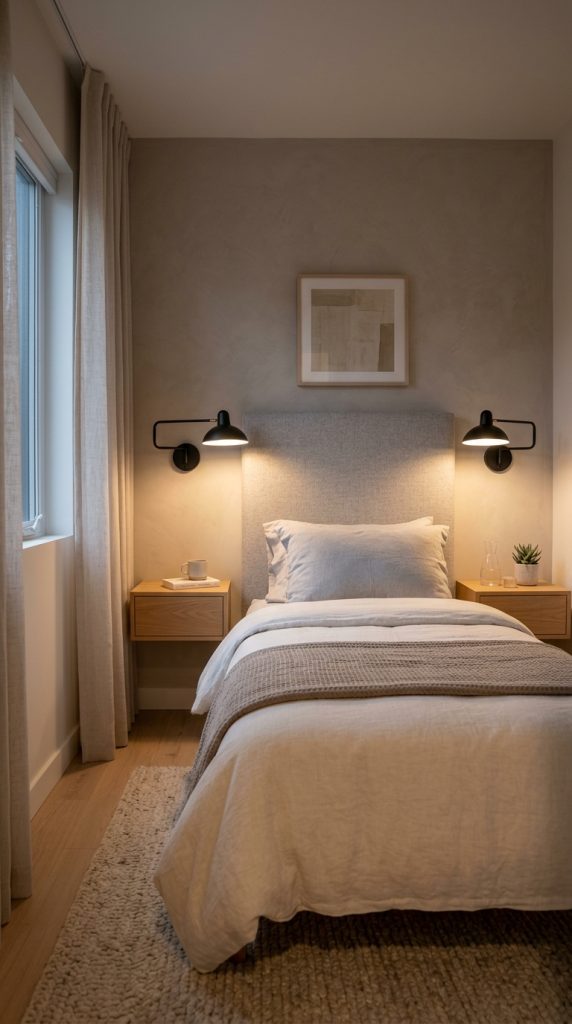
Wall sconces, swing-arm lamps, pendant lights, and mounted reading lights save space while adding style. These fixtures can be installed beside the bed, above a reading chair, or near a desk area to provide targeted lighting exactly where it is needed.
Layered lighting is especially important in small rooms. Combining ambient lighting, task lighting, and accent lighting creates a balanced and comfortable environment. Soft warm lighting also helps make the bedroom feel relaxing and inviting.
Wall-mounted lights are available in various styles, including modern, farmhouse, industrial, Scandinavian, and minimalist designs. Choosing fixtures that match the room’s decor creates a cohesive look while improving functionality.
How to Add Wall Lighting
- Determine where lighting is needed.
- Install sconces beside the bed.
- Choose warm LED bulbs.
- Add dimmers if possible.
- Position lights for reading comfort.
- Keep wiring hidden for a clean look.
Popular Wall Lighting Options
- Swing-arm sconces
- Modern wall lamps
- Hanging pendant lights
- Adjustable reading lights
- Plug-in sconces
- Minimalist fixtures
Materials Needed
- Wall light fixtures
- LED bulbs
- Wall anchors
- Electrical hardware
- Mounting brackets
- Extension cords if necessary
Pinterest Tip
Symmetrical wall sconces placed on both sides of the bed create a hotel-inspired look while freeing up valuable nightstand space in a small bedroom.
9. Decorate With Minimal Furniture to Avoid Clutter
One of the biggest mistakes people make in small bedrooms is adding too much furniture. Oversized dressers, extra chairs, large desks, and unnecessary decorative pieces can quickly make the room feel crowded and uncomfortable. A minimalist furniture approach helps create an open, airy, and organized space.
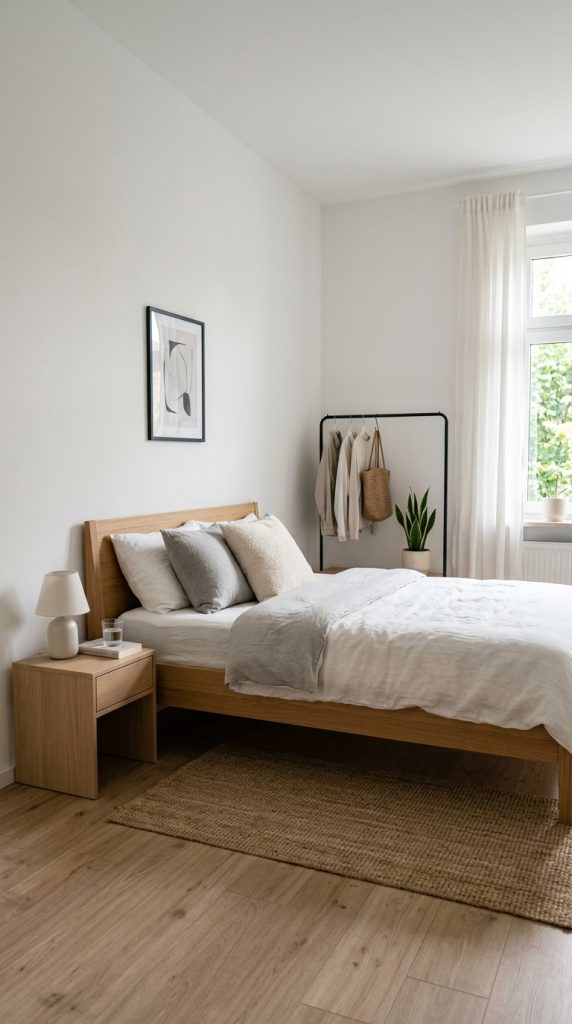
Minimal furniture does not mean sacrificing comfort. Instead, it focuses on selecting only the pieces that truly serve a purpose. A bed, a compact nightstand, a dresser, and perhaps a small desk may be all that is needed. Choosing fewer pieces allows for better movement and makes the room feel larger.
Furniture with clean lines and slim profiles works best in compact spaces. Pieces with exposed legs create visible floor space, which gives the illusion of a larger room. Multifunctional furniture can further reduce the number of items needed.
Keeping surfaces clear also contributes to a minimalist look. Limit decorative objects to a few carefully chosen pieces such as a vase, candle, or framed print. Open floor space creates a sense of calm and order.
How to Create a Minimal Bedroom
- Remove unnecessary furniture.
- Prioritize essential pieces.
- Choose slim furniture designs.
- Keep surfaces uncluttered.
- Use hidden storage solutions.
- Limit decorative accessories.
Essential Furniture Pieces
- Bed frame
- Compact nightstand
- Small dresser
- Storage bench
- Wall desk
- Open shelving
Materials and Decor Items
- Storage baskets
- Decorative trays
- Small plants
- Framed artwork
- Minimalist lamps
- Neutral bedding
Pinterest Tip
Leaving some empty space in a room is an important design strategy. Open areas around furniture help a small bedroom feel larger, cleaner, and more visually balanced while creating a calm and relaxing atmosphere.
10. Add Large Area Rugs to Define and Expand the Space
Many people assume that small bedrooms require small rugs, but interior designers often recommend the opposite. A large area rug can visually expand the room, create a sense of unity, and make the entire bedroom feel more spacious. Rugs help define the sleeping area while adding warmth, texture, and comfort underfoot.
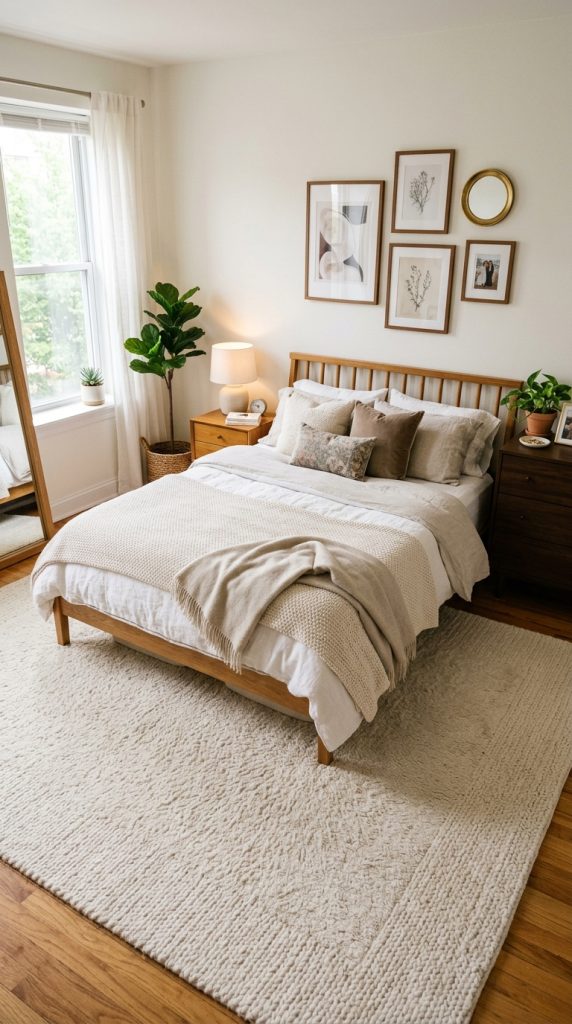
In a small bedroom, a rug that extends beyond the sides and foot of the bed creates the illusion of a larger floor area. Smaller rugs can sometimes make the room feel divided, while a larger rug connects the furniture and creates a more balanced layout.
Neutral-colored rugs work especially well because they keep the room feeling open and bright. Soft patterns, subtle textures, and low-pile materials add interest without overwhelming the space. Layering rugs is also becoming a popular Pinterest trend, allowing homeowners to combine comfort with style.
Area rugs can reduce noise, provide insulation, and make the bedroom feel more inviting. They work beautifully with hardwood floors, laminate, tile, or even carpeted spaces.
How to Use Rugs in a Small Bedroom
- Choose a rug larger than the bed.
- Position the rug partially under the bed.
- Leave equal rug exposure on both sides.
- Select light or neutral colors.
- Add texture through woven materials.
- Keep surrounding decor coordinated.
Best Rug Materials
- Wool rugs
- Cotton rugs
- Jute rugs
- Low-pile rugs
- Washable rugs
- Soft woven rugs
Materials and Decor Items
- Large area rug
- Rug pad
- Decorative throw pillows
- Neutral bedding
- Floor cushions
- Textured blankets
Pinterest Tip
A large cream or beige rug placed underneath the bed instantly creates a cozy, luxurious bedroom look while making the entire room feel bigger and more connected.
11. Bring Nature Indoors With Small Bedroom Plants
Plants can completely transform a small bedroom by adding freshness, color, and natural beauty. Even in compact spaces, a few carefully chosen plants can make the room feel more relaxing and inviting. Indoor plants soften hard surfaces, improve visual balance, and contribute to a calm atmosphere.
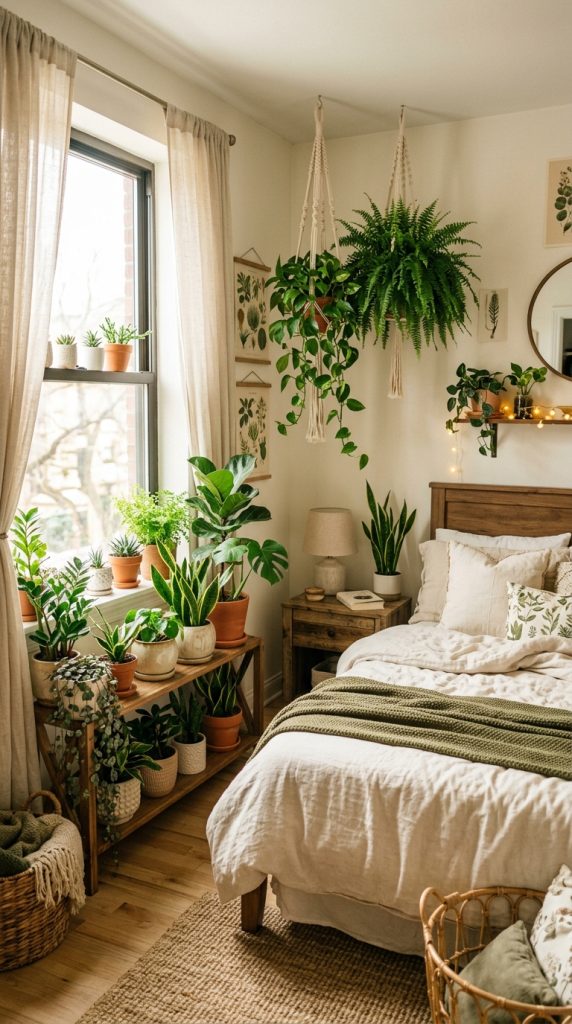
Small bedrooms do not require large plants to make an impact. Hanging plants, small potted plants, shelf greenery, and compact floor plants work wonderfully in limited spaces. Plants placed on floating shelves, nightstands, windowsills, or dressers introduce life without creating clutter.
Popular low-maintenance plants such as snake plants, pothos, peace lilies, and ZZ plants are excellent choices for bedrooms because they require minimal care and adapt well to indoor environments. Many people also enjoy adding eucalyptus branches or dried flowers for a softer decorative touch.
Using decorative pots and baskets can help plants become part of the room’s design. Natural materials like woven baskets, ceramic pots, and neutral containers complement modern bedroom styles.
How to Decorate With Plants
- Choose low-maintenance plants.
- Use wall shelves for greenery.
- Place plants near natural light.
- Avoid overcrowding the room.
- Use decorative containers.
- Mix different plant heights.
Best Bedroom Plants
- Snake plant
- Pothos
- ZZ plant
- Peace lily
- Spider plant
- Aloe vera
- Eucalyptus stems
Materials and Decor Items
- Ceramic pots
- Woven baskets
- Plant stands
- Hanging planters
- Watering can
- Decorative trays
Pinterest Tip
Grouping two or three small plants at different heights creates a stylish designer look. Greenery adds life and softness while maintaining a clean and modern aesthetic.
12. Create a Statement Wall to Add Personality
Small bedrooms often benefit from having one strong focal point. A statement wall can add personality, style, and visual interest without overwhelming the room. Instead of decorating every wall, focusing on a single accent wall helps create balance while making the space feel thoughtfully designed.
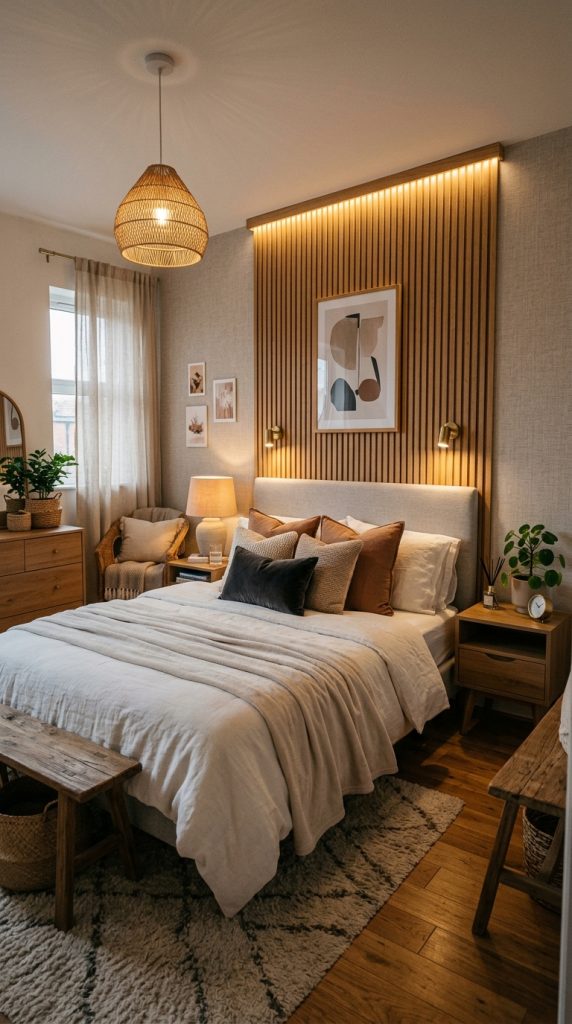
The wall behind the bed is usually the best location for a statement feature. Paint, wallpaper, wood panels, textured finishes, wall molding, or large artwork can transform this area into the centerpiece of the room. Soft colors and subtle patterns work especially well in small spaces because they add character without making the room feel busy.
Wallpaper has become extremely popular in modern bedroom design. Botanical prints, geometric patterns, soft textures, and neutral designs create beautiful focal points. Wood slats and decorative molding can also add depth and architectural interest.
Artwork arrangements are another affordable way to create a statement wall. Large framed prints, gallery walls, or oversized canvas pieces can personalize the bedroom while maintaining a clean design.
How to Create a Statement Wall
- Choose the wall behind the bed.
- Select a design style.
- Use paint, wallpaper, or panels.
- Keep other walls simple.
- Coordinate colors with bedding.
- Add subtle decorative accents.
Statement Wall Ideas
- Wallpaper designs
- Wood slat panels
- Painted accent walls
- Gallery walls
- Decorative molding
- Large artwork displays
Materials Needed
- Wallpaper
- Paint
- Wood trim
- Picture frames
- Wall adhesive
- Measuring tools
Pinterest Tip
A soft neutral accent wall with textured wallpaper creates depth and elegance while keeping the room feeling spacious. This simple design feature can make a small bedroom look professionally designed.
13. Maximize Natural Light to Make the Bedroom Feel Bright and Spacious
Natural light is one of the most valuable design elements in a small bedroom. A bright room automatically feels larger, cleaner, and more inviting, while dark spaces often appear smaller and more confined. Maximizing natural light can completely transform a compact bedroom without requiring expensive renovations or additional square footage.
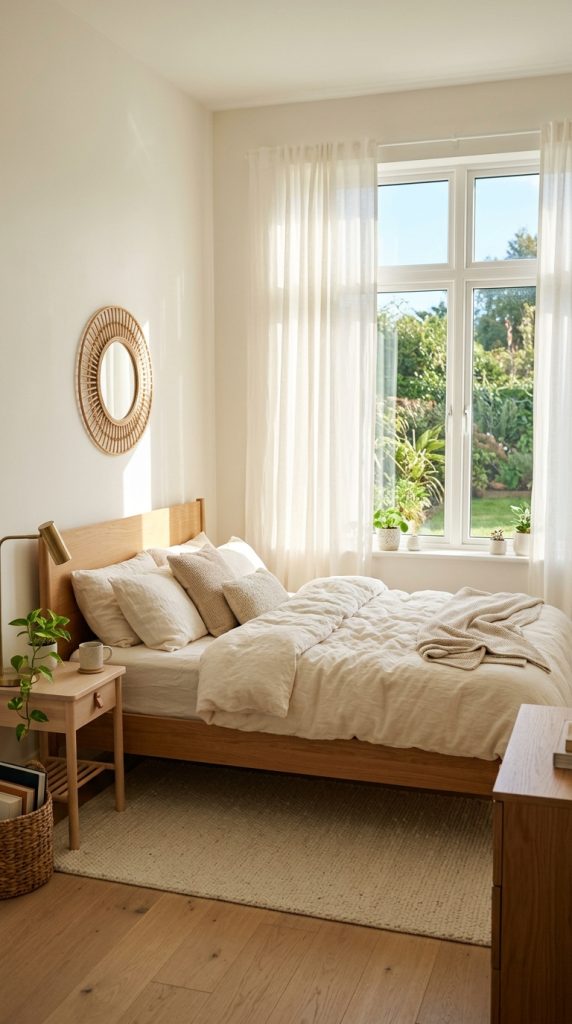
Sunlight reflects off walls, furniture, and decor, helping the entire room feel open and airy. Even small windows can have a significant impact when they are not blocked by heavy curtains, oversized furniture, or dark decorative elements. Creating a bright environment also improves the overall mood of the room and makes it feel more relaxing and comfortable.
One of the easiest ways to increase natural light is by choosing lightweight window treatments. Sheer curtains, linen drapes, or light-colored blinds allow sunlight to enter while still providing privacy. Hanging curtains closer to the ceiling can also make windows appear taller and ceilings feel higher.
Mirrors can further enhance natural light by reflecting sunlight throughout the room. Placing a mirror opposite a window helps distribute brightness into darker corners, making the entire space appear larger.
Furniture placement is equally important. Avoid positioning large wardrobes, bookshelves, or storage units directly in front of windows. Keeping window areas open allows sunlight to move freely throughout the room.
Color choices also affect how light behaves within the space. White walls, soft neutrals, and light wood finishes reflect more light than dark colors, helping the bedroom feel brighter and more spacious.
How to Maximize Natural Light
- Remove heavy or dark curtains.
- Use sheer or light-colored window treatments.
- Place mirrors opposite windows.
- Keep window areas free from large furniture.
- Choose light-colored walls and bedding.
- Keep windows clean to allow maximum sunlight.
- Use reflective decor elements such as glass and metallic accents.
Best Decor Choices for Bright Bedrooms
- Sheer white curtains
- Light wood furniture
- White or cream bedding
- Decorative mirrors
- Glass lamps
- Neutral rugs
- Minimal window treatments
Materials and Decor Items
- Linen curtains
- Mirror wall decor
- Light paint colors
- Reflective accessories
- Glass vases
- White bedding
- Light wood furniture
Pinterest Tip
Floor-to-ceiling sheer curtains paired with a large mirror create one of the most popular Pinterest bedroom designs. This combination allows natural light to fill the room while making a small bedroom feel significantly larger, brighter, and more luxurious.
A naturally bright bedroom never goes out of style. By maximizing sunlight, reducing visual barriers, and choosing light-reflecting materials, even the smallest bedroom can feel open, peaceful, and beautifully designed.