12 Minecraft Architecture Styles Ideas
Minecraft is much more than a survival game. Over the years, it has become one of the world’s most creative building platforms, allowing players to design everything from simple starter houses to massive cities, castles, and fantasy worlds. One of the most exciting aspects of building in Minecraft is architecture. Just like real-world buildings, Minecraft structures can follow different architectural styles, each with its own materials, shapes, colors, and design principles.
Choosing an architectural style before starting a build helps create a more cohesive and visually appealing structure. Rather than placing random blocks together, builders can follow a specific design theme that gives their world personality and character. Whether you enjoy rustic villages, futuristic cities, medieval castles, or modern mansions, Minecraft offers unlimited opportunities to explore different architectural ideas.

Many beginner builders struggle because they focus only on the size of a build rather than its style. A large structure does not always look impressive if the design lacks consistency. On the other hand, even a small house can look extraordinary when it follows a clear architectural theme. Selecting the right style helps determine block palettes, roof shapes, window designs, landscaping, and interior decoration.
Also
Minecraft architecture has evolved significantly as new blocks, textures, and building mechanics have been introduced. Early builds often relied on simple wood and cobblestone combinations, but today’s players have access to hundreds of decorative blocks, allowing for incredible detail and realism. The addition of concrete, copper, deepslate, terracotta, bamboo, and various wood types has expanded architectural possibilities even further.
One of the reasons architectural styles are so popular is that they provide inspiration and direction. Instead of staring at an empty plot of land and wondering what to build, players can choose a specific theme and begin gathering materials accordingly. This makes the building process more enjoyable and less overwhelming.
Different biomes also influence architectural choices. A snowy mountain village may benefit from Nordic architecture, while desert biomes naturally suit sandstone palaces or Mediterranean villas. Jungle environments can inspire tropical houses, while plains biomes often work well with modern homes or farmhouse designs. Matching the architecture to the surrounding environment helps create immersive and realistic worlds.
Modern architecture remains one of the most popular Minecraft styles because of its clean lines, large windows, and minimalist designs. However, many players also enjoy medieval architecture, which uses stone, wood, towers, and detailed roofs to create fantasy-inspired buildings. Rustic and cottage-style homes provide cozy aesthetics, while Japanese and Asian-inspired builds emphasize balance, nature, and elegant details.
Fantasy architecture allows players to break real-world rules completely. Floating islands, magical towers, enchanted forests, and giant tree houses demonstrate how Minecraft encourages creativity beyond traditional design principles. Meanwhile, industrial and steampunk styles offer darker, more mechanical aesthetics filled with metal, pipes, and complex structures.
Architectural styles also influence interiors. Furniture choices, lighting, room layouts, and decorative elements should complement the exterior design. A medieval castle may include wooden beams and lanterns, while a modern house might feature open floor plans, minimalist furniture, and large glass walls.
For players interested in multiplayer servers or large community projects, understanding architectural styles becomes even more important. Consistent building themes help entire towns, cities, and kingdoms feel connected. Many successful Minecraft communities establish architectural guidelines to maintain visual harmony throughout their worlds.
Learning architectural styles also helps players improve their building skills. Studying roof designs, color palettes, symmetry, depth, and block combinations develops creativity and confidence. Even experienced builders often experiment with multiple styles to discover new techniques and inspiration.
Another advantage of architectural styles is their adaptability. A single style can be used for houses, farms, shops, castles, bridges, and entire cities. Builders can expand their worlds while maintaining a consistent visual identity. This creates impressive landscapes that feel professionally designed and carefully planned.
The following Minecraft architecture ideas showcase a variety of styles suitable for beginners and experienced builders alike. Each style offers unique materials, building techniques, and aesthetic principles that can transform ordinary structures into extraordinary creations. Whether you enjoy survival mode, creative mode, or multiplayer building projects, these architectural styles will provide inspiration for your next Minecraft world.
From elegant modern homes to majestic medieval castles and cozy rustic cottages, Minecraft architecture allows every player to express their creativity and develop their own building identity. By understanding different styles and their characteristics, you can create stunning builds that stand out while making your world feel more immersive, realistic, and visually unforgettable.
1. Modern Architecture Style
Modern architecture is one of the most popular Minecraft building styles because of its clean appearance, simple shapes, and luxurious designs. This style focuses on minimalism, open spaces, large windows, and geometric structures. Modern houses often look expensive and elegant while remaining relatively easy to build, making them perfect for both beginners and experienced players.

In Minecraft, modern architecture usually uses smooth blocks such as white concrete, quartz, smooth stone, glass panes, and light wood materials. Large windows are one of the most important features because they allow natural light to enter the structure and create an open atmosphere. Flat roofs, straight lines, and multiple levels also help define the modern style.
Modern builds often include open floor plans instead of many small rooms. Living rooms, kitchens, and dining areas may share the same space, creating a realistic and luxurious appearance. Outdoor features such as swimming pools, patios, gardens, and balconies further enhance the design.
Many players enjoy modern architecture because it looks impressive without requiring extremely complicated building techniques. By combining simple shapes and clean materials, players can create stunning homes that stand out in almost any biome.
Key Features of Modern Architecture
- Flat roofs
- Large glass walls
- Minimal decorations
- Open interior layouts
- White and neutral color palettes
- Geometric shapes
- Outdoor living spaces
Best Blocks to Use
- White concrete
- Quartz blocks
- Smooth stone
- Glass panes
- Light wood planks
- Stone slabs
- Sea lanterns
How to Build a Modern House
- Start with a rectangular foundation.
- Build multiple box-shaped sections.
- Add large glass windows.
- Create flat roofs using slabs.
- Design open interior spaces.
- Add landscaping and outdoor features.
- Use hidden lighting for a clean appearance.
Pinterest Tip
Combining white concrete, black accents, and large glass windows creates a luxury Minecraft mansion aesthetic that performs extremely well on Pinterest and social media.
2. Medieval Architecture Style
Medieval architecture is one of the most iconic and beloved building styles in Minecraft. Inspired by castles, villages, fortresses, and ancient European towns, this style emphasizes stone structures, wooden details, towers, and steep roofs. Medieval builds create a fantasy atmosphere that fits perfectly within Minecraft’s natural landscapes.

This architectural style works especially well in survival mode because many of its building materials are easy to obtain. Stone bricks, cobblestone, oak wood, spruce wood, and lanterns are commonly used throughout medieval designs.
Roofs play a major role in medieval architecture. Tall, sloped roofs made from stairs and slabs add depth and realism. Towers, chimneys, arches, and support beams help create detailed structures that feel authentic.
Medieval villages often include blacksmith shops, churches, taverns, stables, farms, and defensive walls. Larger projects may include massive castles with courtyards, throne rooms, and watchtowers.
Landscaping is equally important. Pathways, bridges, rivers, farms, and custom trees help complete the medieval atmosphere.
Key Features of Medieval Architecture
- Stone foundations
- Wooden support beams
- Tall roofs
- Towers and walls
- Arched windows
- Lantern lighting
- Detailed exteriors
Best Blocks to Use
- Stone bricks
- Cobblestone
- Spruce wood
- Oak logs
- Lanterns
- Mossy stone
- Deepslate blocks
How to Build Medieval Structures
- Create a stone foundation.
- Build wooden support frames.
- Add detailed roof designs.
- Install small windows.
- Add towers or chimneys.
- Decorate with lanterns.
- Create pathways and landscaping.
Pinterest Tip
Adding vines, moss, and custom landscaping makes medieval builds feel older and more realistic, creating highly shareable fantasy-inspired Minecraft content.
3. Japanese Architecture Style
Japanese architecture brings elegance, balance, and natural beauty into Minecraft builds. Inspired by traditional Japanese houses, temples, shrines, and gardens, this style focuses on harmony, simplicity, and connection with nature.

Japanese builds often feature curved roofs, wooden structures, sliding doors, open spaces, and carefully designed gardens. The architecture emphasizes symmetry and peaceful surroundings, making it ideal for players who enjoy calm and aesthetic builds.
Dark wood blocks such as spruce and dark oak are commonly combined with lighter materials like stripped birch or white concrete. Roofs are one of the most recognizable features, often extending outward with layered curves created using stairs and slabs.
Water features play a major role in Japanese design. Small ponds, bridges, bamboo gardens, waterfalls, and cherry blossom trees help create a peaceful atmosphere. Interior spaces remain simple and uncluttered, often featuring low furniture and open layouts.
Japanese architecture works especially well near mountains, forests, rivers, or cherry grove biomes. Entire villages can be built around temples, pagodas, and traditional homes.
Key Features of Japanese Architecture
- Curved layered roofs
- Wooden structures
- Open layouts
- Natural gardens
- Water features
- Symmetrical designs
- Minimal interiors
Best Blocks to Use
- Spruce wood
- Dark oak wood
- Stripped birch logs
- Stone bricks
- Bamboo blocks
- Lanterns
- Cherry wood
How to Build Japanese Structures
- Build a wooden foundation.
- Create large curved roofs.
- Add wooden support pillars.
- Use open windows and entrances.
- Design peaceful gardens.
- Include water features.
- Decorate with lanterns and bamboo.
Pinterest Tip
Cherry blossom trees, lantern paths, and reflective ponds create stunning Japanese-inspired Minecraft scenes that are highly popular in aesthetic Minecraft communities.
4. Rustic Architecture Style
Rustic architecture is one of the coziest and most beginner-friendly Minecraft building styles. Inspired by countryside cabins, mountain lodges, and traditional farmhouses, this style focuses on natural materials, warm colors, and simple yet charming designs. Rustic builds blend beautifully with forests, mountains, plains, and rivers, making them ideal for survival worlds.

The main goal of rustic architecture is to make structures feel connected to nature. Wood, stone, and earthy materials dominate the design. Instead of perfectly smooth walls and straight lines, rustic builds often use texture variation, exposed beams, and layered roofs to create depth and character.
Spruce wood is one of the most popular materials for rustic builds because of its warm appearance. Stone bricks, cobblestone, stripped logs, and mossy blocks help create an aged and weathered look. Large chimneys, wooden fences, flower boxes, and lanterns add additional charm.
Rustic houses often feature cozy interiors with fireplaces, wooden furniture, storage areas, and warm lighting. Outside, gardens, farms, pathways, and small animal pens complete the countryside atmosphere.
This style works particularly well for players who enjoy survival gameplay because most building materials are easy to gather early in the game.
Key Features of Rustic Architecture
- Natural building materials
- Warm color palettes
- Large stone chimneys
- Wooden beams and supports
- Sloped roofs
- Cozy interiors
- Nature-inspired landscaping
Best Blocks to Use
- Spruce planks
- Oak logs
- Cobblestone
- Stone bricks
- Mossy stone
- Lanterns
- Barrels and fences
How to Build Rustic Houses
- Build a stone foundation.
- Add wooden walls and support beams.
- Construct a steep roof using stairs.
- Add a large chimney.
- Decorate with flower boxes and lanterns.
- Build gardens and pathways.
- Create a cozy interior.
Pinterest Tip
Adding custom trees, campfires, and flower gardens around a rustic house creates a warm cottage atmosphere that performs extremely well in Minecraft inspiration boards.
5. Fantasy Architecture Style
Fantasy architecture allows Minecraft players to build without limitations. Unlike realistic styles, fantasy builds embrace imagination and creativity. Floating islands, magical towers, giant tree houses, enchanted castles, and mystical villages all fall within this category.
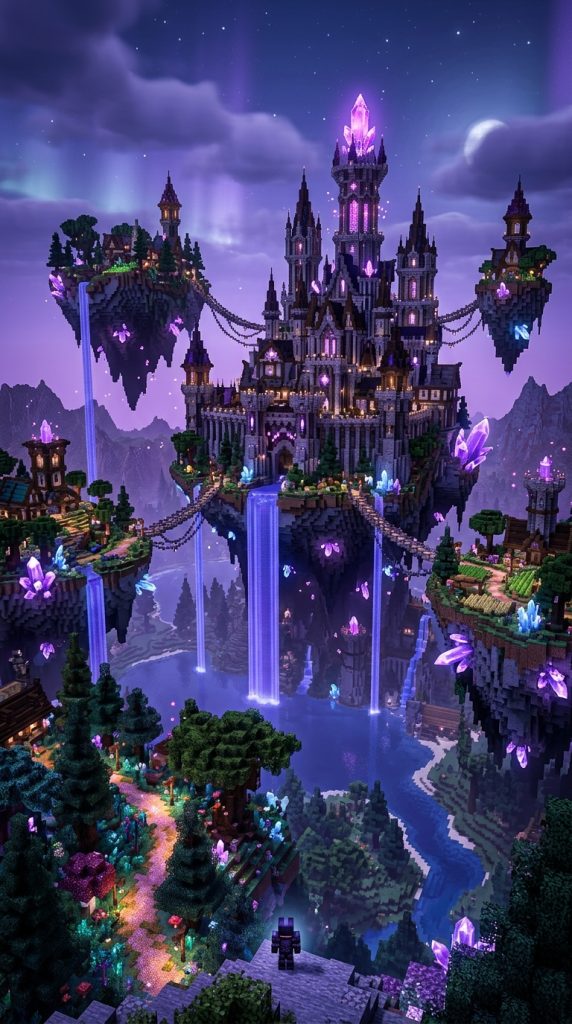
Fantasy architecture often combines elements from medieval, magical, and fictional worlds. Players can experiment with unusual shapes, oversized structures, glowing blocks, and impossible designs that could never exist in reality.
Large towers, curved bridges, magical portals, waterfalls, floating structures, and custom landscapes are common features. Materials vary depending on the theme. Stone bricks, deepslate, amethyst, prismarine, glowstone, and colored blocks can all be incorporated.
Lighting plays a major role in fantasy builds. Hidden light sources, glowing crystals, lanterns, and magical effects create mysterious atmospheres. Terrain manipulation is also important. Mountains, cliffs, waterfalls, and floating land masses help create immersive fantasy environments.
Fantasy architecture is perfect for creative mode players, roleplay servers, and adventure maps. The style encourages experimentation and allows builders to create truly unique worlds.
Key Features of Fantasy Architecture
- Magical environments
- Unusual building shapes
- Floating structures
- Towers and castles
- Glowing details
- Custom landscapes
- Imaginative designs
Best Blocks to Use
- Deepslate
- Amethyst blocks
- Prismarine
- Glowstone
- Stone bricks
- Purpur blocks
- Colored glass
How to Build Fantasy Structures
- Choose a magical theme.
- Create dramatic terrain.
- Build towers and large structures.
- Add glowing decorations.
- Include waterfalls or floating islands.
- Use unique block combinations.
- Design immersive surroundings.
Pinterest Tip
Combining glowing purple crystals, floating islands, and magical towers creates stunning fantasy Minecraft builds that attract high engagement on Pinterest and gaming communities.
6. Industrial Architecture Style
Industrial architecture brings factories, warehouses, mechanical buildings, and urban structures into Minecraft. This style is inspired by old factories, steam-powered machinery, and large industrial complexes. It creates a realistic and slightly rugged appearance that stands apart from traditional house designs.

Industrial builds often use darker materials and metallic-looking blocks. Deepslate, stone bricks, iron blocks, copper, and blackstone are commonly used to create factories, workshops, power stations, and industrial cities.
Large windows, exposed pipes, chimneys, smokestacks, and mechanical details define the style. Copper blocks are especially useful because their weathered appearance adds realism. Chains, iron bars, and scaffolding help create the feeling of heavy machinery and construction.
Interior spaces often contain storage rooms, workshops, furnaces, redstone machines, and industrial equipment. Redstone contraptions fit naturally within industrial designs, making them ideal for technical Minecraft players.
Industrial architecture works well near mountains, mining areas, or large cities. Combining this style with railways, warehouses, and factories can create impressive urban environments.
Key Features of Industrial Architecture
- Dark color palettes
- Large factory buildings
- Metal details
- Chimneys and smokestacks
- Exposed pipes
- Mechanical decorations
- Functional interiors
Best Blocks to Use
- Deepslate bricks
- Copper blocks
- Iron blocks
- Blackstone
- Stone bricks
- Chains
- Iron bars
How to Build Industrial Structures
- Build large rectangular buildings.
- Use dark blocks for walls.
- Add smokestacks and chimneys.
- Install large windows.
- Create pipe systems.
- Add machinery details.
- Design functional interiors.
Pinterest Tip
Weathered copper, exposed pipes, and factory lighting create dramatic industrial Minecraft builds that stand out from traditional house designs and offer a unique aesthetic for creative worlds.
7. Victorian Architecture Style
Victorian architecture brings elegance, sophistication, and historical charm to Minecraft builds. Inspired by 19th-century homes and mansions, this style focuses on decorative details, steep roofs, multiple stories, and highly ornamented exteriors. Victorian houses often look luxurious and impressive, making them ideal for players who enjoy detailed building projects.

One of the defining characteristics of Victorian architecture is complexity. Unlike minimalist styles, Victorian homes feature bay windows, balconies, decorative trims, towers, and intricate rooflines. Multiple materials are often combined to create visual depth and contrast.
Dark wood, stone bricks, and decorative blocks work particularly well for this style. Large windows, elegant entrances, and detailed porches give Victorian homes their signature appearance. Interiors often include libraries, dining rooms, fireplaces, and grand staircases.
Landscaping also plays an important role. Iron fences, gardens, pathways, fountains, and decorative trees help complete the luxurious atmosphere surrounding the home.
Victorian architecture requires patience because of the many decorative elements, but the finished results can become some of the most beautiful structures in a Minecraft world.
Key Features of Victorian Architecture
- Multiple stories
- Decorative exteriors
- Steep roofs
- Bay windows
- Towers and balconies
- Elegant entrances
- Detailed interiors
Best Blocks to Use
- Dark oak wood
- Stone bricks
- Deepslate
- Polished andesite
- Glass panes
- Lanterns
- Iron bars
How to Build Victorian Houses
- Create a large foundation.
- Build multiple floors.
- Add decorative roof designs.
- Construct balconies and towers.
- Install large windows.
- Create detailed interiors.
- Design elegant landscaping.
Pinterest Tip
Combining dark wood, warm lighting, and landscaped gardens creates a luxurious Victorian mansion aesthetic that looks stunning in screenshots and Pinterest collections.
8. Mediterranean Architecture Style
Mediterranean architecture brings the warmth and beauty of coastal Europe into Minecraft. Inspired by homes found in Spain, Italy, and Greece, this style emphasizes bright colors, natural materials, outdoor living spaces, and elegant simplicity.

Mediterranean houses often feature white walls, terracotta roofs, arched windows, and open courtyards. The architecture is designed to feel bright, relaxed, and connected to the outdoors. Large balconies, patios, and gardens are essential elements.
Sandstone, smooth quartz, terracotta, and light-colored blocks work exceptionally well for this style. Orange and red terracotta blocks can create realistic roof designs, while vines and plants add life and color.
Water features such as fountains, pools, and gardens help create the peaceful atmosphere associated with Mediterranean homes. Interior spaces often include open layouts, wooden furniture, and plenty of natural lighting.
This style works especially well in desert, beach, or plains biomes where bright colors and open landscapes complement the architecture.
Key Features of Mediterranean Architecture
- White exterior walls
- Terracotta roofs
- Arched windows
- Courtyards and patios
- Outdoor living spaces
- Bright interiors
- Decorative gardens
Best Blocks to Use
- Smooth quartz
- Sandstone
- Terracotta
- White concrete
- Oak wood
- Stone bricks
- Lanterns
How to Build Mediterranean Homes
- Build white exterior walls.
- Create sloped terracotta roofs.
- Add arches and balconies.
- Design outdoor patios.
- Include water features.
- Decorate with plants and vines.
- Keep interiors bright and open.
Pinterest Tip
Adding fountains, olive trees, and colorful flower gardens creates a vacation-inspired Mediterranean build that feels warm, relaxing, and highly shareable.
9. Nordic Architecture Style
Nordic architecture combines simplicity, functionality, and natural beauty. Inspired by Scandinavian homes and mountain cabins, this style focuses on clean lines, cozy interiors, and practical designs that blend with snowy or forest environments.

Nordic builds typically use light-colored woods, stone, and neutral palettes. Large windows are important because they allow natural light to enter the home during long winter seasons. The overall design feels warm, peaceful, and welcoming.
Steep roofs are common because they reflect real-world Scandinavian buildings designed to handle snow. Fireplaces, wooden beams, and soft lighting create cozy interiors that emphasize comfort.
Nordic architecture works exceptionally well in snowy mountains, taiga forests, and cold biomes. The contrast between warm wooden houses and snowy landscapes creates beautiful scenery.
Interior spaces often remain minimal and functional. Furniture is simple, colors are neutral, and decorations are carefully chosen. Plants, lanterns, and natural materials help maintain the connection with nature.
Key Features of Nordic Architecture
- Light wood materials
- Steep roofs
- Large windows
- Minimal decoration
- Cozy interiors
- Natural colors
- Functional layouts
Best Blocks to Use
- Spruce wood
- Birch wood
- Stone bricks
- White concrete
- Glass panes
- Lanterns
- Campfires
How to Build Nordic Houses
- Create a stone foundation.
- Build wooden walls.
- Add a steep roof.
- Install large windows.
- Build a fireplace.
- Decorate with warm lighting.
- Landscape with trees and snow.
Pinterest Tip
Snow-covered roofs, glowing lanterns, and cozy wooden cabins create some of the most aesthetic Minecraft screenshots and are extremely popular within cottagecore and Scandinavian-inspired builds.
10. Steampunk Architecture Style
Steampunk architecture combines Victorian design with industrial machinery to create one of the most unique and imaginative building styles in Minecraft. Inspired by steam-powered technology, airships, gears, pipes, and mechanical inventions, this style creates massive structures filled with intricate details and industrial aesthetics.

Steampunk builds often feature large factories, clock towers, flying machines, rail stations, and mechanical cities. Copper blocks, deepslate, stone bricks, iron bars, and dark wood are commonly used to create aged metal and industrial textures. Weathered copper is especially useful because it gives structures an old mechanical appearance.
One of the most recognizable features of steampunk architecture is the extensive use of pipes, gears, chimneys, and machinery. Builders often add smokestacks, rotating mechanisms, suspended bridges, and decorative engines to make structures feel functional and alive.
Lighting also plays an important role. Lanterns, redstone lamps, and hidden light sources create a warm industrial atmosphere. Interiors often include workshops, engine rooms, libraries, laboratories, and mechanical control centers.
Steampunk architecture works particularly well in mountainous areas, industrial cities, or fantasy worlds where players can combine technology and imagination.
Key Features of Steampunk Architecture
- Mechanical details
- Copper and metal textures
- Pipes and gears
- Towers and smokestacks
- Victorian influences
- Airships and machinery
- Warm industrial lighting
Best Blocks to Use
- Copper blocks
- Deepslate bricks
- Stone bricks
- Dark oak wood
- Iron bars
- Chains
- Redstone lamps
How to Build Steampunk Structures
- Create large industrial buildings.
- Add towers and chimneys.
- Install decorative pipes.
- Use weathered copper details.
- Add gears and machinery.
- Include warm lighting.
- Create mechanical interiors.
Pinterest Tip
Large copper airships, steam towers, and industrial machinery create dramatic Minecraft scenes that attract attention and perform extremely well on social media and Pinterest boards.
11. Cottagecore Architecture Style
Cottagecore architecture has become one of the most popular Minecraft building trends because of its warm, peaceful, and nature-inspired aesthetic. This style focuses on cozy cottages, flower gardens, natural materials, and simple countryside living.

Cottagecore builds often feature small homes surrounded by flowers, trees, farms, and ponds. The architecture emphasizes comfort and beauty rather than size. Wooden walls, stone foundations, and sloped roofs create charming structures that feel inviting and relaxing.
Spruce wood, oak wood, cobblestone, mossy stone, and flower decorations are commonly used throughout cottagecore designs. Gardens filled with flowers, vines, lanterns, and pathways help create a magical atmosphere.
Interiors are usually warm and functional. Fireplaces, bookshelves, storage areas, and cozy bedrooms make these homes perfect for survival worlds. Animal pens, vegetable gardens, and small farms often surround the house.
This architectural style works beautifully in forests, plains, flower fields, and riverside locations. Cottagecore builds blend naturally into the environment and create peaceful landscapes.
Key Features of Cottagecore Architecture
- Small cozy houses
- Flower gardens
- Natural materials
- Warm lighting
- Rustic details
- Farm elements
- Nature-inspired landscaping
Best Blocks to Use
- Spruce planks
- Oak logs
- Cobblestone
- Moss blocks
- Lanterns
- Flower pots
- Fences
How to Build Cottagecore Houses
- Build a small stone foundation.
- Add wooden walls and beams.
- Create a steep roof.
- Decorate with flowers and vines.
- Build gardens and pathways.
- Add warm lighting.
- Create cozy interiors.
Pinterest Tip
Flower-covered cottages surrounded by gardens and lantern paths are among the most saved Minecraft aesthetic builds on Pinterest because of their soft and relaxing appearance.
12. Futuristic Architecture Style
Futuristic architecture represents advanced technology, innovation, and modern design. This style allows Minecraft players to imagine cities and structures from the future using sleek shapes, glowing lights, and highly advanced designs.

Futuristic builds often feature curved structures, floating sections, glass walls, elevated platforms, and glowing materials. White concrete, quartz, glass, sea lanterns, and blue lighting create clean and high-tech environments.
Many futuristic cities include transportation systems, elevated walkways, towers, research facilities, and advanced residential buildings. Symmetry and smooth curves help create a futuristic appearance.
Lighting is one of the most important elements. Sea lanterns, end rods, froglights, and hidden illumination make structures glow at night. Interiors often contain open spaces, advanced laboratories, control rooms, and technology centers.
Futuristic architecture works especially well in creative mode because players can experiment with unusual shapes and large-scale projects. Entire sci-fi cities, space stations, and futuristic bases can be created using this style.
Key Features of Futuristic Architecture
- Sleek geometric shapes
- Large glass surfaces
- Glowing lighting
- Floating structures
- Advanced technology designs
- Minimal color palettes
- Smooth modern finishes
Best Blocks to Use
- White concrete
- Quartz blocks
- Glass panes
- Sea lanterns
- End rods
- Blue stained glass
- Smooth stone
How to Build Futuristic Structures
- Design smooth geometric shapes.
- Build elevated platforms.
- Add large glass sections.
- Install glowing lighting.
- Create clean interiors.
- Add futuristic details.
- Connect buildings with pathways.
Pinterest Tip
Glowing futuristic cities with blue lighting, floating structures, and sleek white buildings create highly eye-catching Minecraft images that are extremely popular among modern and sci-fi builders.