13 Aesthetic Minecraft Boat Dock Ideas to Upgrade Your Survival Waterfront
Waterfront architecture instantly transforms raw shorelines into functional, breathtaking survival hubs. Furthermore, building dedicated docks prevents annoying boat breakages while organizing essential maritime gear. Sturdy wooden pilings, hanging lanterns, and weathered stone give docks authentic harbor realism. Survival players spend significant time exploring oceans for rare shipwrecks and ocean monuments. Therefore, constructing a welcoming harbor base makes returning home deeply satisfying and visually rewarding.
Elevating Vanilla Shorelines Beyond Flat Dirt Banks
Natural Minecraft shorelines generate with bland, uneven sand patches and awkward gravel mounds. In contrast, thoughtful terraforming creates structured quays, sheltered coves, and deep maritime slips. Mixing textured stone varieties with stripped logs establishes convincing structural weight against water currents. Additionally, detailing walkways with crates, barrels, and fishing nets tells compelling environmental stories. Custom harbors ground your coastal empire with undeniable survival utility and stunning aesthetic balance.
Designing Functional Boat Slips and Launch Bays
Maritime utility requires effortless boat entry and exit mechanics across all dock designs. Tight single-block water channels often snag moving watercraft, frustrating players during hurried escapes. Instead, wide slips cushioned by floating trapdoors or slime blocks prevent vehicle damage. Integrating underwater soul sand water-elevators creates high-speed launch ramps into deep ocean channels. Well-engineered water mechanics balance functional efficiency with gorgeous nautical framing.
Essential Materials for Coastal Survival Carpentry
- Stripped spruce logs, oak planks, and dark oak slabs
- Cobblestone walls, mossy stone bricks, and cracked bricks
- Natural oak leaves, flowering azalea, and hanging weeping vines
- Campfires, spruce trapdoors, and polished granite stairs
- Hanging iron lanterns, copper chains, and glow lichen
- Barrels, decorative loom blocks, and colored target blocks
1. The Rustic Spruce Fisherman Pier
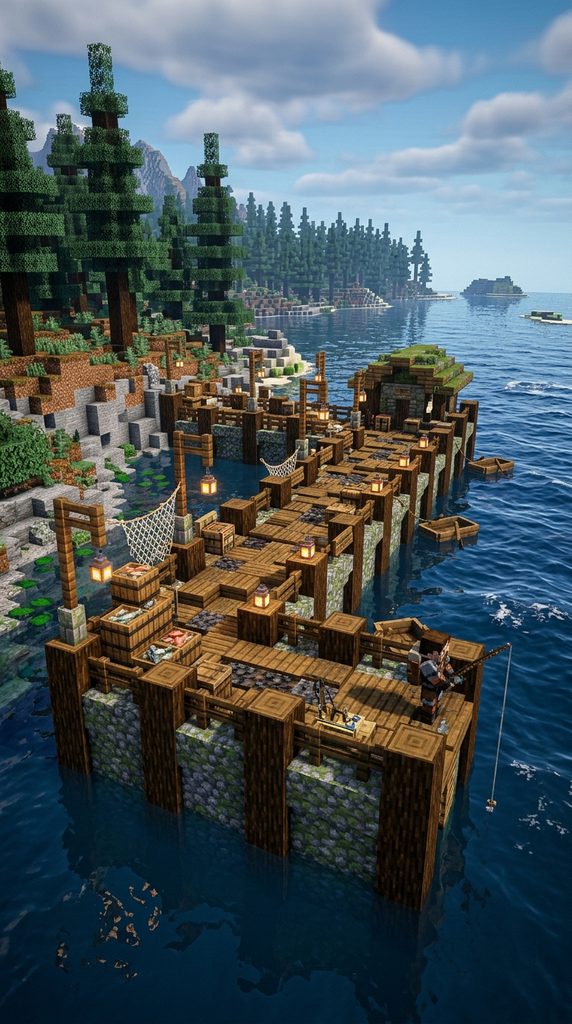
Weathered spruce timbers capture the rugged charm of isolated coastal fishing outposts. Furthermore, natural wood grain blends seamlessly against crashing ocean waves and gravel beaches. Slender wooden pilings wrapped in cobblestone walls replicate heavy, barnacle-encrusted tide supports. The open wooden boardwalk provides ample room for sorting daily catches into labeled barrels. It anchors coastal fishing villages with authentic, historic maritime utility and grounded charm.
Engineering Barnacle-Encrusted Water Pilings
Anchoring wooden structures into deep water beds requires layered texturing around waterlines. Extend stripped spruce log pillars deep into muddy seabed gravel for maximum realism. Next, wrap lower submerged logs in cobblestone walls, mud bricks, and subtle glow lichen. In addition, place unlit extinguished campfires along boardwalk edges to mimic weathered rope bumpers. The finished pier looks weathered, salty, and fully resilient against stormy survival tides.
Pier Construction Supplies
- Stacks of stripped spruce logs and weathered spruce slabs
- Cobblestone walls and cracked stone brick blocks
- Extinguished wooden campfires for detailed timber edging
- Barrels, looms, and decorative chest storage units
- Iron chains and warm hanging brass lanterns
- Fishing rods, armor stands, and lead lines
Step-by-Step Waterfront Construction
- Drive vertical stripped spruce pillars three blocks apart into open water.
- Wrap submerged pillar sections with mossy cobblestone walls to mimic barnacles.
- Bridge support pillars horizontally using alternating spruce slabs and oak planks.
- Extinguish campfire blocks along pier perimeters to create thin wooden railings.
- Suspend iron chains holding glowing lanterns beneath dock walkways for boat navigation.
- Scatter stacked barrels and decorative loom blocks to represent fish crates.
- Anchor an armor stand wearing leather fishing gear beneath an open shelter.
- Carve an indented three-wide boat slip fitted with smooth water trapdoors.
2. Cozy Covered Lantern-Lit Boathouse
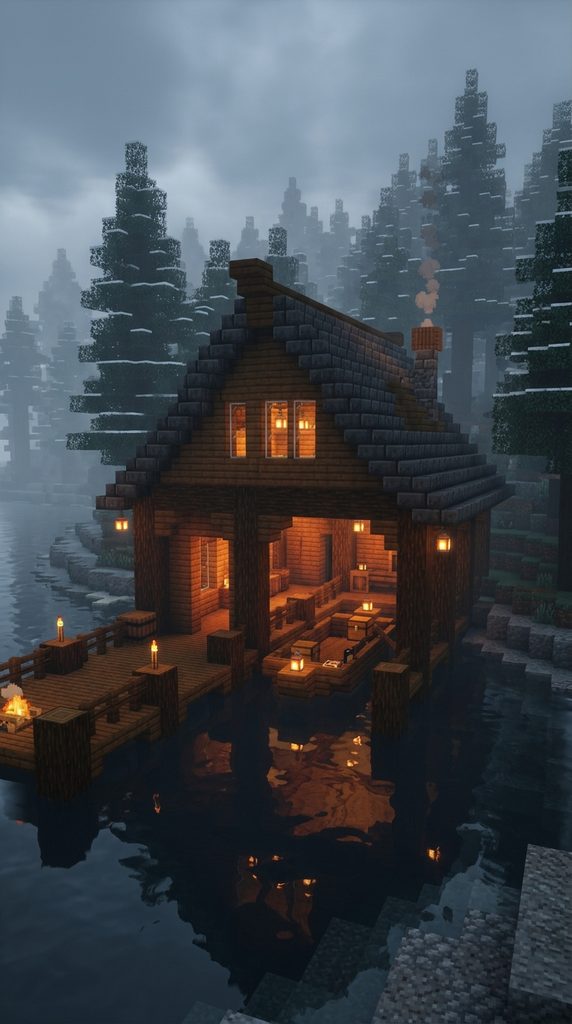
Enclosed boathouses shelter precious watercraft from stormy weather and wandering surface monsters. Furthermore, steep A-frame rooflines evoke charming Scandinavian coastal architecture in chilly biomes. Interior water slips let players sail directly inside before stepping onto dry land. Soft amber light glowing through glass windows welcomes sailors across dark, foggy open oceans. Consequently, this protective boathouse combines peak survival security with undeniably cozy cottage warmth.
Framing Sweeping Gabled Maritime Roofs
Steep roof pitches prevent heavy winter snow accumulation while creating dramatic interior ceiling heights. Frame triangular rafters utilizing dark oak stairs edged with crisp deepslate tiles. Meanwhile, line internal ceiling rafters with stripped birch beams to maintain bright interior lighting. Installing mechanical redstone iron doors or suspended trapdoor gates secures the harbor against drowneds. This sheltered haven keeps your favorite travel boats safe, organized, and ready.
Boathouse Construction Materials
- Stripped dark oak logs and warm mangrove timber planks
- Deepslate tile stairs, slabs, and textured wall blocks
- Tinted glass panes or clear glass window blocks
- Iron bars and hanging soul-lantern fixtures
- Redstone dust, sticky pistons, and oak tripwire hooks
- Polished andesite slabs for interior dry docks
Step-by-Step Boathouse Framing
- Excavate an interior rectangular water channel measuring five blocks by nine.
- Border the water basin with smooth polished andesite stone walking platforms.
- Erect sturdy corner pillars using four-block-tall stripped dark oak logs.
- Construct a steep gabled roofline utilizing alternating deepslate tile stairs.
- Inset open front and back triangular gables using decorative clear glass.
- Install an overhanging timber archway above the primary open water entrance.
- Hang glowing copper lanterns along central rafters to illuminate dark corners.
- Wire a hidden piston gate beneath waterlines to lock the boathouse securely.
3. Nordic Viking Longship War Harbor
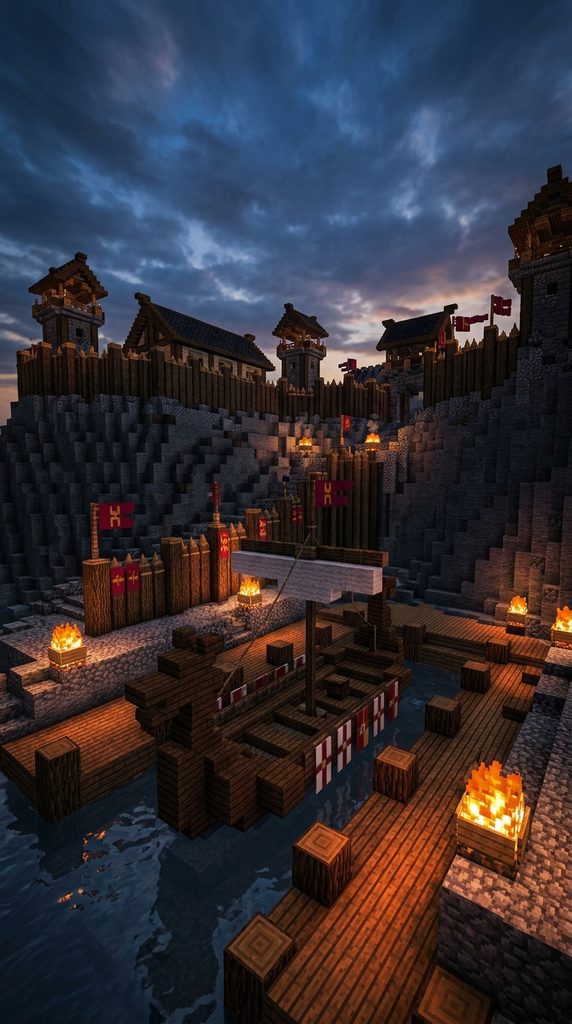
Imposing timber palisades and war horns give coastal survival bases fierce historical dominance. Furthermore, dark weathered woods paired with stone fortifications evoke legendary northern Viking longports. Dragon-headed prow carvings on moored ships declare coastal sovereignty to nearby multiplayer rivals. Wide timber launch slips accommodate massive raiding vessels loaded with heavy combat gear. This grand defensive harbor transforms vulnerable beaches into formidable, impenetrable oceanic strongholds.
Sculpting Fortified Coastal Palisade Walls
Defensive seaside architecture requires aggressive timber spikes and reinforced stone sea barriers. Interlock vertical stripped dark oak logs with pointed spruce fence palisades along cliffs. In addition, place flaming netherrack braziers atop stone bastions to guide war fleets home. Carving stone dragons or fierce animal totems along pier headers enhances ancient storytelling. This imposing fortress layout warns invading pillagers to steer clear of your realm.
Viking Harbor Crafting Essentials
- Stripped dark oak logs and textured spruce timber planks
- Netherrack blocks, flint and steel, and heavy iron bars
- Pointed spruce fence poles and dark oak trapdoors
- Banners dyed in aggressive crimson, black, and white patterns
- Hay bales, target blocks, and functional smithing tables
- Raw stone boulders mixed with coarse dirt pathways
Step-by-Step War Harbor Assembly
- Clear a rocky coastal fjord bordered by steep, natural stone cliffs.
- Erect defensive timber palisades along ridge tops using stripped dark oak.
- Build a wide stone quay utilizing rough cobbled deepslate and gravel.
- Mount elevated watchtowers equipped with blazing fire braziers for coastal defense.
- Construct wide, sloping wooden slipways leading directly into deep ocean water.
- Moar a custom-built miniature Viking longship complete with wool sail patterns.
- Clutter dock platforms with shields, weapon racks, and supply hay bales.
- Suspend heavy iron portcullis gates between cliff outcroppings using dark chains.
4. Modern Marina Floating Pontoon Slips
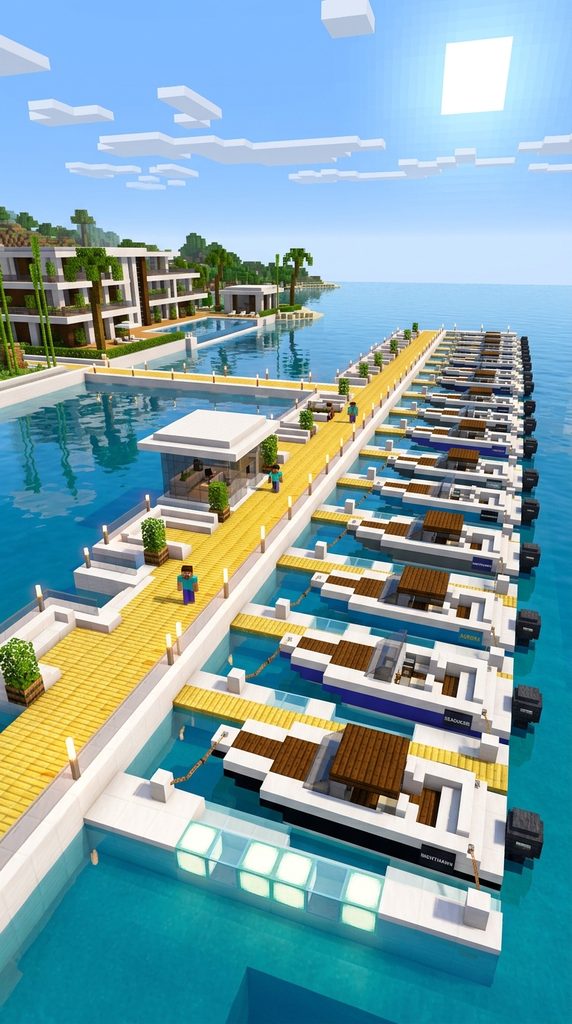
Clean lines and polished quartz deliver sleek, luxury yacht club aesthetics to survival. Furthermore, floating pontoon docks rise and fall visually against gentle, rolling ocean waves. Smooth white concrete paired with warm bamboo planks creates crisp, contemporary architectural contrast. Minimalist safety lighting concealed beneath stair edges keeps walkways illuminated without messy lantern clutter. It turns sleepy vacation islands into high-end, glamorous modern maritime resorts.
Designing Sleek Minimalist Modular Pontoons
Modern waterfront engineering focuses on modular geometric floating pads linked by metal hinges. Utilize white smooth quartz slabs underlaid with dark gray concrete to mimic flotation pontoons. Furthermore, place submerged sea lanterns beneath light blue stained glass for futuristic underwater illumination. Polished iron trapdoors serve as sleek deck cleats for tying off swift speedboats. This pristine aesthetic pairs gorgeously with luxury ocean liners and modern glass mansions.
Modern Marina Materials
- Smooth quartz blocks, stairs, and polished quartz slabs
- Bright white concrete and contrasting light gray concrete powder
- Fresh yellow bamboo wood planks and matching trapdoors
- Sea lanterns and cyan or light blue stained glass
- Iron trapdoors, heavy weighted pressure plates, and tripwires
- End rods for sleek, vertical illuminated pathway bollards
Step-by-Step Pontoon Construction
- Outline a straight floating walkway extending sixty blocks out from shore.
- Layer white concrete bases topped with alternating smooth quartz block walkways.
- Inset sea lanterns along the center line, covered with quartz stairs.
- Branch modular floating fingers perpendicular to the main dock for individual boats.
- Install vertical end rods capped with iron pressure plates as modern bollards.
- Underpin outer pontoon perimeters with submerged dark gray concrete flotation pods.
- Connect land bases to floating docks using angled smooth sandstone ramps.
- Park uniform dark oak boats within each pristine, illuminated private slip.
5. Tropical Bamboo Lagoon Boardwalk
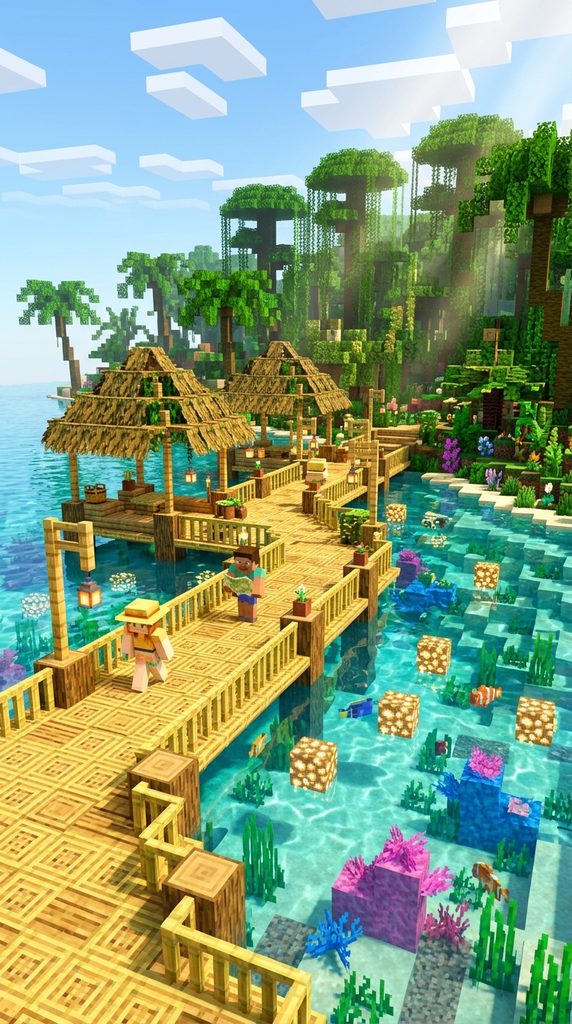
Vibrant golden bamboo timbers blend effortlessly into warm ocean beaches and jungle lagoons. Furthermore, elevated boardwalks winding across shallow coral reefs protect fragile underwater tropical marine life. Lightweight thatch awnings crafted from dried kelp or hay bales provide cool midday shade. Flowering hibiscus, jungle ferns, and hanging melons bring lush wilderness right to deck edges. This breezy paradise dock makes checking turtle breeding grounds feel like an exotic holiday.
Winding Fluid Boardwalks Across Shallow Lagoons
Rigid straight lines look unnatural across curvy, organic jungle shorelines and shallow coral lagoons. Instead, weave three-block-wide pathways that snake organically between natural sandbars and palm trees. Bamboo mosaics and striped jungle planks create lively, patterned boardwalk surfaces underfoot. In addition, suspend glowing sea pickles in underwater glass cases to light night swimming. The resulting tropical wharf invites players to kick off boots and relax barefoot.
Tropical Boardwalk Supplies
- Stacks of bright bamboo planks, bamboo mosaic, and rafts
- Stripped jungle wood logs and tropical jungle leaves
- Dried kelp blocks or yellow hay bales for thatched awnings
- Scaffolding blocks and rustic jungle wood fence posts
- Sea pickles, lily pads, and bright pink coral fans
- Melons, cocoa beans, and clay flower pots
Step-by-Step Lagoon Boardwalk Construction
- Trace a sweeping, curved pathway through your shallow turquoise coastal lagoon.
- Drive thin scaffolding and jungle fence posts into underwater sandbars securely.
- Lay a decorative walking surface utilizing alternating bamboo mosaics and planks.
- Construct open-sided sun shelters topped with sloped dried kelp thatch roofs.
- Inset water basins within walkways filled with glowing multi-colored coral fans.
- Wrap shoreline palm trees with cocoa pods, vines, and hanging lanterns.
- Anchor compact bamboo rafts into natural water pockets between lily pads.
- Build a small seaside smoothie hut equipped with brewing stands and melons.
6. Industrial Redstone Auto-Docking Station
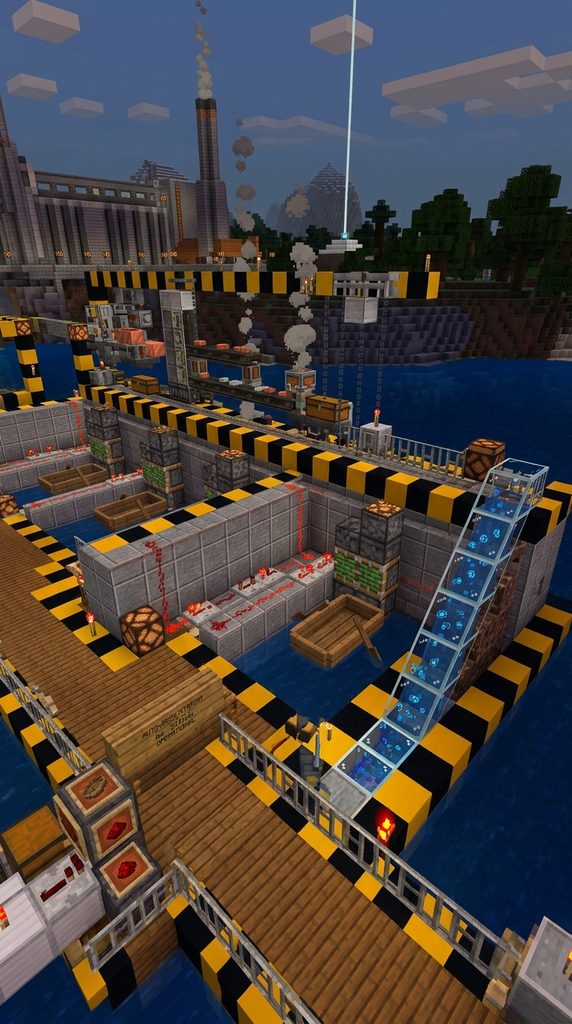
Redstone machinery takes the tedium out of manual boat alignment and storage logistics. Furthermore, automated water channels glide arriving boats into position using concealed dispenser systems. Step out onto clean iron platforms as pistons raise your vehicle safely out of water. Pressing a single polished stone button launches you instantly back into deep currents. This high-tech engineering marvel suits players who value technical automation above all else.
Engineering Rapid Mechanical Boat Launchers
Automated boat mechanics utilize water source block redirection alongside sticky piston elevators. Wire pressure plates along entry canals to detect incoming boats and trigger water gates. Meanwhile, beneath the docking bay, note blocks and dispensers store replacement boat items neatly. Polished andesite, smooth stone, and yellow-black hazard stripes establish sharp industrial factory themes. This build eliminates lost watercraft forever through seamless technical redstone efficiency.
Redstone Dock Hardware
- Redstone repeaters, comparators, redstone dust, and sticky pistons
- Dispensers, droppers, hoppers, and large storage chests
- Smooth stone slabs, polished andesite, and iron blocks
- Yellow and black concrete for industrial hazard safety striping
- Soul sand blocks and water buckets for bubble elevator launch ramps
- Heavy-duty iron pressure plates and stone activation buttons
Step-by-Step Automation Rigging
- Excavate an underground ten-by-twelve redstone mechanics chamber beneath your shoreline.
- Route a two-block-wide incoming water canal lined with ice blocks for speed.
- Install tripwire hooks across the entry canal to trigger mechanical safety gates.
- Wire a sticky piston beneath docking bays to lift boats onto dry slabs.
- Build a soul sand bubble column in the departure bay for high-speed launches.
- Install a dispenser loaded with fresh boat items linked to launch buttons.
- Frame surrounding dock floors with industrial polished andesite and iron blocks.
- Paint hazard borders along water edges using alternating yellow and black concrete.
7. Medieval Stone Citadel Sea Gate
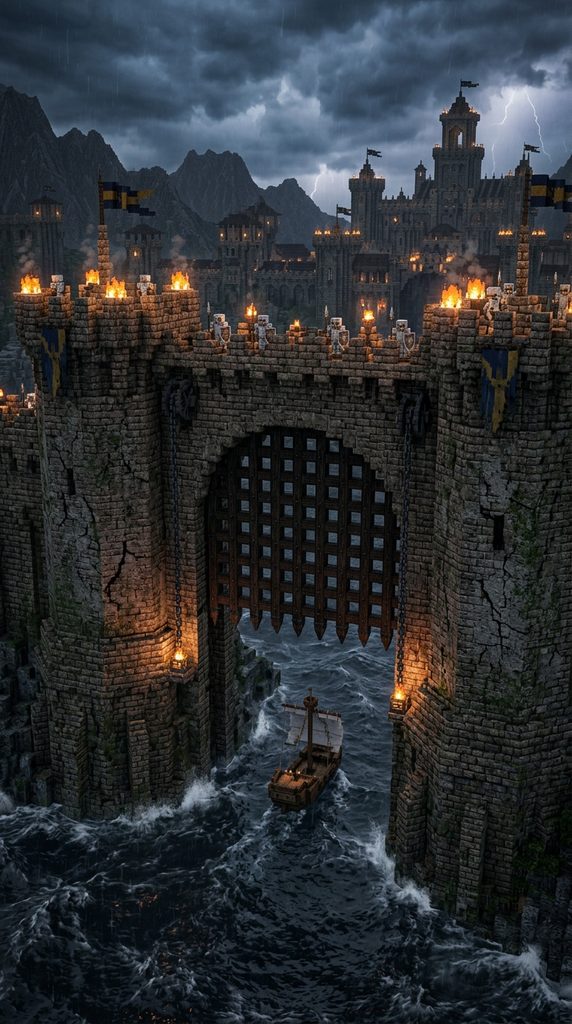
Towering stone ramparts guarding sea approaches evoke dramatic fantasy kingdom entrances and ports. Furthermore, massive portcullis gates suspended between stone bastions control all maritime traffic into capitals. Ancient mossy stone bricks mixed with cracked variants suggest centuries of weathering ocean spray. High battlement walkways let archers rain defensive fire down upon invading water mobs. This colossal fortification establishes your survival capital as an unassailable maritime empire.
Raising Massive Fortified Stone Water Gates
Colossal stone architecture requires varied block textures to avoid flat, boring gray surfaces. Blend plain stone bricks with mossy bricks, cracked bricks, and rough cobbled variants. Furthermore, fashioning an imposing portcullis using dark oak fences and iron chains adds realism. Deep arrow loops carved from upside-down stone stairs provide functional defense for crossbow combat. This grand water gate leaves arriving guests awestruck by its sheer architectural majesty.
Citadel Sea Gate Materials
- Stacks of mixed stone bricks, cracked bricks, and mossy stone bricks
- Cobblestone stairs, walls, and rough andesite building blocks
- Dark oak fences and heavy hanging iron chains for the portcullis
- Polished deepslate slabs and carved stone brick accents
- Netherrack fire pots or redstone-powered red glowstone beacons
- Heavy iron doors and crossbow-bearing guard armor stands
Step-by-Step Citadel Construction
- Lay massive eight-by-eight stone foundation towers on either side of sea channels.
- Blend textures continuously, mixing mossy and cracked stone bricks near waterlines.
- Bridge towers thirty blocks high using a double-thick reinforced stone archway.
- Suspend an open wooden portcullis gate beneath the arch utilizing iron chains.
- Carve crenelated battlements across upper walkways for defensive player archery.
- Install iron-reinforced observation galleries overlooking incoming ocean traffic.
- Build deep internal docks behind gates lined with smooth stone landing quays.
- Ignite blazing fire beacons atop both towers to illuminate night horizons clearly.
8. Sunken Grotto & Smuggler’s Cove Dock
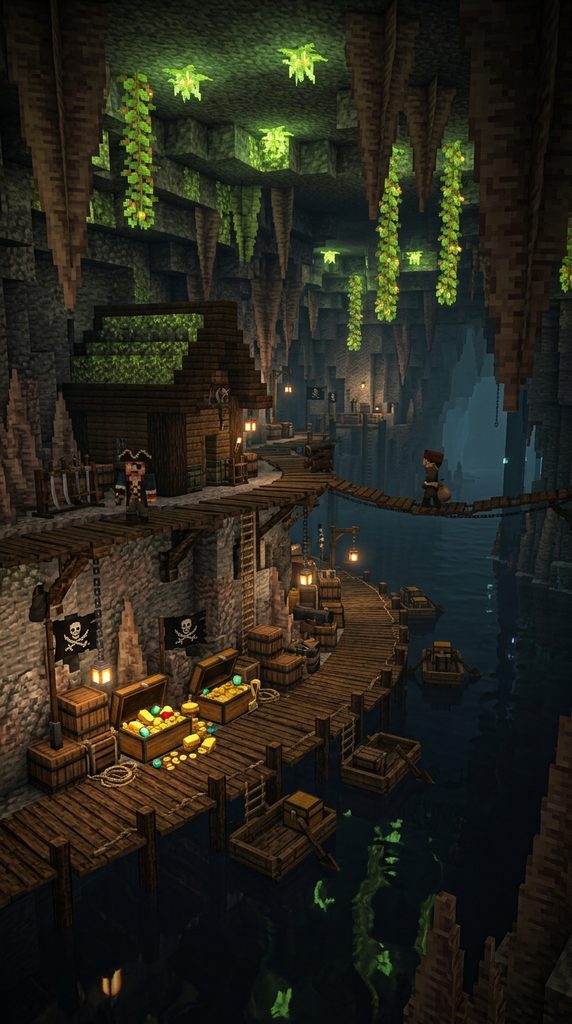
Concealing survival harbors inside natural sea caves keeps valuable pirate loot completely hidden. Furthermore, jagged stalactites dripping water overhead create thrilling, immersive atmospheric mystery. Secret wooden boardwalks hug dark cavern walls, lit only by soft glowing flora. Tucking storage rooms behind fake rock walls keeps diamonds safe from greedy server companions. This clandestine cove transforms ordinary shoreline caves into exciting, covert treasure havens.
Integrating Natural Geology with Hidden Carpentry
Building within cave geography demands preserving rough, natural stone walls rather than smoothing them. Anchor crooked wooden walkways directly into jagged granite cliffs using iron support chains. In addition, scatter glowing spore blossoms and weeping vines down from dark cavern ceilings. Conceal your primary storage vaults behind water-curtain doors or hidden flush piston entrances. This atmospheric pirate’s cove feels like an authentic, secret den of oceanic thieves.
Smuggler’s Cove Supplies
- Dark oak planks, stripped spruce logs, and warped wood slabs
- Raw dripstone blocks, pointed dripstone spikes, and hanging moss
- Spore blossoms, glow berries, and green weeping vines
- Treasure chests, gilded blackstone, and gold raw ore blocks
- Skeletons, cobwebs, and decorative skull wall mounts
- Redstone comparators and pistons for secret door mechanisms
Step-by-Step Grotto Construction
- Locate a deep natural sea cavern opening directly onto the ocean waterline.
- Retain natural dripstone formations while clearing adequate water depth for boats.
- Suspend uneven dark oak boardwalks along rocky cavern walls using chains.
- Line jagged ceiling crevices with dangling glow berries and dripping pointed dripstone.
- Anchor small wooden dinghies within shadowy cavern crevices and dark corners.
- Scatter open treasure chests overflowing with gold ingots and emeralds along piers.
- Frame hidden interior workshop caves using mossy cobblestone and spider cobwebs.
- Wire a hidden book-switch door leading deep into private underground treasury vaults.
9. Serene Japanese Torii Harbor
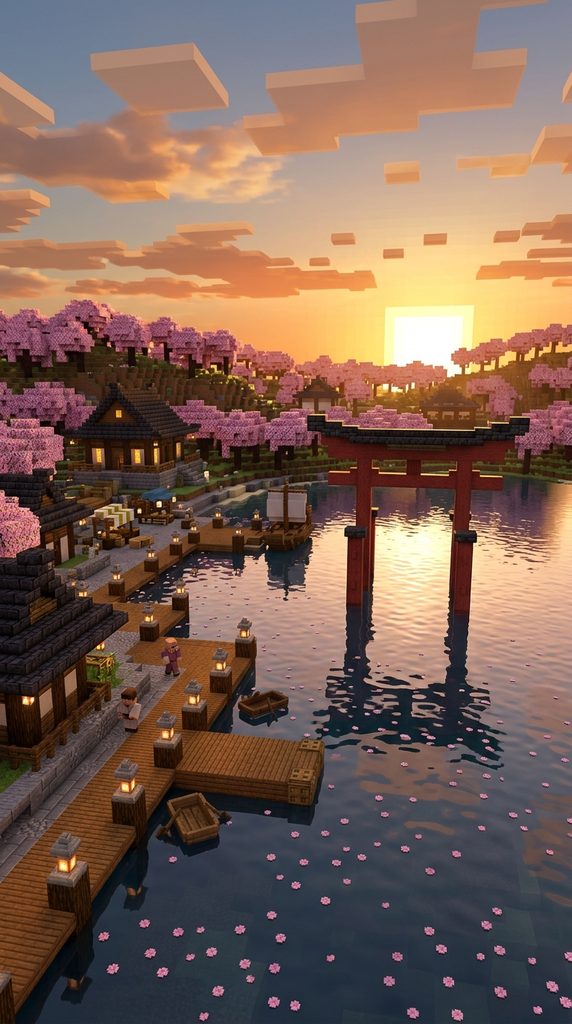
Graceful upturned eaves and bold vermilion timber arches bring spiritual tranquility to coastlines. Furthermore, vibrant crimson gates reflecting across still harbor waters create iconic, peaceful visual centerpieces. Cherry blossom trees dropping soft pink petals over dark stone lanterns enhance peaceful themes. Tiered wooden wharfs provide orderly, quiet mooring spaces for simple wooden rowboats. This serene sanctuary offers weary survival adventurers peaceful reflection after grueling mining journeys.
Framing Iconic Vermilion Waterfront Shrines
Traditional Torii arches gain structural elegance through bold color contrast and subtle roof flares. Construct soaring red gate pillars utilizing vibrant crimson mangrove logs or red terracotta. In addition, crown the majestic arch with dark curved eaves made from deepslate tile stairs. Surround the harbor with manicured bamboo groves, sweet berry bushes, and pink blossoms. The resulting waterside shrine feels deeply connected to nature, harmony, and ancient tradition.
Japanese Harbor Essentials
- Mangrove wood logs, crimson planks, and red terracotta blocks
- Polished deepslate tile stairs, slabs, and decorative wall pillars
- Cherry blossom saplings, pink petals, and sweet bamboo stalks
- Stone lanterns, soul campfires, and polished granite blocks
- Lily pads, sea pickles, and decorative weeping willows
- Stripped spruce wood slabs for clean, minimal decking
Step-by-Step Torii Harbor Assembly
- Clear a calm, natural ocean bay bordered by rolling grass hillsides.
- Lay clean, minimalist wooden docks using horizontal stripped spruce wood slabs.
- Erect two soaring vertical gate pillars in open water using red mangrove logs.
- Cross pillars horizontally with bold mangrove beams, cantilevering the ends outward.
- Cap the upper gate beam with sweeping upturned deepslate tile eave corners.
- Mount a glowing stone lantern centrally beneath the majestic Torii archway.
- Plant weeping cherry trees along shoreline perimeters, carpeting grass with pink petals.
- Moor simple, elegant wooden boats along clean stone mooring posts with lead ropes.
10. Gothic Haunted Shipwreck Wharf
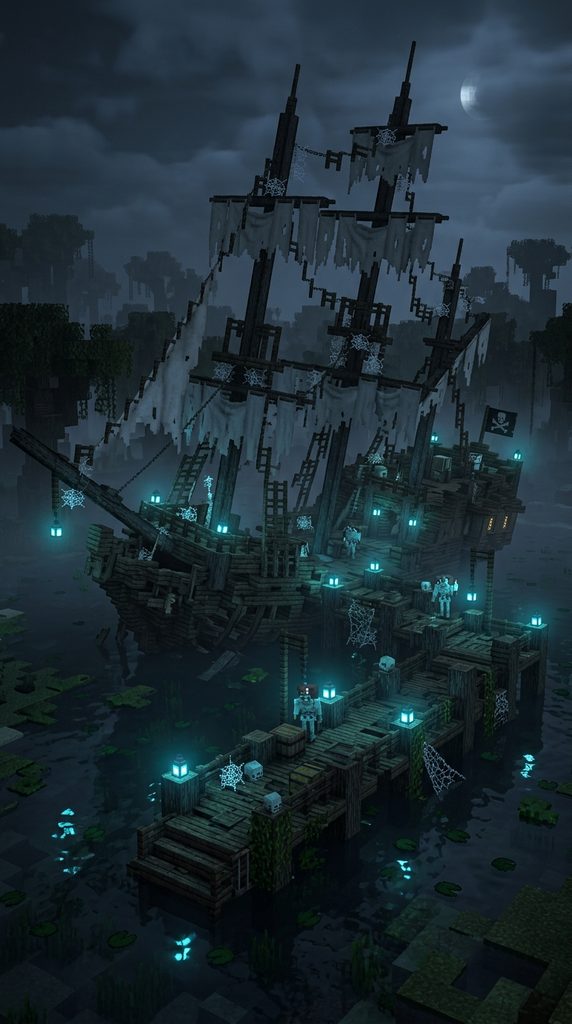
Eerie green soul fire and broken mast ribs evoke spine-chilling pirate ghost folklore. Furthermore, building a dock directly out of fractured, rotting shipwreck hulls tells haunting stories. Creeping cobwebs, tattered sails, and dark soul lanterns suggest the crew perished long ago. Drowned zombies wandering nearby waters enhance the scary, abandoned cemetery atmosphere naturally. This macabre build proves that damaged ship debris makes unforgettably atmospheric survival architecture.
Reclaiming Broken Ship Debris Artfully
Reconstructing ruined ships requires deliberate asymmetry and jagged, splintered timber angles. Incorporate broken stripped dark oak logs jutting upward like exposed, bleached whale ribcages. In addition, drape shredded white banners and cobwebs across broken yards to mimic rotting canvas sails. Replace ordinary warm lanterns with eerie, cold blue soul-lanterns and soul-torches throughout. This cursed port looks as though it sailed straight out of ghostly maritime legends.
Haunted Wharf Materials
- Weathered dark oak logs, rotting spruce planks, and stripped mangrove
- Soul lanterns, soul campfires, and turquoise soul torches
- Dense white cobwebs and tattered gray or white wool banners
- Skulls, bone blocks, and weathered mossy cobblestone blocks
- Iron bars, heavy rusted chains, and waterlogged slabs
- Loom blocks, barrels, and distressed brewing stand supplies
Step-by-Step Haunted Dock Assembly
- Select a foggy marshland or bleak gravel coastline shrouded in sea mist.
- Terraform a half-sunken, tilted wooden ship hull embedded deep in shore sand.
- Extend broken, splintered dark oak planks outward from the wreck to form piers.
- Thread loose iron chains and ragged cobwebs between leaning mast timbers.
- Inset soul campfires beneath iron bars to produce eerie blue shoreline smoke.
- Scatter bleached bone blocks and decaying ribcage curves across surrounding sands.
- Install waterlogged spruce stairs to allow easy boat entry into broken hull quarters.
- Suspend flickering soul lanterns from tilted yardarms to light the gloomy marsh.
11. Tiered Steampunk Crane & Cargo Harbor
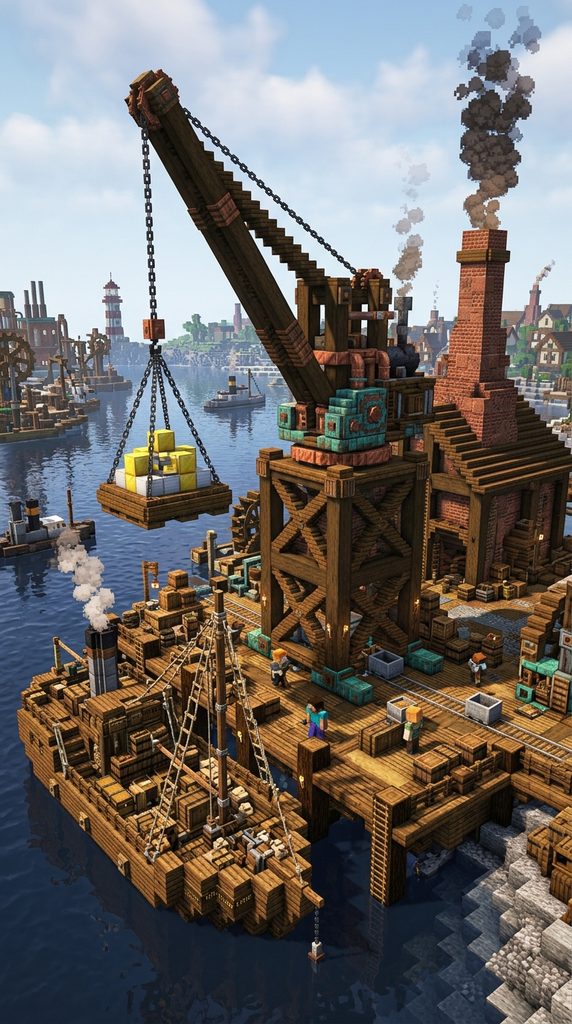
Towering timber cranes and copper pipework bring gritty, industrial energy to maritime docks. Furthermore, suspended cargo pallets hanging from thick chains create wonderful vertical visual storytelling. Gearboxes fashioned from grindstones and pistons suggest heavy mechanical machinery loading bulk freight. Polished copper blocks, lightning rods, and smoking chimneys add bustling industrial realism. This active commercial port suits expansive survival empires exporting valuable mined ores.
Constructing Convincing Industrial Timber Cranes
Realistic dockside cranes require sturdy structural cross-bracing that looks capable of lifting weight. Build angled timber boom arms extending far out over water using spruce fences. In addition, counterweight crane rears using dense iron blocks or heavy stone brick slabs. Hang wooden cargo pallets stacked with iron ore and raw gold blocks from chains. This busy trading harbor hums with the visual excitement of thriving survival commerce.
Steampunk Harbor Supplies
- Stripped spruce timbers, dark oak fences, and wooden trapdoors
- Oxidized copper cut blocks, copper grates, and lightning rods
- Heavy iron chains, iron blocks, and functional stone grindstones
- Campfires, furnaces, and brick chimneys for industrial factory smoke
- Barrels, raw iron ore blocks, and packed gold storage crates
- Polished andesite slabs and smooth stone for heavy quay paving
Step-by-Step Crane Wharf Construction
- Pave a broad, heavy-duty commercial cargo quay using smooth andesite stones.
- Assemble a sturdy four-legged crane foundation tower utilizing stripped spruce logs.
- Angle an elongated wooden boom arm forward over the water using dark fences.
- Mount stone grindstones and polished copper blocks to replicate winches and gears.
- Suspend thick iron chains downward from the crane tip over open boat berths.
- Build a floating cargo pallet platform carrying barrels and gleaming gold ore blocks.
- Add small brick boiler rooms puffing campfire smoke behind the crane superstructure.
- Moor heavy-duty freight boats directly beneath the suspended cargo crane boom.
12. Fantasy Tree-Root River Landing
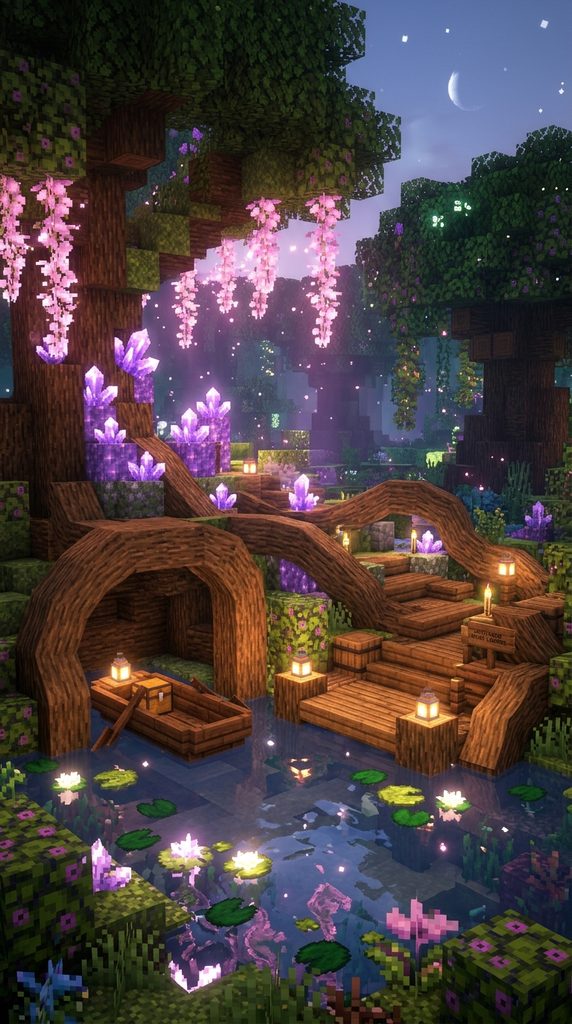
Massive enchanted tree roots bursting through riverbanks create magical, otherworldly boat moorings. Furthermore, weaving delicate docks directly into living timber blurs lines between nature and shelter. Glowing amethyst clusters and spore blossoms sprouting from wet bark illuminate nocturnal waters. Small wooden landing decks rest comfortably within hollowed-out tree cavities along the shore. This organic haven fits seamlessly into enchanted fairycore forests and elven river settlements.
Sculpting Massive Living Organic Root Systems
Sculpting convincing tree roots requires broad, curving sweeps that taper down into waterbeds. Curve thick coils of stripped dark oak and mangrove roots down river bluffs. In addition, hollow out central root openings to create sheltered parking docks for small boats. Weave flowering azalea leaves and dripping weeping vines across exposed bark surfaces generously. The resulting river dock feels entirely alive, deeply ancient, and quietly magical.
Tree-Root Dock Materials
- Stripped dark oak logs, mangrove roots, and mud brick walls
- Lush moss blocks, flowering azalea foliage, and hanging vines
- Large glowing amethyst clusters and hanging pink spore blossoms
- Warm cherry wood slabs or stripped birch for delicate decking
- Glow lichen, lily pads, and pink floating sea pickles
- Unlit campfires for thin, organic gangplank pathways
Step-by-Step Fantasy Landing Construction
- Locate a steep, earthen riverbank flanked by towering canopy trees.
- Carve thick, winding root pathways flowing down into the river using mangrove logs.
- Anchor wooden gangplanks made of unlit campfires between two sprawling main roots.
- Hollow out an alcove inside the primary root trunk to shelter small watercraft.
- Line interior hollows with glittering amethyst crystals that chime in breezes.
- Drape flowing weeping vines and glowing moss down over river docking channels.
- Plant lush flowering azalea foliage around upper root banks to carpet soil.
- Scatter water lilies and glowing sea pickles across calm river mooring pools.
13. Sunken Tidal Estuary Boardwalk
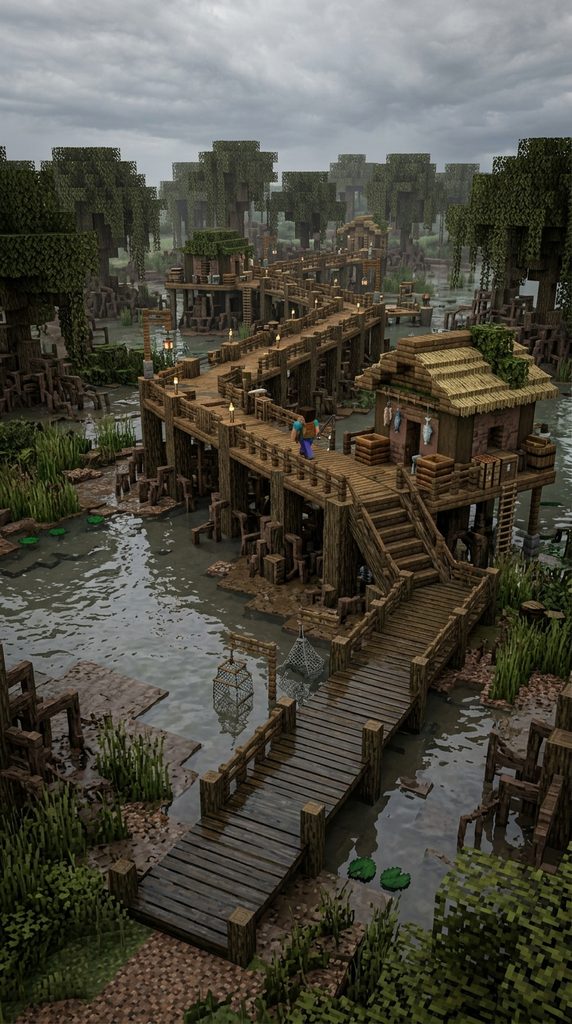
Tidal estuarine docks mimic real salt marshes where ocean waters rise and fall continuously. Furthermore, stepped multi-tiered walkways accommodate varying water levels without flooding primary pathways. Weathered mud bricks, packed mud, and mangrove roots capture rich marshland textures accurately. Fishing traps submerged in brackish water channels provide passive food gathering for patient survivalists. This ecological wetland dock celebrates raw coastal nature while providing sturdy, reliable utility.
Layering Stepped Walkways Across Tidal Marshes
Tidal design uses tiered platform levels connected by gentle wooden steps and ramps. Place lower boardwalk tiers flush with high tide, letting water gently lap over edges. Meanwhile, elevate upper storage pavilions safely above the flood line on sturdy stilts. Incorporate hanging mangrove propagules and swamp mud to blend structures into wetland surroundings. This earthy, ecological design proves that muddy swamps can host magnificent, functional harbors.
Estuary Boardwalk Essentials
- Packed mud blocks, mud bricks, and mangrove root clusters
- Weathered spruce planks, stripped spruce logs, and dark trapdoors
- Mangrove propagules, moss carpets, and tall marsh seagrass
- Composter blocks, barrels, and functional string tripwire fish traps
- Extinguished campfire pathways and iron hanging lantern posts
- Coarse dirt and gravel for natural shoreline pathway blending
Step-by-Step Estuary Dock Construction
- Find an expansive, muddy mangrove swamp or brackish ocean river estuary.
- Build stepped, multi-level boardwalk frames utilizing weathered spruce timber logs.
- Submerge lower landing stages so high-tide waves gently wash across lowest planks.
- Construct elevated secondary storage docks supported by clustered mangrove root pilings.
- Line mud flats with functional string tripwires connected to decorative fish traps.
- Scatter composter units, bait barrels, and drying fish racks across main platforms.
- Plant fresh mangrove propagules directly in surrounding shallow, brackish water pools.
- Connect land trails into marsh boardwalks using textured gravel and coarse dirt.