14 Rustic & Cozy River Docks in Minecraft (Cottagecore Inspo)
Building along water in Minecraft River Dock transforms a standard survival base into an enchanting, lived-in sanctuary. Waterways provide natural paths, rich biomes, and stunning atmospheric reflections. However, simple flat wooden planks alongside water often feel lifeless, artificial, and visually uninspiring.

A cottagecore aesthetic emphasizes organic shapes, weathered materials, cozy utility, and harmonious integration with surrounding nature. This comprehensive guide will explore fourteen rustic, deeply immersive, and detailed river dock design concepts for your world. You will discover how to mix textures, incorporate vegetation, build functional boat slips, and create charming waterside retreats.
Mastering Waterside Architecture & Foundations
Building sturdy structures over water requires an understanding of depth, support pillars, and material gradients. Before placing decorative elements, you must establish realistic foundations that look anchored to the riverbed. Smooth wood floating on water breaks visual immersion instantly.
Using stripped logs or dark fences as submerged pilings creates the structural logic needed for realistic builds. Furthermore, blending various wood tones with mossy blocks simulates age, moisture, and gentle decay. Integrating lanterns ensures safety from hostile mob spawns while bathing your riverbank in a warm, amber glow.
1. The Lantern-Lit Oak & Spruce Fishing Pier

Blending Classic Woods for Weathered Charm
Mixing standard oak and dark spruce creates a worn, sun-bleached look perfect for peaceful fishing spots. This pier extends gracefully into winding rivers, offering stability for local anglers. By staggering plank lengths, you avoid harsh geometric edges and match the natural river contours.
Varying your floor tiles gives the impression of years of constant footsteps and repair work. Adding mossy cobblestone where wood meets the dirt bank introduces realistic moisture texturing. This concept suits starter survival worlds, requiring simple, easily accessible early-game materials.
Essential Materials for the Fishing Pier
- Spruce logs and stripped oak logs
- Oak and spruce wood slabs
- Spruce fences and gates
- Iron chains and lanterns
- Waterlily pads and seagrass
Step-by-Step Implementation Guide
- Drive stripped oak logs deep into the riverbed to form solid support pillars.
- Connect the support pillars horizontally using sturdy spruce fences and slabs.
- Lay an alternating pattern of oak and spruce slabs across the walkway surface.
- Remove full planks periodically and replace them with lower slabs for uneven wear.
- Hang iron chains holding warm lanterns from the tops of the outer support posts.
- Place waterlily pads along the dock edges to blend the wood into the water.
2. The Overgrown Mossy Cobblestone Boat Slip
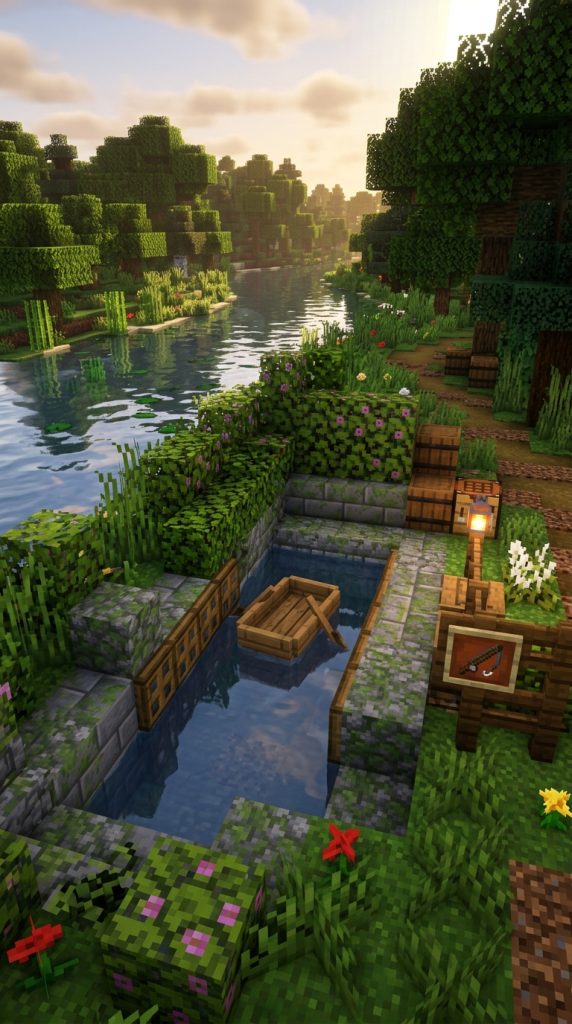
Integrating Weathered Stone with Lush Vegetation
Combining cobblestone, mossy stone bricks, and leafy vines creates an ancient, timeless river structure. This boat slip offers a protected nook to park wooden boats safely away from fast river currents. The heavy stone foundation contrasts beautifully against surrounding soft grassy banks.
Allowing wild vegetation to creep over stone walls makes the structure feel deeply embedded in its natural biome. You can use composters and leaf blocks nearby to simulate ongoing gardening or fish preparation. It provides a durable, rustic anchor for any woodland or forest river settlement.
Stone & Floral Supplies Checklist
- Mossy cobblestone and stone brick stairs
- Oak leaf blocks and flowering azalea leaves
- Spruce trapdoors and wooden barrels
- Fishing rods and item frames
- Bone meal for riverbank seagrass
Step-by-Step Implementation Guide
- Dig a shallow three-block-wide canal leading into the riverbank for the boat slip.
- Line the canal walls using mixed mossy cobblestone and stone brick stairs.
- Place spruce trapdoors along the water level inside the slip as gentle bumpers.
- Drape oak leaf blocks over the stone edges to simulate wild crawling vines.
- Set up storage barrels and item frames displaying fishing rods along the stone path.
- Apply bone meal to the surrounding dirt banks to generate dense wild grass.
3. The Covered Mud-Brick Stilt Pavilion
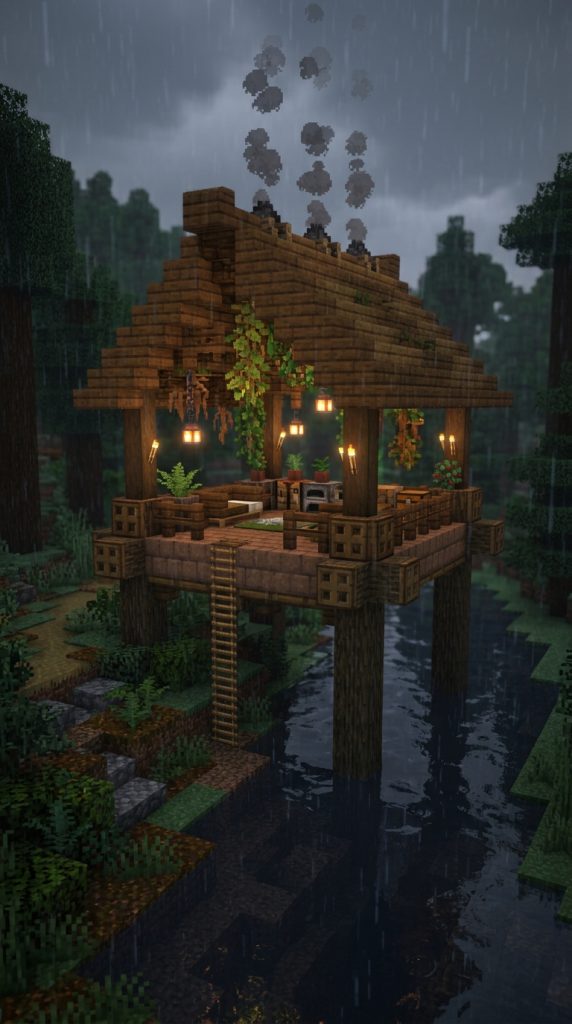
Building Warm Shelters Above Winding River Currents
Earthy mud bricks paired with dark wood tones offer a cozy, sheltered dock space ideal for rainy biomes. This design raises a small, covered pavilion on tall wood stilts directly over the water. It protects your gear from weather while providing elevated views of surrounding landscapes.
The warm, terracotta-like tones of packed mud bricks blend seamlessly with river clay and mud banks. Using stairs for a sloped roof prevents the shelter from looking bulky or top-heavy. Hanging potted ferns inside the rafters adds lush green pops that enhance the cottagecore vibe.
Earthy Pavilion Building Components
- Packed mud and mud brick slabs
- Dark oak logs and fence posts
- Spruce stairs and trapdoors
- Potted ferns and hanging roots
- Campfires for decorative smoke effects
Step-by-Step Implementation Guide
- Erect four tall dark oak log pillars extending three blocks above the water surface.
- Build a wooden platform frame using dark oak fences and spruce trapdoors.
- Lay packed mud blocks across the floor to form a solid, earthy deck platform.
- Construct an A-frame roof using spruce stairs supported by dark oak corner posts.
- Hang potted ferns and dangling hanging roots from the interior roof beams.
- Extinguish campfires on top of the roof structure to create rustic wooden thatch beams.
4. The Hanging Vine Mangrove & Root Deck
Harnessing Twisted Roots for Organic Architecture
Mangrove wood introduces rich reddish-brown hues and sprawling root structures that fit wild riverbanks perfectly. This design weaves docks directly through living mangrove roots, creating an organic, untouched aesthetic. It feels less constructed and more naturally integrated into marshlands and swampy biomes.
The natural arching curves of mangrove roots act as built-in supports, railings, and decorative arches. Combining muddy mangrove roots with moss carpets creates a damp, rich environment full of life. It provides a secluded, magical atmosphere for potion brewing or quiet boat trips.
Mangrove Organic Materials List
- Mangrove wood planks and mangrove roots
- Muddy mangrove roots and moss carpets
- Vines and drapes of weeping vines
- Froglights or hidden glowberry lights
- Clay pots and brown mushrooms
Step-by-Step Implementation Guide
- Locate a natural cluster of mangrove roots extending out into your chosen river bend.
- Weave mangrove planks through the natural gaps between the roots at water level.
- Replace surrounding dirt blocks with muddy mangrove roots for realistic riverbank texture.
- Hang weeping vines and glowberries underneath the root arches for soft underwater lighting.
- Cover exposed wood deck surfaces with moss carpets to soften straight block lines.
- Place clay pots filled with red and brown mushrooms along the damp walkways.
5. The Spruce Log Raft & Floating Storage Hub
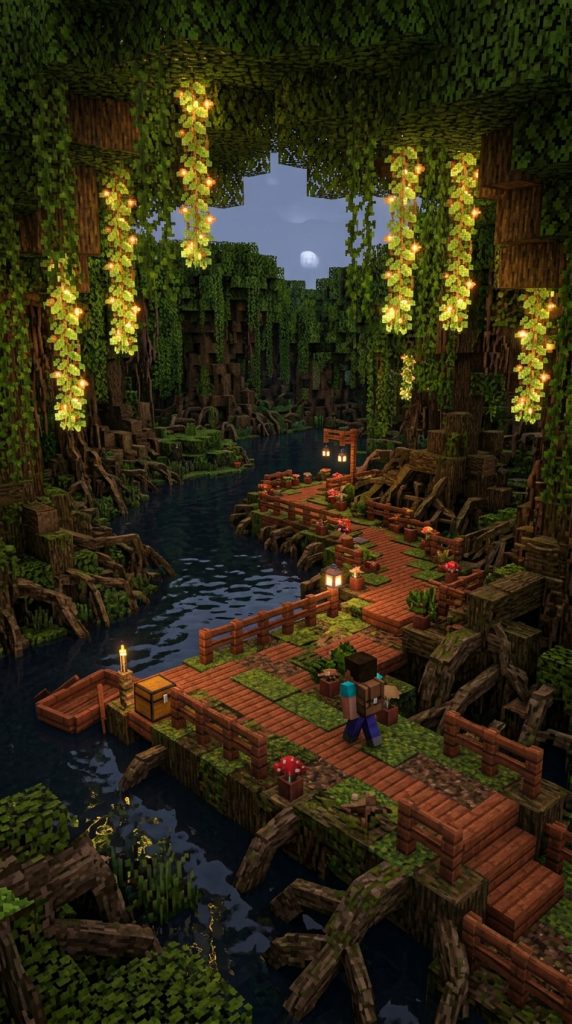
Floating Functional Utility Platforms on Water
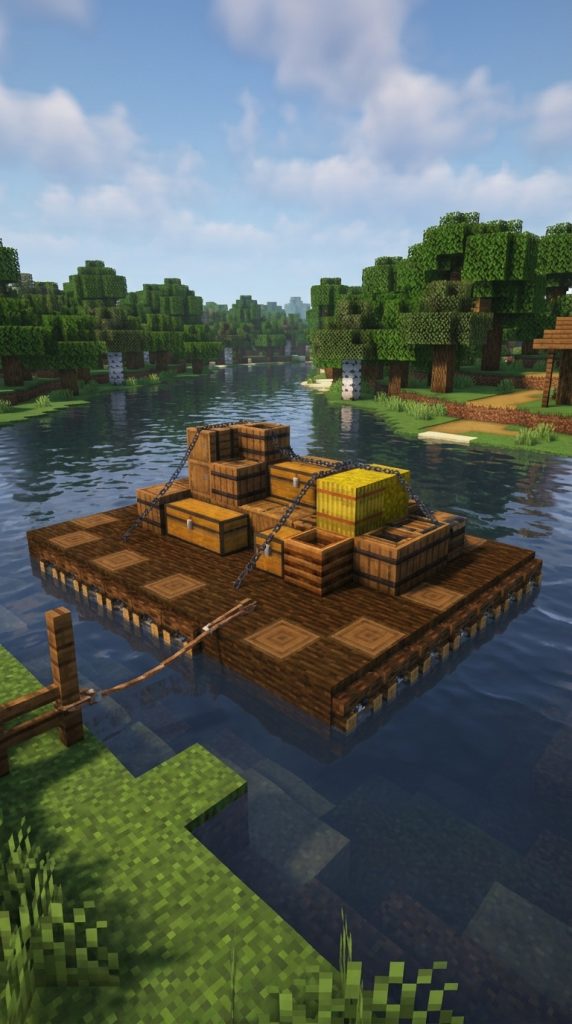
A floating raft dock offers a flexible, portable aesthetic that looks ready to navigate downstream. Built using unstripped logs tied with chains, this structure simulates a heavy wooden barge moored to land. It works brilliantly as a central storage hub for river-based resource harvesting.
Adding barrels, chests, and hay bales onto the platform creates a busy, mercantile atmosphere. Using fence posts with leads attached to fence posts on land simulates sturdy mooring ropes holding the raft. It adds dynamic storytelling to your survival river port without altering terrain heavily.
Floating Hub Materials Checklist
- Spruce logs and stripped spruce logs
- Campfires and iron chains
- Barrels, chests, and hay bales
- Leads and fence posts for mooring lines
- Composters and water buckets
Step-by-Step Implementation Guide
- Assemble a flat seven-by-five grid of unstripped spruce logs directly on the water.
- Place unlit campfires along the edges to create tied log raft borders.
- Anchor the raft to a land-based fence post using leads attached to invisible boats.
- Stack barrels, chests, and hay bales unevenly across the central floor surface.
- Install iron chains across the cargo piles to secure goods for transport visual.
- Add a composter filled with kelp or fish scraps to enhance working dock realism.
6. The Floral Azalea Canopy Docks
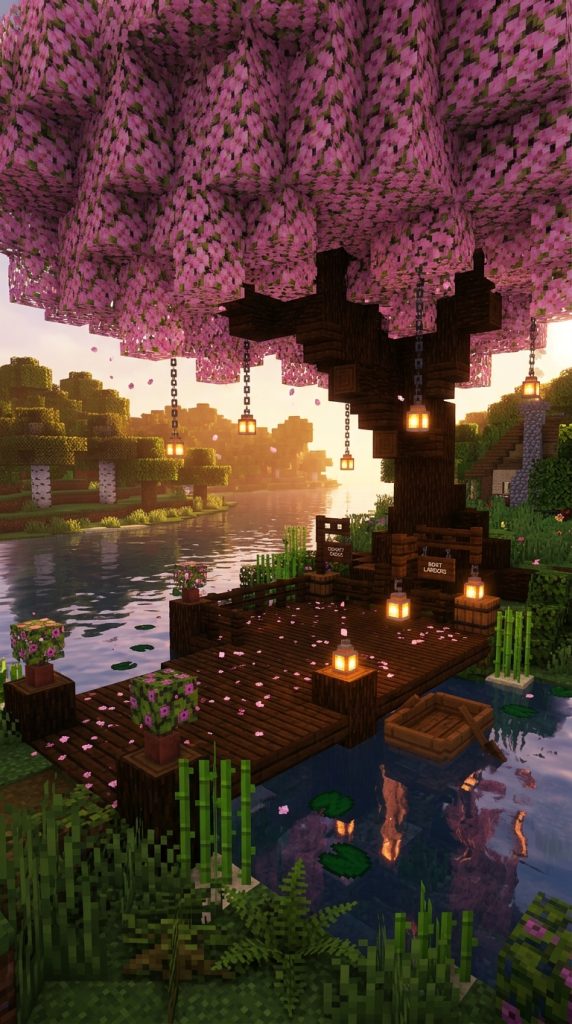
Framing Waterways with Vibrant Blooming Trees
Integrating flowering azalea trees into your dock structure introduces soft pink blossoms and lush green foliage. The overhanging tree canopy creates a natural roof, showering the wooden planks with fallen petals. This design embodies romantic cottagecore charm, turning a simple pier into a fairy-tale waterside retreat.
Using pink wool, magenta carpet, or pink petals scattered along the wooden planks mimics dropped blossoms. Placing root beer-colored dark oak supports beneath vibrant pink leaves creates striking visual contrast. It transforms boring river bends into colorful, inviting focal points for your world.
Botanical Azalea Materials Needed
- Flowering azalea leaf blocks and oak leaves
- Rooted dirt and moss blocks
- Dark oak planks and slab steps
- Pink petals or magenta carpets
- Lanterns and hanging signboards
Step-by-Step Implementation Guide
- Plant an azalea tree directly on the riverbank edge where your dock starts.
- Grow the tree until its leaf canopy extends out over the water surface.
- Build a dark oak plank deck underneath the spreading pink leaf canopy.
- Scatter pink petals across the wood slabs to look like fallen tree blossoms.
- Hang warm iron lanterns directly from the thickest azalea tree branches above.
- Attach hanging signboards to the tree trunk to mark your boat destination points.
7. The Curved Birch Bark & Pumpkin Patch Pier

Capturing Cozy Autumnal Harvest Atmosphere
Light birch wood paired with warm orange pumpkins creates an inviting, autumn-themed harvest dock. This curved pier snakes along gentle riverbends, providing space to unload farm produce from boats. The bright cream tones of stripped birch provide a clean, cheerful contrast to dark river water.
Decorating with carved pumpkins, jack-o’-lanterns, and hay bales makes the dock feel alive with seasonal activity. Placing leaf litter using orange and yellow carpet tiles highlights fall transitions seamlessly. It is an ideal addition to cottagecore farmland or rural pumpkin patch builds.
Autumnal Harvest Materials List
- Stripped birch logs and birch slabs
- Pumpkins, carved pumpkins, and hay bales
- Yellow, orange, and brown carpets
- Birch fences and wooden buttons
- Wheat crops and farmland blocks
Step-by-Step Implementation Guide
- Lay a gently curving path of stripped birch logs extending along the riverbank.
- Add birch slabs along the outer curve edges to create a soft, rounded shape.
- Scatter pumpkins and carved pumpkins in small clusters near the shoreline entrance.
- Place hay bales and yellow carpets along the deck to represent loose harvest straw.
- Add birch fences topped with lanterns at the pier ends for night visibility.
- Scatter wooden buttons across the birch logs to look like natural wood knots.
8. The Old Watermill & Wheel Dockside
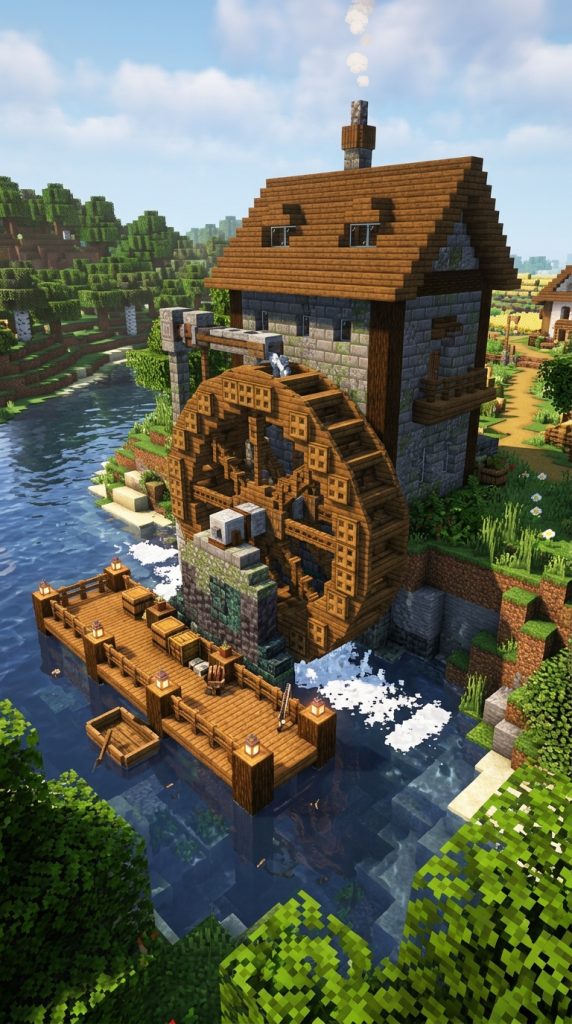
Combining Industrial Utility with Country Charm
Adding a functional or decorative watermill wheel beside your river dock introduces architectural height and historical charm. The large wooden wheel appears to turn using the river current, powering nearby workshops. This structure transforms a simple boat landing into a thriving, self-sustaining country estate hub.
Using dark prismarine or polished basalt near the submerged wheel parts simulates wet, mossy machinery. You can connect the watermill to a small cobblestone shed for storing tools and grain bags. It adds incredible mechanical detail and immersion to any winding river system.
Watermill Architectural Components
- Spruce planks, stairs, and fence gates
- Dark prismarine or polished basalt blocks
- Stone bricks and mossy stone brick walls
- Grindstones and iron bars
- Water buckets for splash effects
Step-by-Step Implementation Guide
- Build a small stone brick shed directly along the deeper edge of the riverbank.
- Construct a large circular wheel framework using spruce stairs and fence gates on the river side.
- Use dark prismarine or basalt for the bottom third of the wheel submerged in water.
- Attach grindstones and iron bars near the center hub to create mechanical axle details.
- Extend a low wooden pier from the shed base running parallel to the waterwheel.
- Place water sources above the wheel to create flowing water splash visuals.
9. The Miniature Boathouse with Arch Doorway

Enclosing Boats in Cute Architectural Shelters
A miniature boathouse built over the water provides a dedicated garage for your wooden boats. Featuring an arched entryway that boats can sail directly through, this design is both practical and charming. The enclosed space keeps your vehicles safe while adding a cozy cottage roofline to your riverbank.
Using spruce trapdoors as decorative window shutters allows natural light to filter into the interior slip. Adding a small loft space inside provides room for extra chest storage and brewing equipment. It creates an adorable, functional landmark along major river trade routes.
Boathouse Construction Materials List
- Spruce wood logs and dark oak stairs
- White terracotta or calcite blocks
- Spruce trapdoors and glass panes
- Wooden boats and chest minecarts
- Lanterns and hanging flower pots
Step-by-Step Implementation Guide
- Build a rectangular frame over the water using sturdy spruce logs anchored in riverbed.
- Fill wall sections with calcite or white terracotta to contrast dark wood framing.
- Construct an open archway on the water-facing side using inverted dark oak stairs.
- Add a steep dark oak stair roof over the structure with gabled end details.
- Install spruce trapdoors on wall cutouts to act as rustic opening window shutters.
- Park boats inside the sheltered water slip and hang interior ceiling lanterns.
10. The Wild Bamboo & Lantern Tea Dock
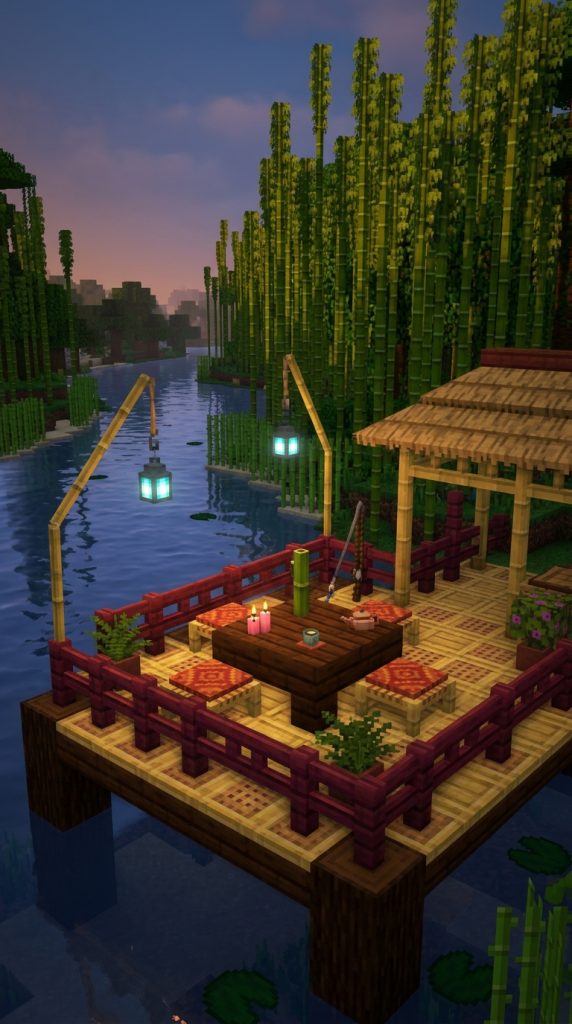
Creating Serene Oriental Waterside Spaces
Inspired by traditional Asian gardens, this design uses green bamboo, dark wood, and red accents for tranquility. The dock extends smoothly over quiet, wide rivers, providing a peaceful space for tea drinking and fish watching. Surrounded by tall bamboo stalks, it offers privacy and natural green shading.
Using red banners or crimson trapdoors adds elegant pops of color against lush green foliage. Hanging paper-like soul lanterns creates a cool, serene night atmosphere that contrasts warm torchlight. It is a stunning addition to bamboo jungle biomes or Japanese-inspired garden landscapes.
Tranquil Tea Dock Materials Checklist
- Bamboo planks, mosaic, and bamboo stalks
- Crimson trapdoors and red banners
- Soul lanterns and iron chains
- Pink candle clusters and sea pickles
- Scaffolding and custom cushions
Step-by-Step Implementation Guide
- Plant dense lines of bamboo stalks along both sides of your river shore.
- Build a flat deck extending over the water using light bamboo mosaic planks.
- Add crimson trapdoor railings along the perimeter for striking color contrast.
- Hang soul lanterns from bent bamboo poles extending out over the water surface.
- Place scaffolding covered with carpets to serve as low tea-drinking seats.
- Decorate the table with pink candles and sea pickles to resemble tea cups.
11. The Sunken Overgrown Boardwalk
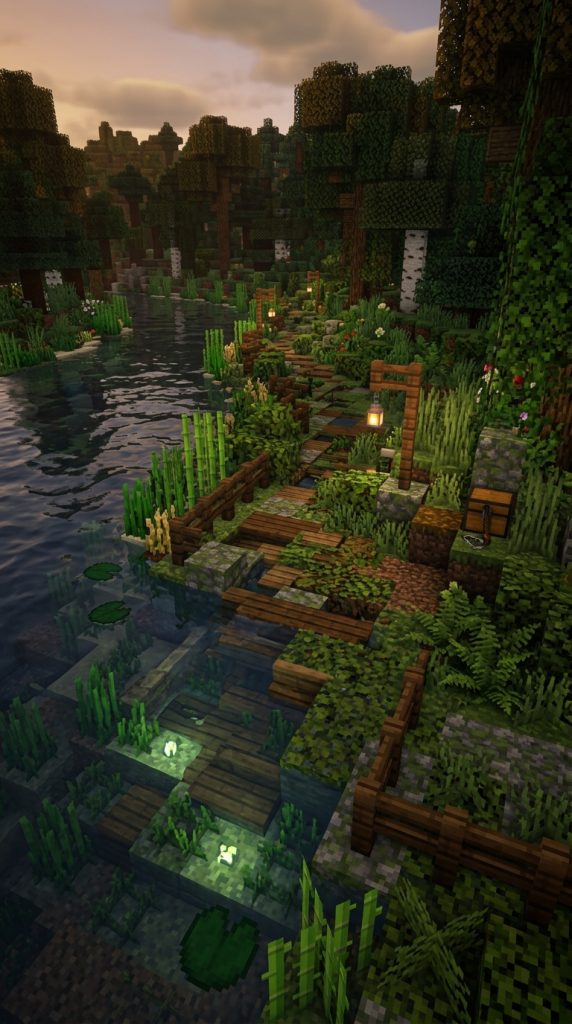
Designing Weathered Pathways Hugging the Water
Instead of elevating your dock high above the river, a sunken boardwalk sits flush with the water level. Parts of the wooden path submerge slightly beneath the surface, looking weathered, old, and well-loved. This design curves naturally along marshy banks, blending land and water effortlessly.
Using lily pads, seagrass, and moss carpets breaks up the hard wooden edges of the floor. Replacing full wooden blocks with waterlogged slabs simulates sunken, waterlogged planks naturally. It gives your world a mysterious, ancient, and deeply atmospheric exploration feel.
Boardwalk Material Requirements
- Spruce, oak, and birch wood slabs
- Waterlogged slabs and oak stairs
- Lily pads, sea pickle lights, and vines
- Mud blocks and mossy cobblestone
- Tall grass and sugarcane plants
Step-by-Step Implementation Guide
- Dig a shallow path along the water edge, allowing river water to flow partially in.
- Place waterlogged spruce and oak slabs inside the shallow water channel path.
- Mix in mossy cobblestone and mud blocks along the submerged land edges.
- Allow wild vines to grow down nearby tree trunks onto the boardwalk path.
- Place sea pickles underwater beside the path for subtle, hidden night illumination.
- Plant sugarcane and tall grass along the land side to frame the walkway naturally.
12. The Candlelit Witchy Swamp Landing
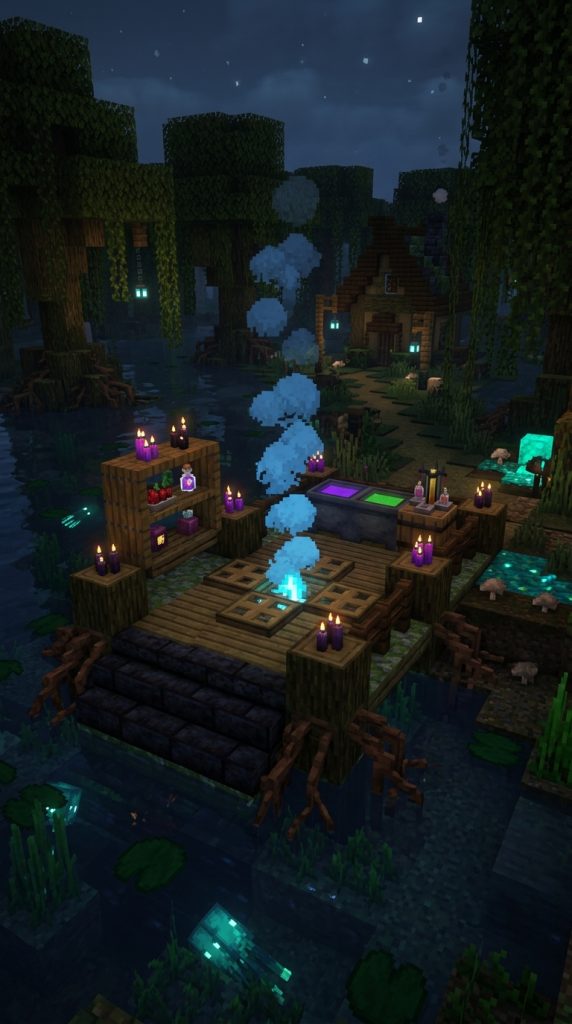
Crafting Atmospheric Mystical Dockside Nooks
For darker, mysterious river zones, a witchy swamp landing uses dark materials, purple flora, and dim lighting. Built from dark oak, mangrove roots, and blackstone, this dock feels secret and hidden. It provides a landing spot for alchemists returning from gathering rare potion ingredients in dark swamps.
Decorating with brewing stands, cauldrons, and glowing candles creates an eerie, enchanting atmosphere at dusk. Using soul campfires provides cool blue smoke that drifts lazily across dark river waters. It fits witch huts, dark forest biomes, or spooky Halloween-themed builds.
Mystical Landing Supplies List
- Dark oak logs, planks, and blackstone stairs
- Soul campfires and soul lanterns
- Candles in purple, magenta, and black
- Cauldrons, brewing stands, and glass bottles
- Warped fungus and brown mushrooms
Step-by-Step Implementation Guide
- Construct a low, dark oak dock protruding into dark, shadowy swamp waters.
- Mix polished blackstone stairs into the dark oak deck for dark texturing.
- Place a soul campfire beneath open floor trapdoors to create rising blue smoke.
- Set up cauldrons filled with dyed water and brewing stands on wooden barrels.
- Group purple and black candles across barrel tops, lighting them for dim warmth.
- Plant warped fungus and brown mushrooms in surrounding damp mud blocks.
13. The Storybook Stone Arch Bridge & Dock Combo

Unifying Crossing Architecture with Boat Access
Combining a grand stone arch bridge with a lower wooden landing creates an impressive, multi-level structure. The upper bridge allows land travel across wide rivers, while the lower dock serves boat traffic. This design acts as a major regional crossroads, bustling with visual interest and detail.
Using stone bricks, cobble, and spruce wood creates a classic medieval or storybook kingdom aesthetic. Adding stairs along the arch underside ensures smooth, realistic structural curves for boats passing underneath. It anchors large towns, medieval villages, or castle estates beautifully.
Bridge & Dock Building Supplies
- Stone bricks, cracked stone bricks, and cobblestone
- Spruce wood planks, slabs, and fence posts
- Spruce trapdoors and iron lanterns
- Oak leaves and mossy cobblestone walls
- Banners and decorative shields
Step-by-Step Implementation Guide
- Build a high, curved stone brick arch bridge spanning across your river channel.
- Construct a low wooden spruce dock attached directly to one of the bridge stone piers.
- Add stone stairs leading down from the bridge walkway to the lower boat landing.
- Detail the bridge underside with stairs and walls to create smooth support arches.
- Hang iron lanterns from the bridge arch ceiling to light boat passage below.
- Decorate the stone bridge walls with creeping oak leaf blocks and regional banners.
14. The Rustic Trading Post & Market Dock
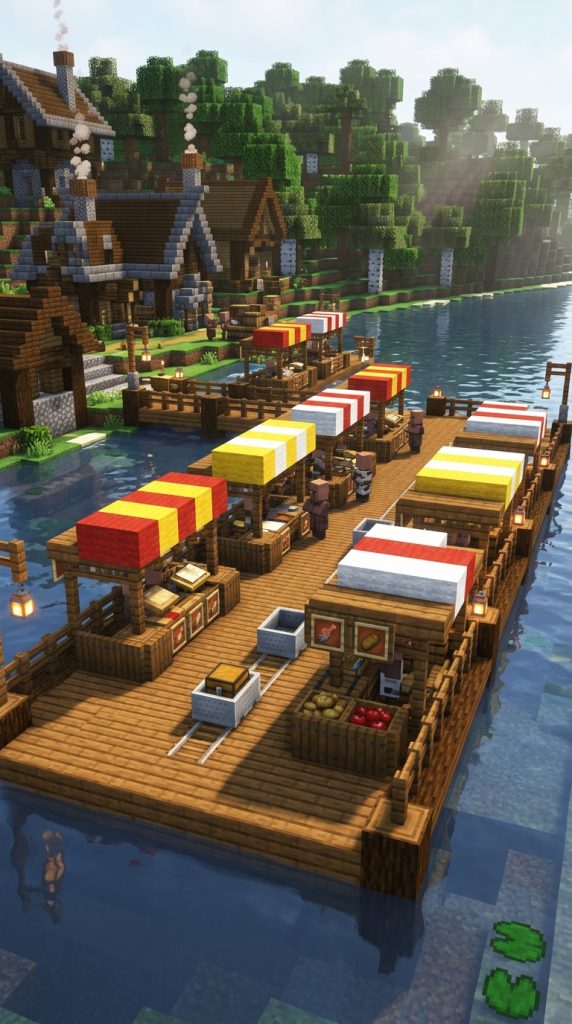
Building Vibrant Merchant Hubs on River Trade Routes
A trading post dock serves as a bustling riverside market where local villagers swap goods. Featuring colorful wool awnings, trade stalls, and packed cargo, this build brings life to river networks. It turns static water bodies into active economic trade routes filled with movement and color.
Using bright wool or terracotta awnings adds eye-catching pops of color against natural wood framing. Placing villager workstations like cartography tables, fletching tables, and barrels encourages NPC movement. It provides the ultimate cozy, thriving cottagecore settlement landing.
Trading Post Materials List
- Spruce wood logs, slabs, and fence posts
- White, red, and yellow wool blocks for awnings
- Cartography tables, fletching tables, and barrels
- Chest minecarts, bell, and emerald blocks
- Item frames displaying trade goods like fish and wheat
Step-by-Step Implementation Guide
- Construct a wide, spacious spruce wood deck extending along a major river intersection.
- Build small wooden market stall frames using spruce fence posts and logs.
- Top the market stalls with striped awnings made from alternating colored wool blocks.
- Place villager workstations like cartography tables and barrels inside the stalls.
- Scatter chest minecarts, bell anchors, and trade goods across the main trading deck.
- Mount item frames on barrels displaying fish, emeralds, and bread for trade visuals.